History of the Béchamel Sauce Recipe
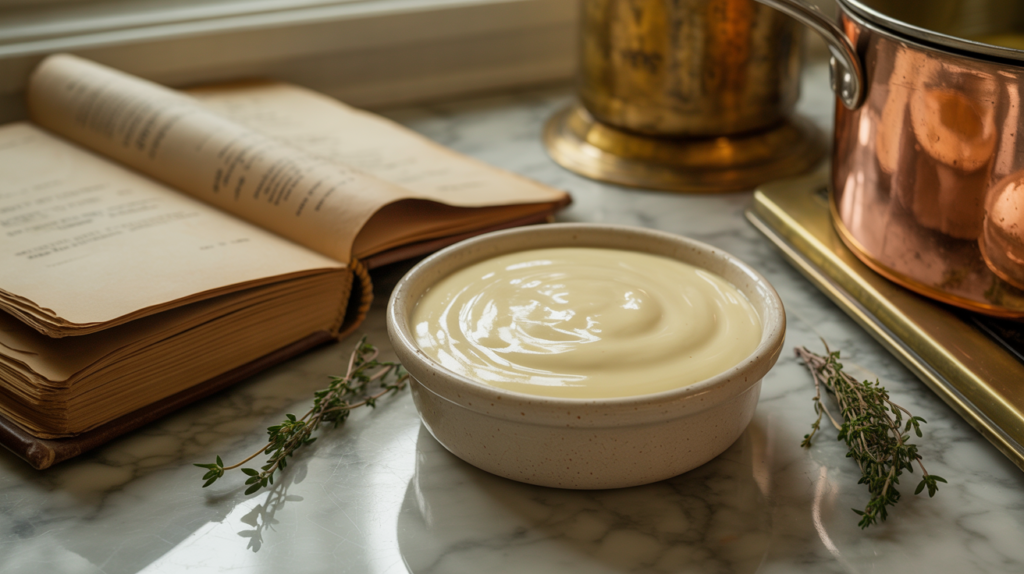
Béchamel Sauce is not just a sauce; it is one of the five fundamental “Mother Sauces” of classical French cuisine. Its history is as rich and complex as its flavor, dating back hundreds of years.
While often attributed to Louis de Béchameil, a marquis in the court of King Louis XIV, its true origins are likely much simpler, rooted in early French and Italian cooking where butter, flour, and liquid were combined to create thickening sauces.
What makes the Béchamel Sauce Recipe so enduring is its simplicity and its incredible versatility. It provides the perfect creamy, savory base for countless other sauces and dishes, acting as the culinary backbone for classics like soufflés and lasagna.
Mastering this sauce is considered a right of passage for any cook. It’s a technique that relies on precision to transform humble ingredients—butter, flour, and milk—into a luscious, velvety-smooth creation that elevates any meal.
Best Ingredients for the Perfect Béchamel Sauce
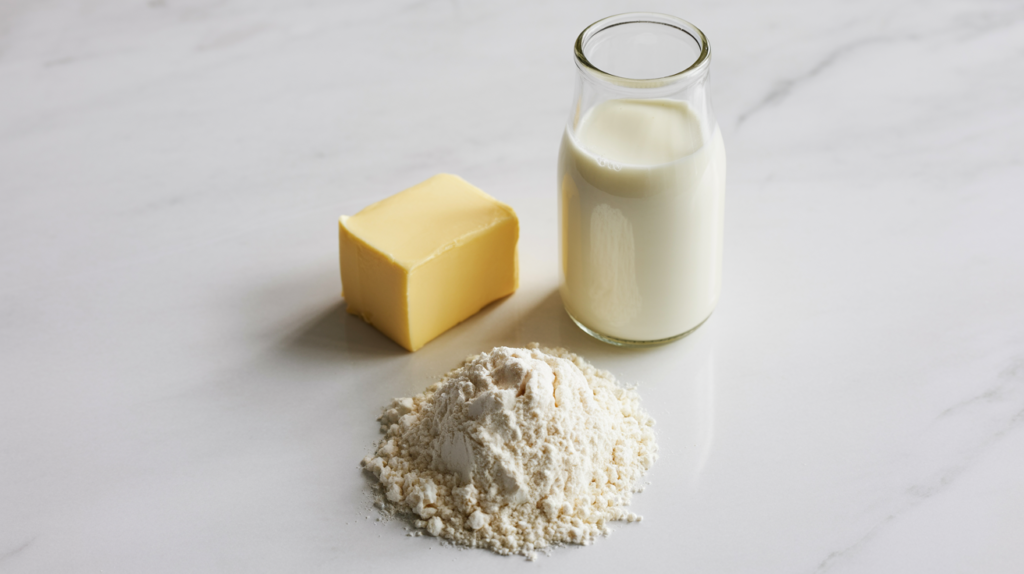
Creating the perfect, silky Béchamel Sauce requires attention to the quality and temperature of just a few simple ingredients. This is a recipe where the process is as important as the components.
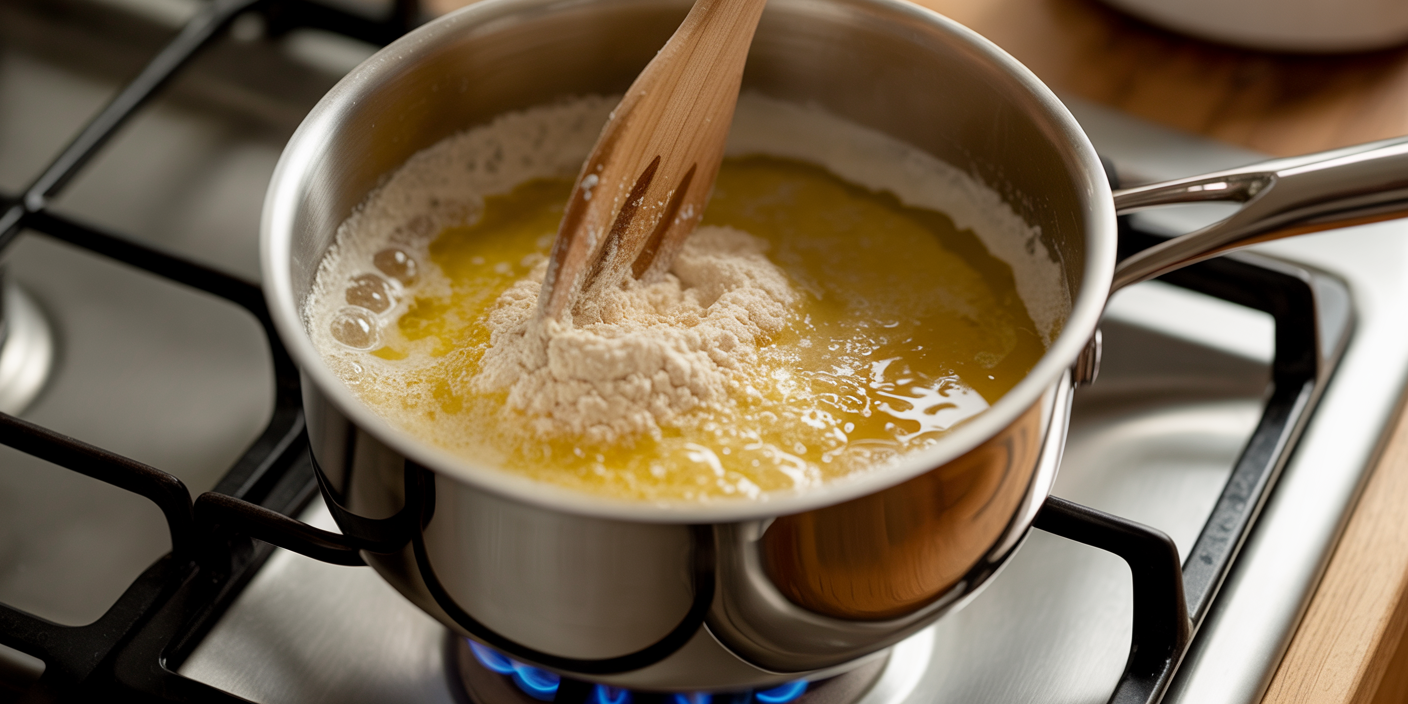
The foundation starts with the roux, a 1:1 mixture of unsalted butter and all-purpose flour. Use good-quality butter for the best flavor, as it forms the backbone of the sauce’s richness. The roux must be cooked properly to eliminate the raw, chalky taste of the flour.
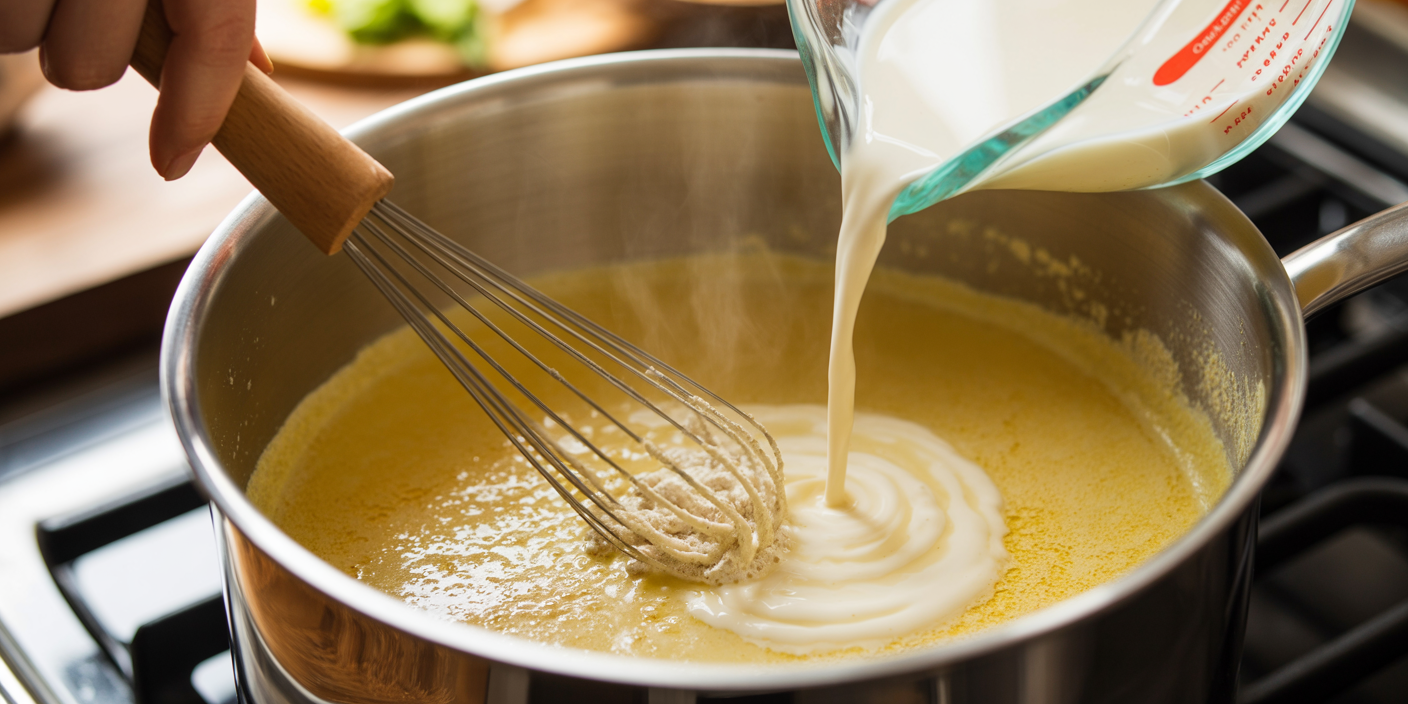
The liquid should be whole milk, gently warmed. Whole milk provides the necessary fat content to achieve the signature creamy body and richness. Using cold milk will drastically increase the chance of lumps forming.
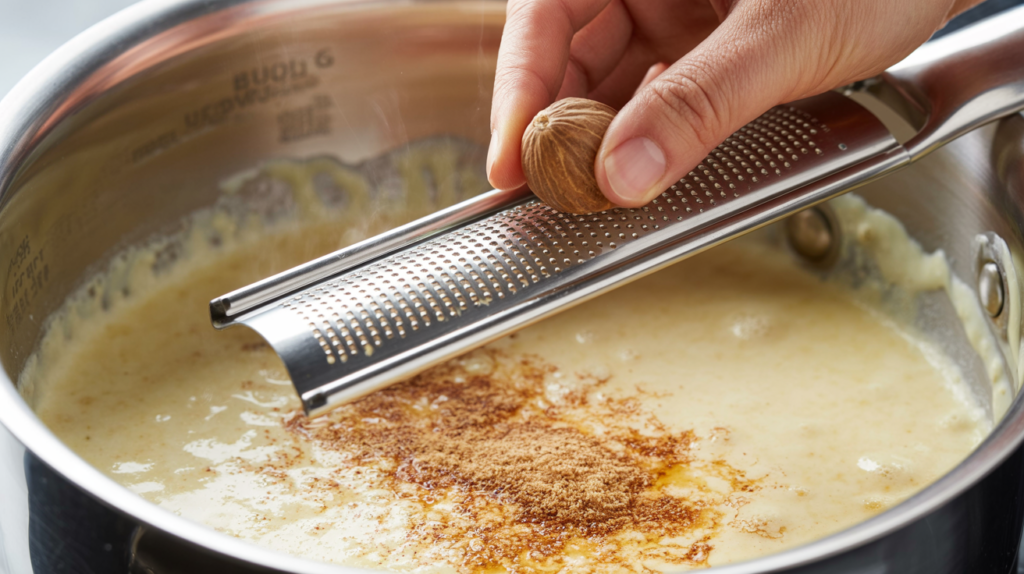
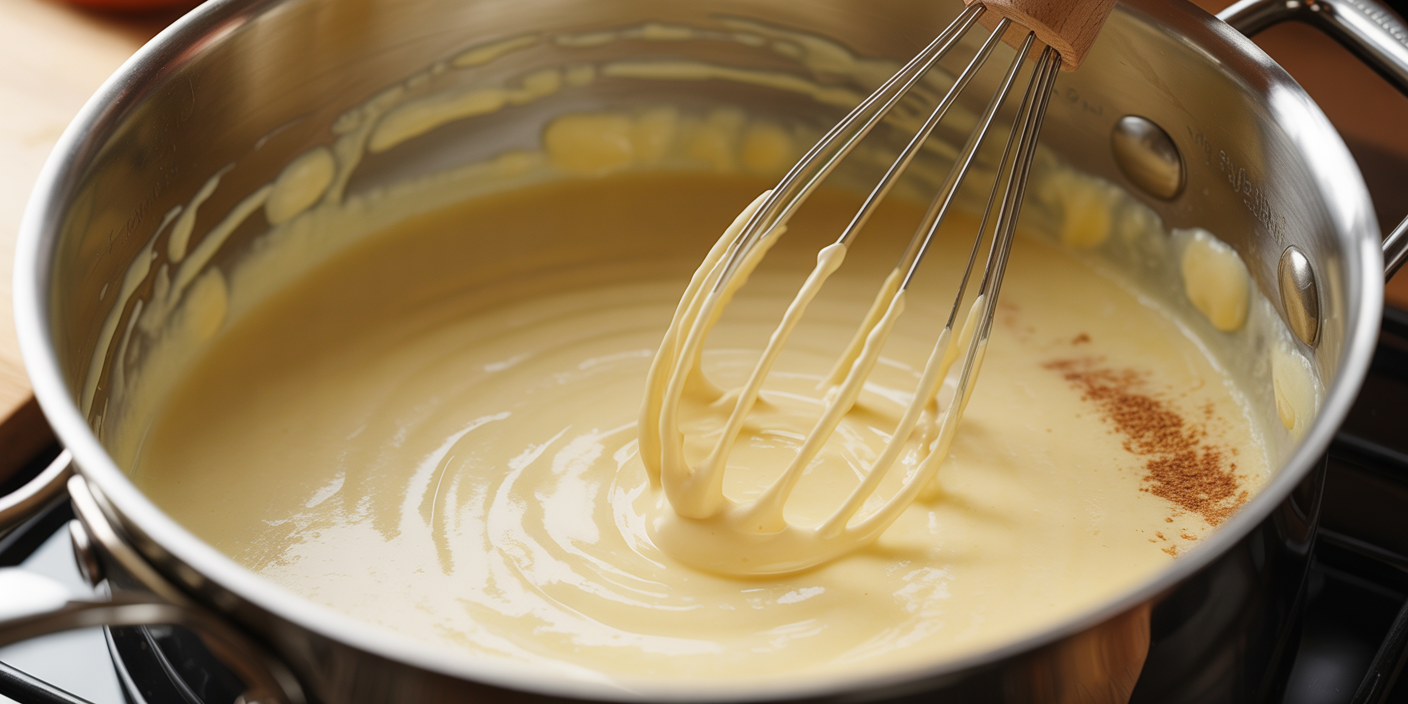
For the subtle, classic seasoning, a dash of freshly grated nutmeg is essential. It provides a warm, earthy counterpoint that perfectly complements the milk’s richness without overpowering the sauce’s velvety-smooth texture.
Using these basic, high-quality ingredients with the correct technique is key to mastering this foundational mother sauce.
Taste & Texture Highlights
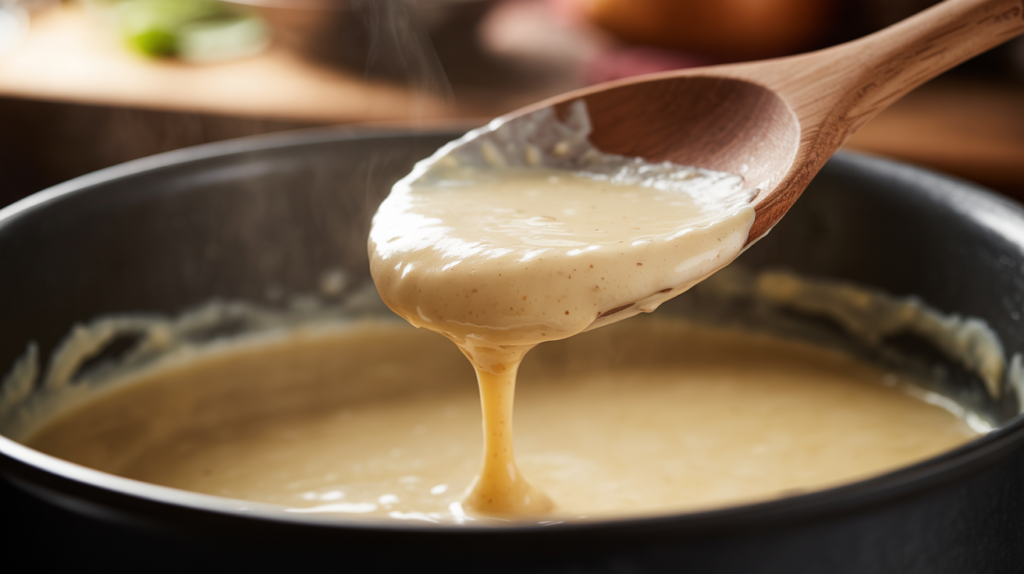
A beautifully executed Béchamel Sauce is a masterpiece of both taste and mouthfeel. It is the definition of creamy comfort.
The taste is inherently rich, milky, and savory, often described as subtly sweet due to the dairy, with a beautiful, faint nutty aroma from the butter and flour, enhanced by the signature touch of nutmeg.
The texture is the defining characteristic of a great Béchamel. It must be impeccably smooth and velvety, flowing easily but still thick enough to evenly coat the back of a spoon. There should be absolutely no graininess or lumps whatsoever.
This luscious consistency makes it an incredibly satisfying sauce, providing a warm, comforting hug to everything it touches. It is the essence of richness and elegance in simple French cooking.
Flavor Combinations That Work
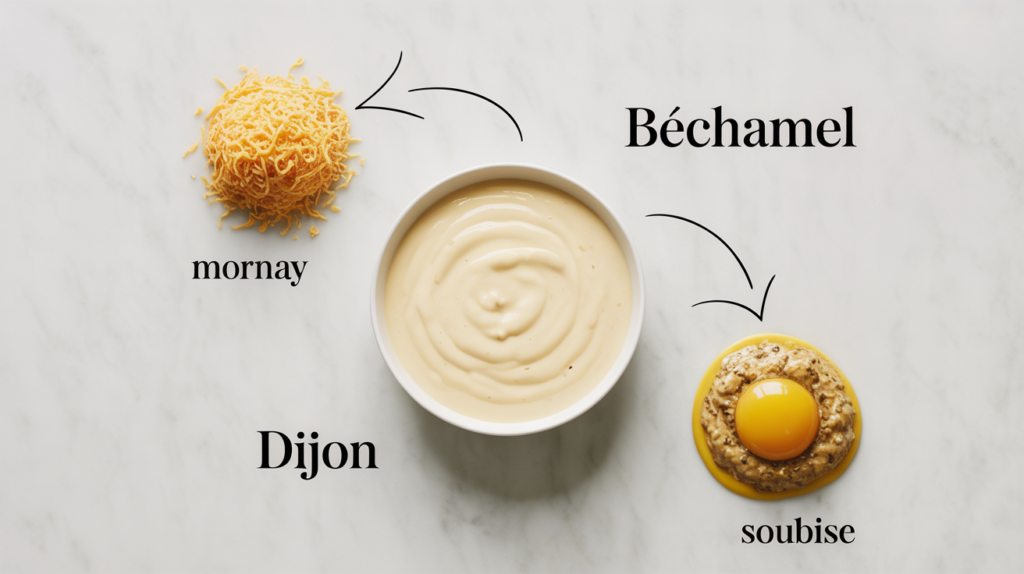
The brilliance of the Béchamel Sauce Recipe is that it is designed to be a starting point. It’s a foundational sauce that is easily transformed into a variety of secondary sauces.
- Mornay Sauce (Cheese): Stirring in grated Gruyère, Swiss, or Parmesan cheese creates a classic Mornay, turning the Béchamel into the perfect, cheesy sauce for gratins or pasta dishes.
- Mustard Sauce: Whisking in a spoonful of Dijon mustard adds a sharp, tangy bite that cuts through the richness and pairs wonderfully with fish or vegetables.
- Cream Sauce: Folding in sautéed mushrooms, herbs like tarragon, or a dash of lemon juice transforms the Béchamel into a versatile, savory cream sauce ideal for poultry.
- Cajun/Creole Base: Adding Creole seasonings, cayenne pepper, and perhaps a touch of caramelized onion quickly gives the Béchamel a fiery, spicy complexity perfect for American Southern cooking.
These simple additions demonstrate the true versatility of Béchamel in a chef’s kitchen.
Health Benefits of the Béchamel Sauce
While Béchamel is a rich sauce, it contributes nutritional value primarily through its dairy and fat content, making it a source of key vitamins and energy.
The main benefit comes from the milk, which is an excellent source of calcium—essential for bone health—and Vitamin D. Using whole milk provides the benefit of healthy fats, which are necessary for energy and hormone production.
The flour contributes a small amount of complex carbohydrates to the sauce, helping with structure and thickness. The sauce is generally a good carrier for fat-soluble vitamins (A, D, E, K) found in the butter and milk.
Because this is a homemade sauce, you have complete control over the salt and fat content, allowing you to moderate the ingredients and ensure you are using the highest-quality butter and dairy.
Nutrition Facts & Calories
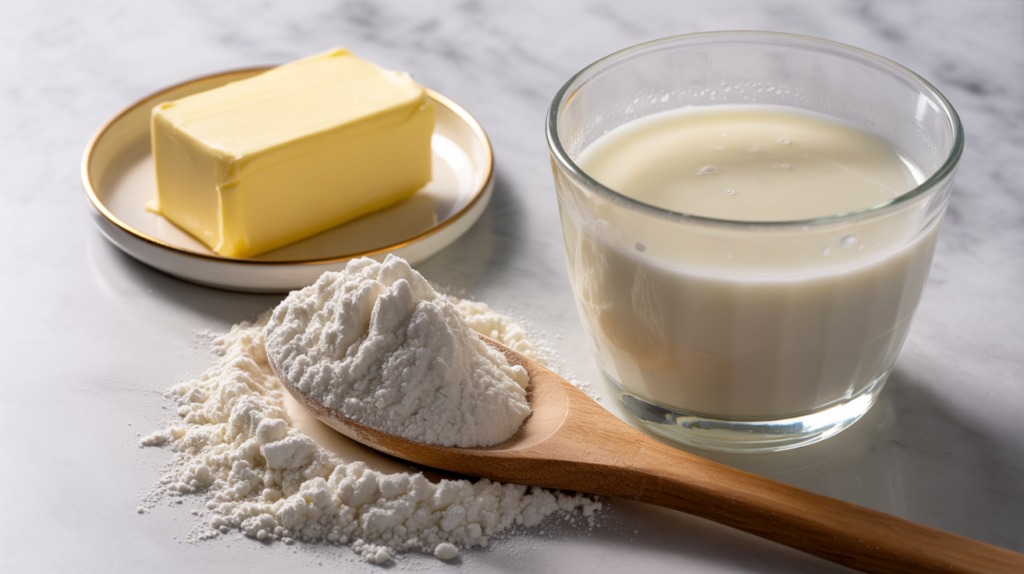
When analyzing the Béchamel Sauce, it’s important to remember it is a foundational, concentrated sauce. Its nutritional profile is determined by the butter and milk.
The sauce is primarily composed of fats and carbohydrates (from the flour and milk). The fat content is significant, contributing to the richness and creamy body.
In terms of micronutrients, the sauce is a source of Calcium, Vitamin A, and Vitamin D (from the milk). The starch in the flour contributes to its satisfying texture and thickening power.
Because it is high in fat, the calorie count is concentrated, typically ranging from 70 to 100 calories per 1/4 cup serving. It is best used sparingly as an enriching element of a dish, not as a main course.
Quick Tips for Making the Perfect Béchamel Sauce
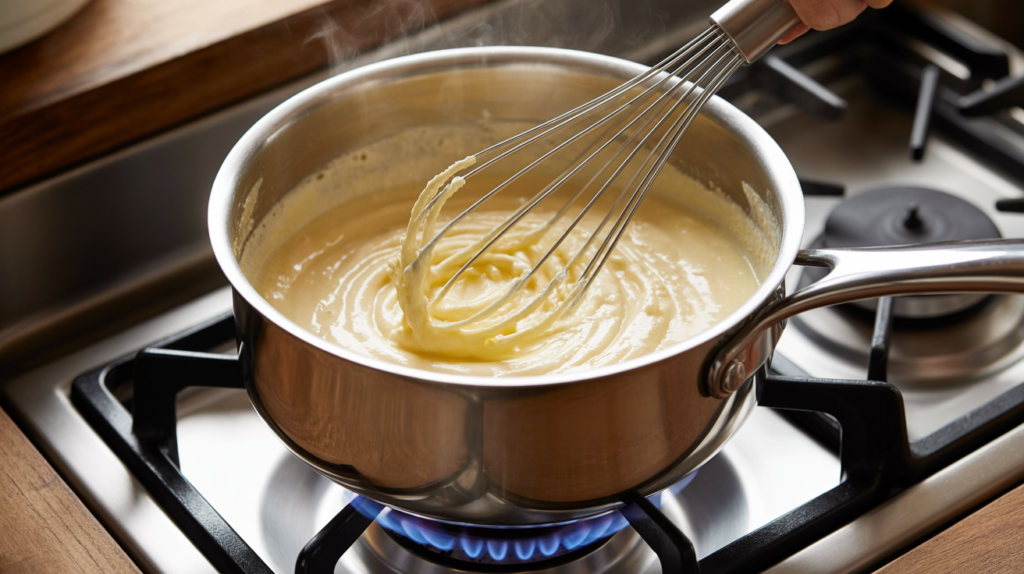
Mastering the Béchamel Sauce Recipe requires a few key techniques to ensure it is always lump-free and velvety-smooth.
The roux is critical. You must cook the butter and flour mixture for at least 2-3 minutes until it smells nutty and the raw flour taste is cooked out. Do not brown it, just cook it until it foams.
Use warm milk. Gradually adding pre-warmed milk to the hot roux is the single best way to prevent lumps from forming and speeds up the thickening process.
Whisk constantly. Use a whisk throughout the entire process—when making the roux and especially when adding the milk. This ensures the flour particles are perfectly dispersed, giving you that signature silky smoothness.
Serving Suggestions
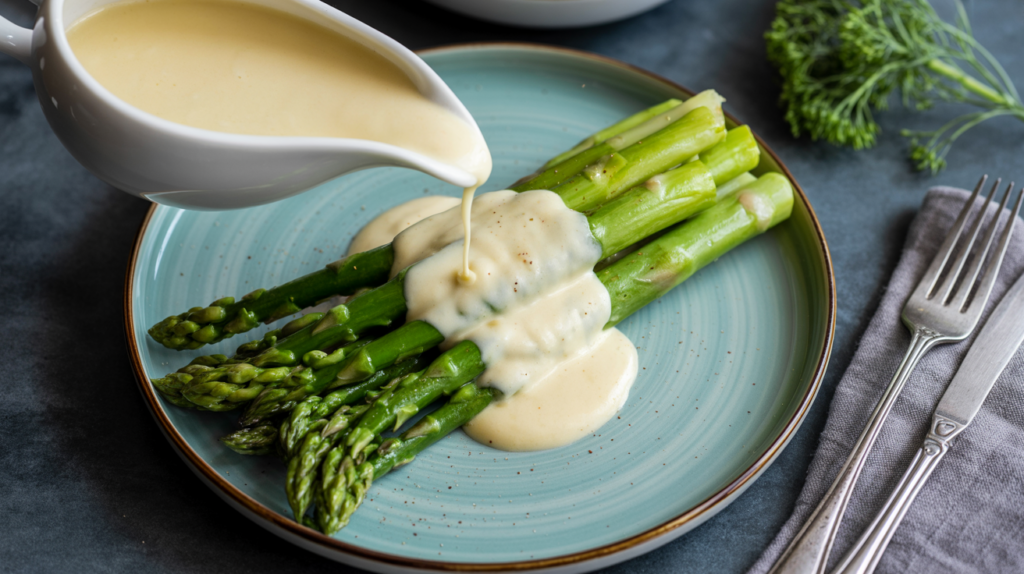
The finished Béchamel Sauce is rarely served on its own but is instead a key component in dishes that rely on its creamy richness.
Use it as the foundation for classic lasagna or pasticcio. Its ability to bind and moisten layers of pasta and meat is unmatched.
It is the perfect topping for vegetable gratins, especially those made with potatoes, cauliflower, or fennel. The Béchamel creates a delicious, golden crust when baked.
Serve it over simple proteins like poached white fish or steamed chicken breast. The sauce adds all the necessary flavor and creamy texture.
Perfect Pairings / Meal Ideas
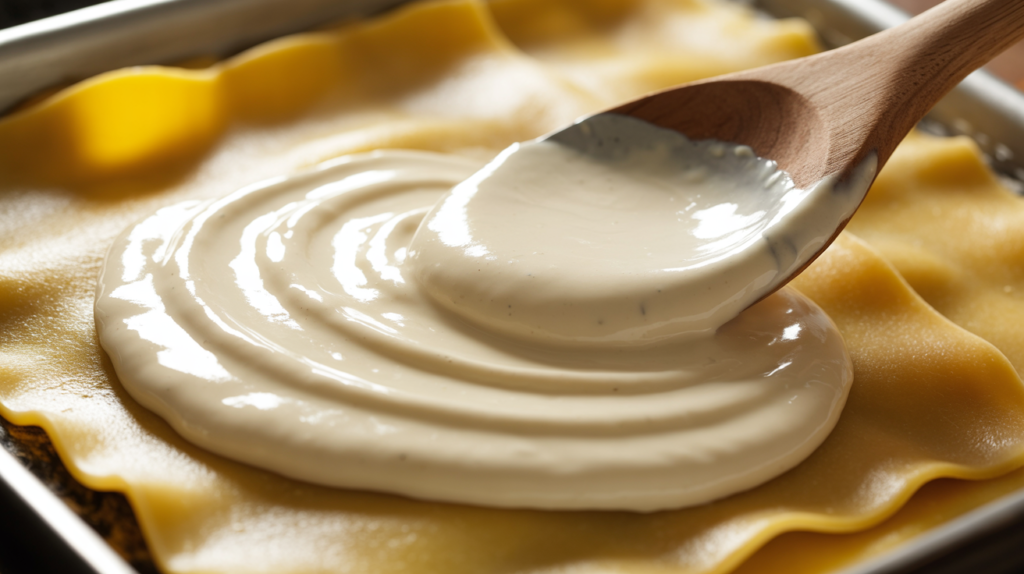
The versatility of the Béchamel Sauce means it pairs well with a vast range of cuisines and primary ingredients.
It is the essential binder for croque monsieur and croque madame sandwiches, providing the velvety richness that holds the ham and cheese together.
For a classic French pairing, use Béchamel to create a simple, savory cheese soufflé. The sauce provides the structure and richness needed for the perfect rise.
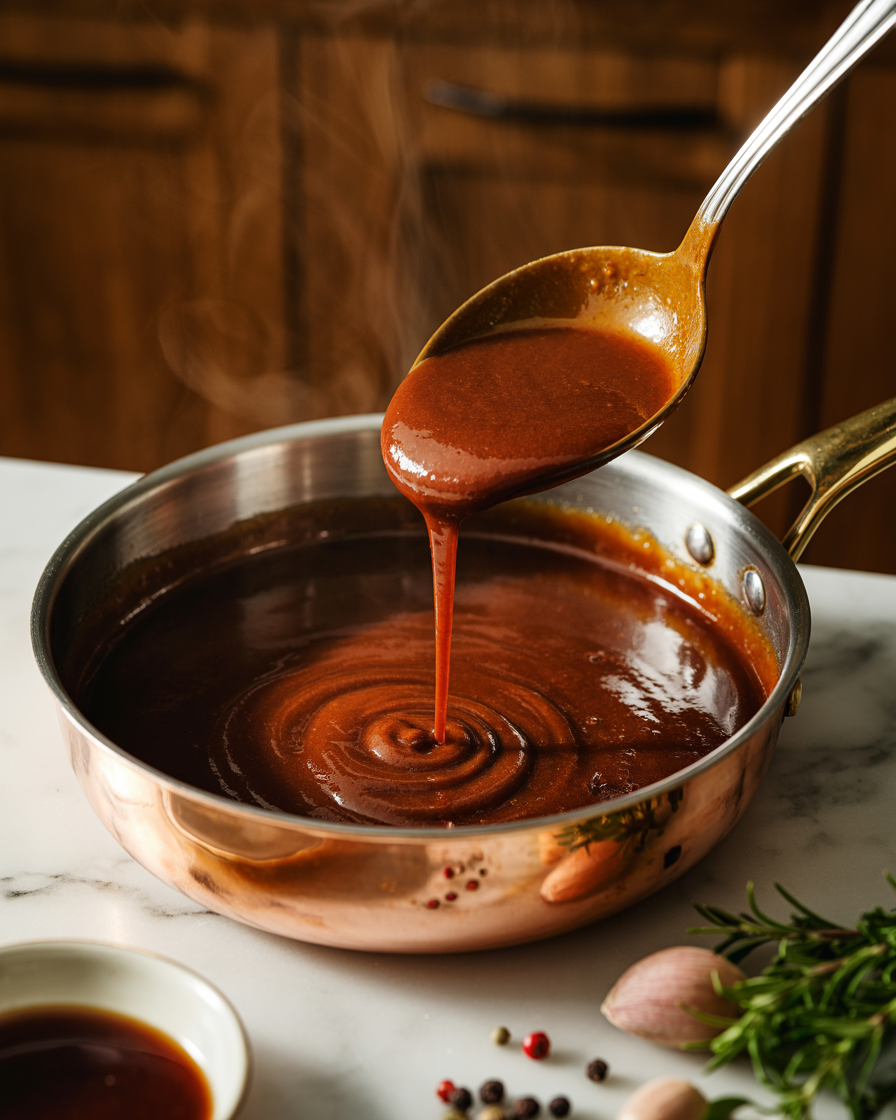
While Béchamel is considered the white mother sauce, its savory counterpart is the dark, rich Espagnole Sauce. If you’re looking to complete your foundation of French cooking, learning how to make this other key sauce is an absolute must.
Presentation Tips
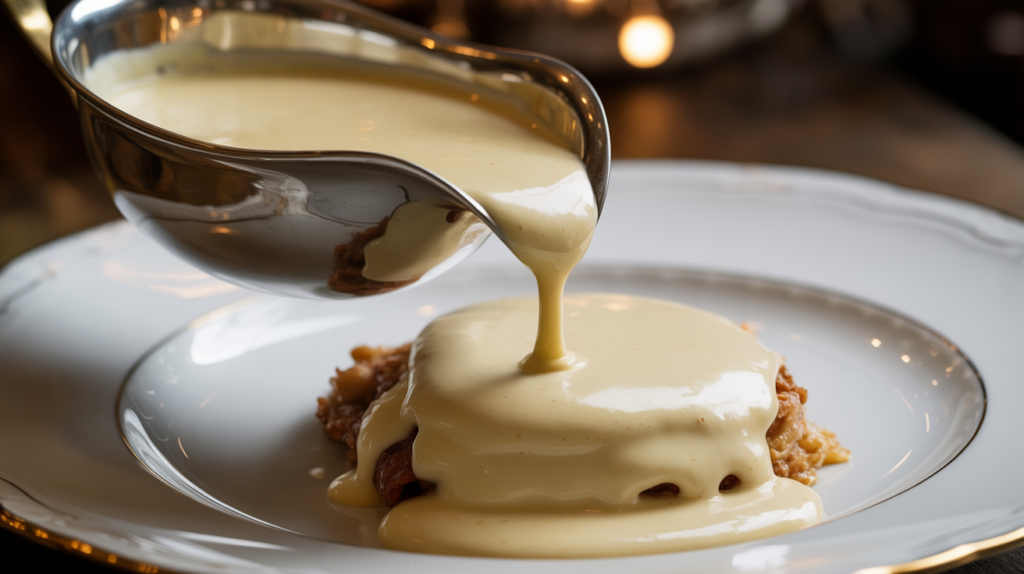
Since Béchamel Sauce is generally an internal sauce, presentation focuses on the final dish it supports.
If using it as a topping for a gratin, sprinkle the surface generously with breadcrumbs or Parmesan cheese before the final bake to ensure a beautiful, golden-brown crust.
When serving over a simple protein or vegetable, ladle the sauce slowly over the dish to create an attractive, glossy coating that showcases its silky smoothness.
Always serve Béchamel-based dishes immediately, as the sauce is at its best when piping hot and at its creamiest.
Pro Tips & Fun Facts
- Fixing Lumps: If your Béchamel Sauce develops lumps, don’t panic! Simply pour the sauce through a fine-mesh sieve into a clean saucepan and reheat gently. This removes all graininess and restores the velvety-smooth texture.
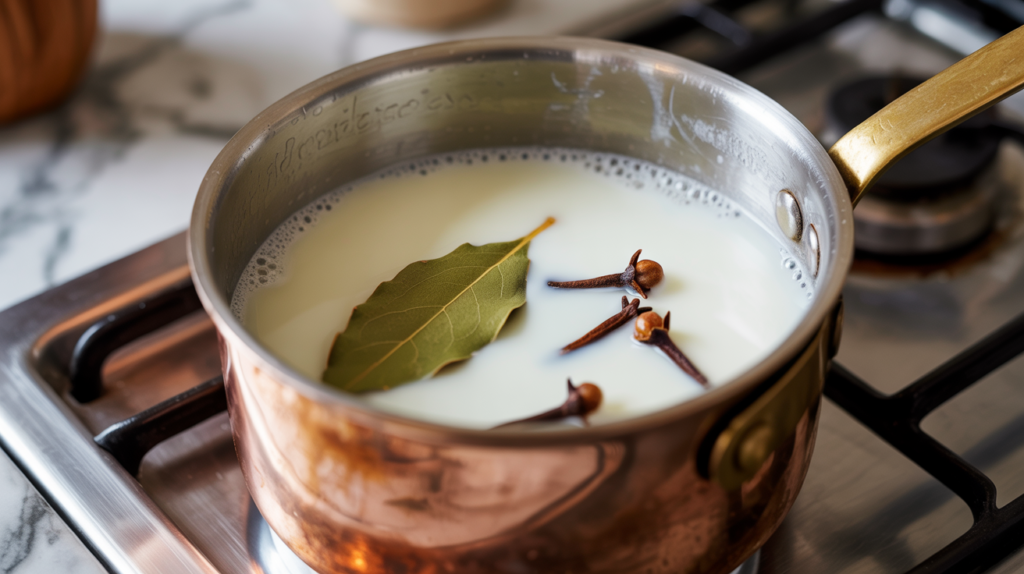
- Infusion: Before making the sauce, infuse the milk with flavor by simmering it with a bay leaf and a slice of onion (remove before adding to the roux). This adds an extra layer of savory depth to the final product.
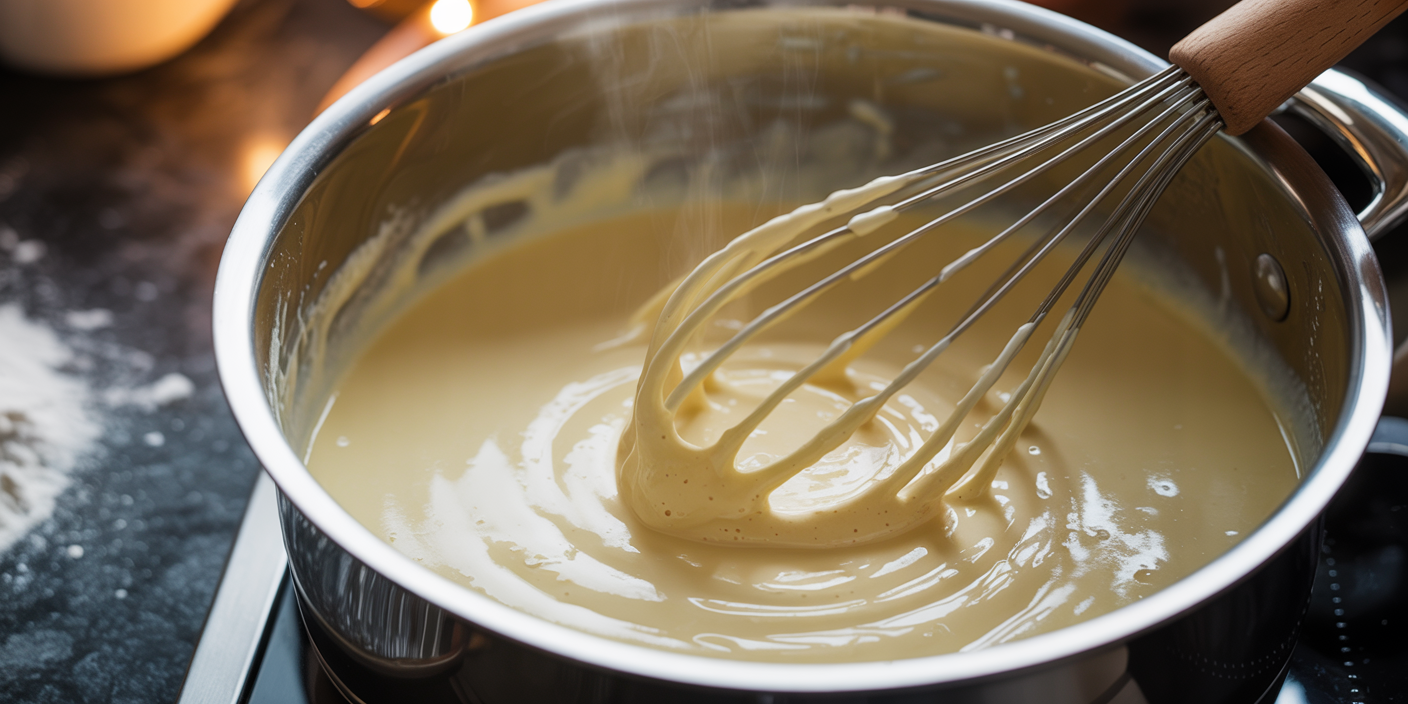
- Controlling Thickness: The longer you cook the sauce after adding the milk, the thicker it will become. If it’s too thick, simply whisk in a little more warm milk until the desired creamy consistency is reached.
Why You Should Try the Béchamel Sauce Recipe
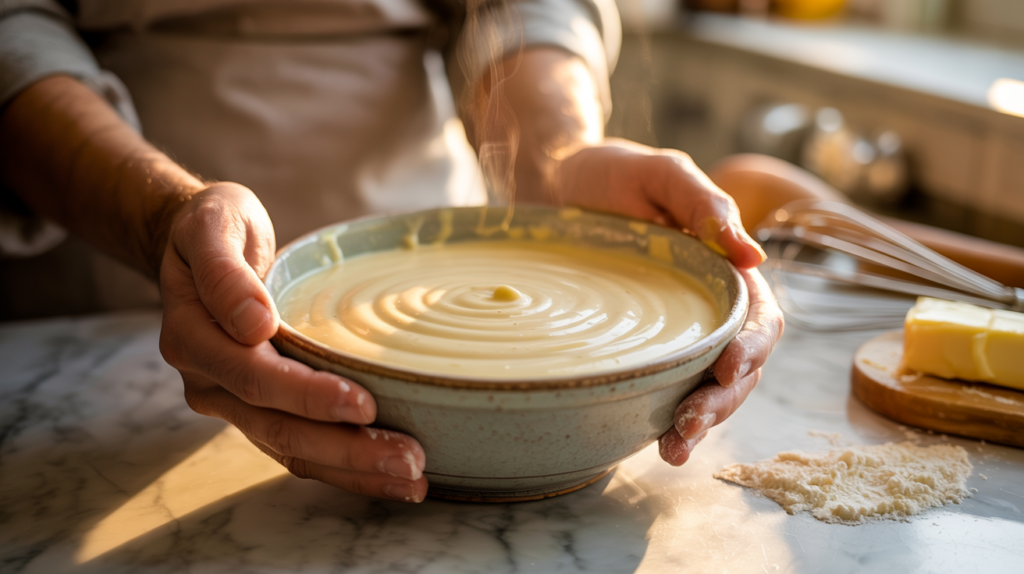
Mastering the Homemade Béchamel Sauce Recipe is one of the most rewarding skills you can acquire in the kitchen. It’s a technique, not just a recipe.
It instantly elevates your cooking, providing a foundation for making classic, rich, creamy dishes like perfect mac and cheese, gratins, and soufflés. You gain control over flavor and texture that store-bought sauces simply can’t match.
Stop relying on pre-made sauces. Learn how to make Béchamel and unlock the secret to velvety-smooth richness and timeless French comfort. It’s an essential, satisfying sauce you’ll use forever.
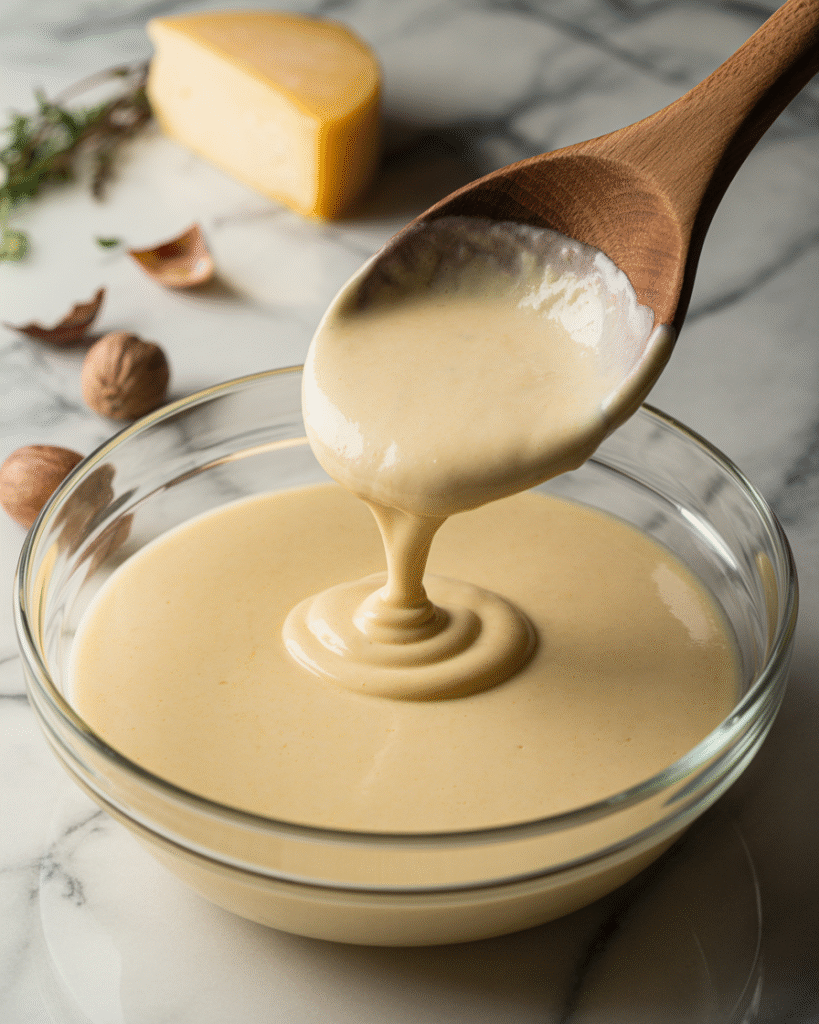

Homemade Béchamel Sauce Recipe – Creamy French White Sauce
Description
Learn to make homemade Béchamel sauce, a versatile French mother sauce used for lasagna, gratins, creamy pasta, and more. Rich, smooth, and velvety.
Ingredients
Seasonings:
Optional Add-ins:
Instructions (Step-by-Step)
-
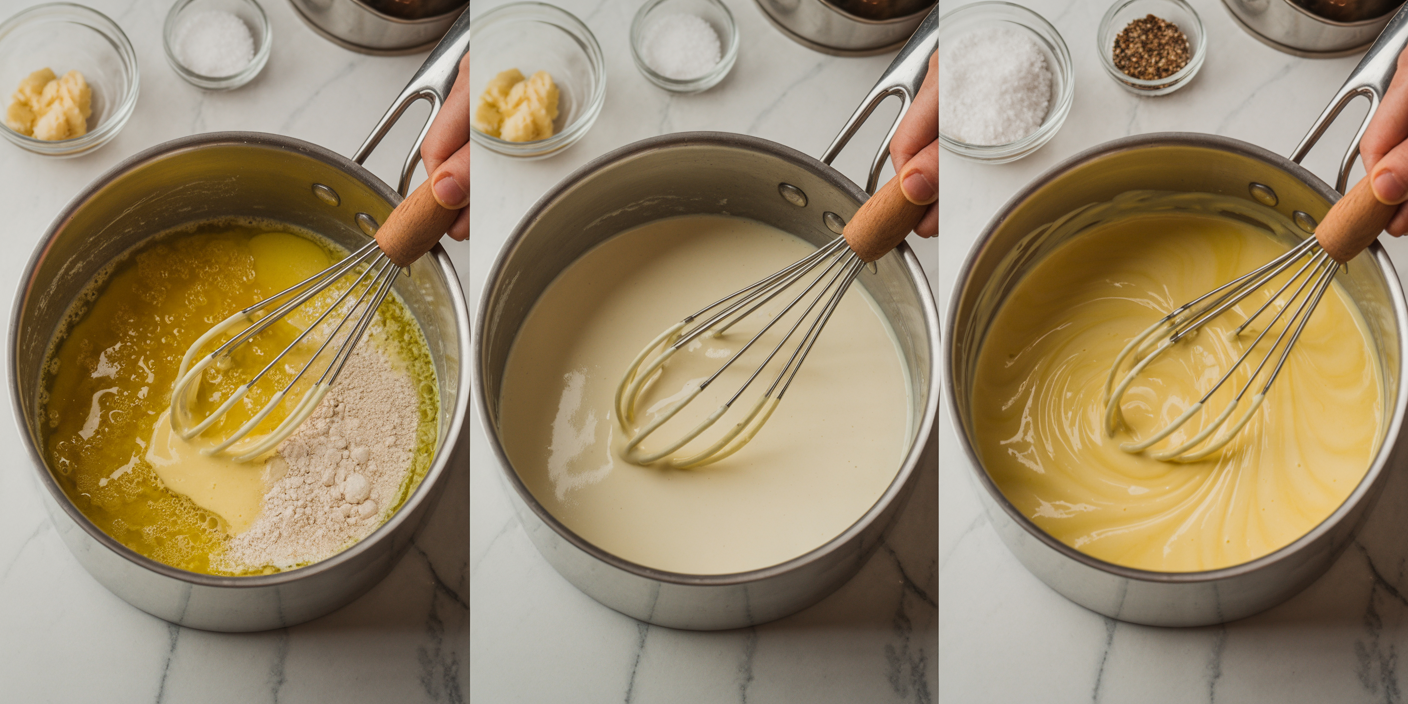
Step 1: Prepare the Roux
Melt butter in a saucepan over medium heat. Add flour and whisk constantly until light golden and fragrant.

-
Step 2: Incorporate Milk Gradually
Slowly pour in warm milk while whisking continuously to avoid lumps.
-
Step 3: Season the Sauce
Add salt, white pepper, and a pinch of nutmeg. Stir until smooth and creamy.
-
Step 4: Simmer to Thicken
Reduce heat to low and simmer for 5–10 minutes, whisking occasionally, until desired thickness is achieved.
-
Step 5: Use or Store
Use immediately as a base for dishes or cool and refrigerate for later use. Reheat gently before serving.
Nutrition Facts
Servings 6
- Amount Per Serving
- Calories 120kcal
- % Daily Value *
- Total Fat 7g11%
- Saturated Fat 4g20%
- Sodium 120mg5%
- Total Carbohydrate 10g4%
- Protein 4g8%
* Percent Daily Values are based on a 2,000 calorie diet. Your daily value may be higher or lower depending on your calorie needs.
Note
Warm milk prevents lumps
Whisk constantly for a velvety texture
Can be used as a base for Mornay, cheese, or mustard sauces