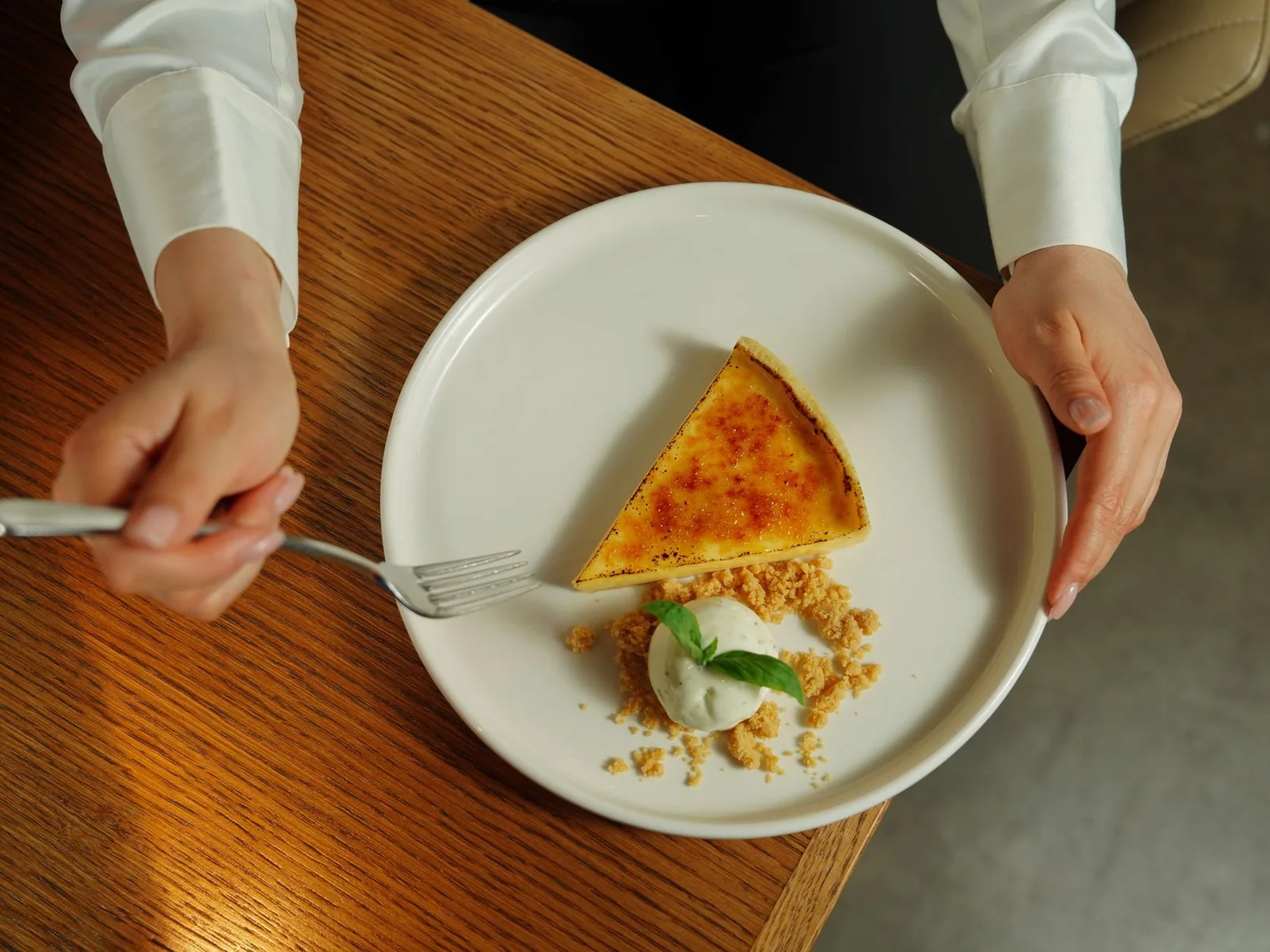
A creme brulee cheesecake brings together two desserts that usually live in separate corners of the pastry world: the dense, tangy slice of a baked cheesecake and the glass-pot custard with a shatteringly crisp sugar lid. In this version, you bake a vanilla cheesecake base, chill it until firm, then lay down a thin layer of sugar and torch it so the top turns into a brittle sheet you crack with a spoon. The result is a chilled, creamy body under a warm, snapping crust.
What makes this recipe worth your time is the control. A water bath keeps the filling from curdling, and a measured sugar layer means you get crack without burnt bitterness. You end up with a dessert that looks restaurant-built but uses a standard springform pan and a kitchen torch you likely already own. If you enjoyed this, our recipe search is worth trying next. Making this creme brulee cheesecake at home is surprisingly straightforward once you know the key steps.
Why You'll Love These Creme Brulee Cheesecake
Two textures in one bite: a cool, smooth filling against a hot, glassy sugar top.
Make-ahead friendly since the cake must chill overnight before the sugar finish.
Reliable in a home oven thanks to a gentle water bath that blocks cracks.
Impressive plating with no advanced pastry training required.
Ingredients You'll Need
200 g graham crackers, crushed fine — forms the sturdy base that holds the soft filling.
90 g unsalted butter, melted — binds the crumbs so the crust slices cleanly.
800 g full-fat cream cheese, room temperature — gives body and the signature tang.
200 g granulated sugar, divided — 150 g goes in the batter, 50 g for the top.
3 large eggs, room temperature — set the custard without making it rubbery.
240 ml heavy cream — loosens the mix for a silkier mouthfeel.
2 tsp pure vanilla extract — the core flavor tying both dessert styles together.
1 tbsp cornstarch — stabilizes the filling so it cuts without weeping.
Pinch of salt — sharpens the vanilla and balances the sugar.
Ingredient Substitutions
Graham crackers: Replace with 200 g crushed digestive biscuits for a milder, slightly malted base. Digestive biscuits hold moisture a touch longer, so bake the crust 8 minutes instead of 6 to drive off excess steam. The swap adds a softer bite and a darker edge but keeps the structure intact for slicing. The creme brulee cheesecake works well for weeknight cooking when time is limited.
Heavy cream: Use 240 ml full-fat sour cream for a tangier, thicker filling that sets faster. Sour cream lowers the fat spread, so drop the cornstarch to 2 tsp to avoid a too-firm slice. Expect a brighter flavor and a denser crumb that still cracks clean under the torch. Storing leftover creme brulee cheesecake correctly keeps it tasting good for days.
Cornstarch: Swap with 1 tbsp all-purpose flour if you have no starch on hand. Flour needs the same heat to activate but adds a faint cereal note and a less glossy cut face. Keep the bake time unchanged and cool the cake fully before torching to prevent a gummy center.
Vanilla extract: Substitute 1 scraped vanilla bean for a speckled, floral lift over extract. A bean carries more seed texture and a cleaner nose, though it costs more and needs 5 minutes of steeping in the cream. The finished top will show tiny vanilla dots that read as homemade. For another easy option, check out our magnesium spray.
Step-by-Step Instructions
Heat the oven to 180°C / 350°F and line a 9-inch springform pan with parchment on the base. Stir crushed graham crackers with melted butter until sandy, then press into the pan bottom. Bake 8 minutes until the edge smells toasty, then cool.
Beat room-temperature cream cheese with 150 g sugar on medium-low heat off the stove, using a paddle, for 2 minutes until no lumps remain. Add cornstarch and salt, mixing just set edges of batter with no streaks.
Add eggs one at a time on low speed, scraping after each, then pour in heavy cream and vanilla. Mix do not overmix once combined; stop when the batter looks like thin pudding.
Set the springform in a larger roasting pan, pour boiling water halfway up its side, and bake at 160°C / 320°F for 55–65 minutes. Pull it when the center barely jiggles like set yogurt.
Cool on a rack 1 hour, then refrigerate uncovered up to 3 days but ideally overnight so the slice firms for clean torching.
Before serving, sprinkle the reserved 50 g sugar evenly across the top. Torch in circles serve immediately after the sugar turns amber and hard, about 1 minute per half.
Pro Tips
Room-temperature dairy is the quiet rule here; cold cream cheese leaves lumps no mixing fixes without beating in air that later cracks the top. Set blocks out 25–30 minutes before you start.
Use a shallow spoon to spread sugar so the layer is thin and even — a thick pile burns before the base melts. For technique detail on caramelizing safely, see torching sugar from The Kitchn.
Avoid opening the oven early because the draft drops the temp and the filling sinks. If you want a firmer slice, rest the batter for 5 minutes then skim foam off the top before baking.
Pair the chilled cake with creme brulee custard cups if you serve a dessert spread and want to echo the theme.
Common Mistakes to Avoid
Skipping the water bath bakes the edges dry while the middle stays loose, so always use the outer pan with hot water. A dry cheesecake loses the contrast that makes this creme brulee cheesecake work.
Torching wet sugar from a damp fridge top causes steam pits instead of a sheet; pat the surface dry first. dessert courses like this need a dry lid for the crack.
Using fine berry sugar instead of granulated melts too fast and scorches; stick to the coarse grain for control. Burnt top tastes bitter and hides the vanilla underneath.
Serving Suggestions
Cut with a hot knife wiped between slices so the sugar top stays whole and the base stays neat. A plain cucumber bread on the side balances the rich slice at a brunch table.
Add a few fresh raspberries for acid that cuts the dairy weight. The red fruit also flags the vanilla tones without adding sugar.
Storage and Reheating
Keep the un-torched cake in an airtight container in the fridge for up to 3 days; add the sugar top only when ready to serve. Torched sugar softens within hours, so never torch ahead.
You can freeze the plain baked cake for freeze for up to 2 months wrapped in two layers of film. Thaw overnight in the fridge, pat dry, then sugar and torch.
Do not leave the finished dessert out beyond 2 hours since the dairy filling sits at room temp under sugar. Chill leftovers promptly to stay food-safe.
Recipe Variations
Citrus Version
Add 1 tbsp lemon zest to the batter for a bright note that lifts the vanilla. The acid tightens the custard slightly, so bake 5 minutes less and watch the jiggle. You get a springier slice with a fresher nose.
Chocolate Base
Swap 30 g of graham crumbs for cocoa powder mixed into the crust for a dark, bittersweet floor. Cocoa absorbs more butter, so add 1 tsp melted butter to the mix. The result frames the pale top with a brown edge.
Espresso Top
Dust the sugar with 1/2 tsp instant espresso before torching for a coffee bitterness in the crack. The granules melt with the sugar and leave a faint speckle. Serve with martini for a late-night pair.
Cardamom Spice
Grind 3 pods into the sugar layer for a floral warmth in the lid. The spice toasts under the flame and sharpens the vanilla below. Use dessert tags to file this version separately if you blog the spin.
A creme brulee cheesecake joins a dense vanilla baked cheesecake with a shatteringly crisp torched sugar lid. The chilled creamy body under a warm snapping crust looks restaurant-built but uses a standard springform pan and kitchen torch.
Ingredients
200g graham crackers, crushed fine
90g unsalted butter, melted
800g full-fat cream cheese, room temperature
200g granulated sugar, divided
3 large eggs, room temperature
240ml heavy cream
2tsp pure vanilla extract
1tbsp cornstarch
Pinch of salt
Instructions
1
Heat oven and line pan
Heat the oven to 180°C / 350°F and line a 9-inch springform pan with parchment on the base. This preheat ensures the crust bakes evenly and the pan is ready before the crumb mix goes in.
2
Make and bake crust
Stir crushed graham crackers with melted butter until the texture is sandy, then press firmly into the pan bottom. Bake for 8 minutes until the edge smells toasty and the surface looks set, then cool on a rack before filling.
3
Beat cream cheese and sugar
Beat room-temperature cream cheese with 150 g of the sugar on medium-low speed, with the heat off the stove and using a paddle, for 2 minutes until no lumps remain. This gentle mixing avoids whipping air that later cracks the baked top.
4
Add dry then eggs
Add cornstarch and salt, mixing just until the edges of the batter are set with no streaks visible. Add eggs one at a time on low speed, scraping the bowl after each addition so the batter stays smooth and doesn't overmix.
5
Add cream and vanilla
Pour in the heavy cream and vanilla, then mix only until the batter looks like thin pudding and stop immediately. Do not overmix once combined, or the filling may turn rubbery after baking.
6
Bake in water bath
Set the springform in a larger roasting pan, pour boiling water halfway up its side, and bake at 160°C / 320°F for 55–65 minutes. Pull it when the center barely jiggles like set yogurt, which shows the custard is done without curdling.
7
Cool and refrigerate
Cool on a rack for 1 hour, then refrigerate uncovered for up to 3 days but ideally overnight so the slice firms for clean torching. The long chill is required for the sugar lid to crack instead of sinking into a soft top.
8
Sugar and torch top
Before serving, sprinkle the reserved 50 g sugar evenly across the top using a shallow spoon for a thin layer. Torch in circles and serve immediately after the sugar turns amber and hard, about 1 minute per half, so you get a brittle sheet you crack with a spoon.
Nutrition Facts
Servings 12
Amount Per Serving
Calories420kcal
% Daily Value *
Total Fat30g47%
Saturated Fat18g90%
Cholesterol140mg47%
Sodium320mg14%
Total Carbohydrate30g10%
Dietary Fiber1g4%
Sugars22g
Protein8g16%
* Percent Daily Values are based on a 2,000 calorie diet. Your daily value may be higher or lower depending on your calorie needs.
Note
Storage: Keep the un-torched cake in an airtight container in the fridge for up to 3 days; add sugar only when ready to serve since torched sugar softens within hours.
Make ahead: The cake must chill overnight before torching, so plan at least one full day before you serve it.
Pro tip: Set dairy out 25–30 minutes before starting and see our creme brulee recipe for more vanilla dessert technique.
Food safety: Do not leave the finished dessert out beyond 2 hours; chill leftovers promptly since the dairy filling sits at room temp under sugar.
Keywords:
creme brulee cheesecake, vanilla cheesecake, torched sugar, water bath, springform pan, make ahead, kitchen torch, graham cracker crust
Pin this recipe to share with your friends and followers.
Anna
Food and Lifestyle Blogger
Hi, I’m Anna — a wellness enthusiast, recipe creator, and founder of Cook Recipe. I love making healthy, easy, and feel-good meals that inspire others to live happier, more balanced lives. When I’m not in the kitchen, you’ll find me exploring new places or flowing through a yoga session! 🌿