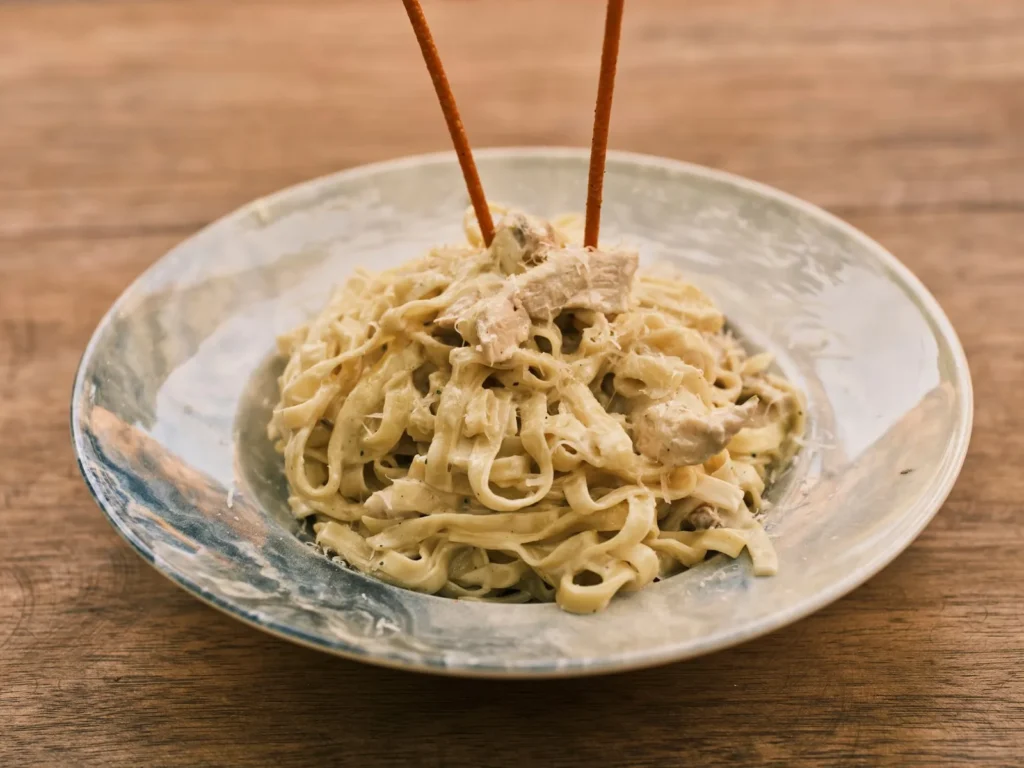
Chicken fettuccine alfredo with sundried tomatoes is a weeknight pasta that balances a rich parmesan cream sauce with the concentrated tang of oil-packed tomatoes. The chicken is seared separately so it stays juicy, then folded into the sauce at the end so it doesn't overcook. You get a restaurant-style plate without a pile of pans or a long ingredient list.
This version keeps the sauce based on real butter, heavy cream, and grated parmesan rather than a canned mix, which gives you control over thickness and salt. The sundried tomatoes cut through the dairy fat so the bowl doesn't feel heavy. It's a solid choice when you want something comforting but still built around a few clean flavors. If you enjoyed this, our fettuccine alfredo you is worth trying next. Making this chicken fettuccine alfredo with sundried tomatoes at home is surprisingly straightforward once you know the key steps.
Why You'll Love These Chicken Fettuccine Alfredo With Sundried Tomatoes
- Seared chicken adds protein and a browned edge the sauce can't give you on its own.
- Sundried tomatoes bring a chewy, sweet-tart bite that balances the cream.
- The sauce comes together in one skillet while the pasta boils.
- You can plate it in about 35 minutes from cold ingredients.
Ingredients You'll Need
- 12 oz fettuccine pasta
- 1.5 lb boneless skinless chicken breasts, cut into 1-inch strips
- 2 tbsp olive oil
- 3 tbsp unsalted butter
- 4 cloves garlic, minced
- 1.5 cups heavy cream
- 1 cup grated parmesan cheese, finely grated
- 2/3 cup sundried tomatoes in oil, drained and sliced
- 1/2 tsp salt
- 1/4 tsp black pepper
- 2 tbsp chopped parsley
Ingredient Substitutions
Heavy cream: Replace with an equal volume of half-and-half for a lighter sauce. Half-and-half contains less fat, so the sauce won't thicken as firmly and can break if boiled hard; keep it at medium-low heat once added. Expect a looser coat on the noodles and a slightly less round dairy flavor. The chicken fettuccine alfredo with sundried tomatoes works well for weeknight cooking when time is limited.
Fettuccine pasta: Use an equal weight of tagliatelle or pappardelle if fettuccine isn't available. These wider cuts hold the same amount of sauce but feel broader on the fork, so the chicken-to-pasta ratio shifts slightly. Cook time stays within the 10 to 12 minutes range for dried ribbon pasta. Storing leftover chicken fettuccine alfredo with sundried tomatoes correctly keeps it tasting good for days.
Parmesan cheese: Swap for an equal weight of grana padano for a milder, less salty finish. Grana padano melts the same way but lacks parmesan's sharp nose, so the sauce reads sweeter. You may want to add a pinch more salt to compensate. For the best results with this chicken fettuccine alfredo with sundried tomatoes, read through all the steps before starting.
Sundried tomatoes in oil: Use 1/2 cup dry-packed sundried tomatoes rehydrated in warm water for 10 minutes. Dry-packed tomatoes are firmer and less oily, so the dish loses some of its slick mouthfeel and needs an extra tablespoon of olive oil in the sauce. The tartness is brighter and the color is deeper red. For another easy option, check out our fettuccine alfredo you.
Step-by-Step Instructions
- Bring a large pot of salted water to a boil and cook the fettuccine for 10 to 12 minutes until al dente. Drain and reserve 1/2 cup of the pasta water before setting the noodles aside.
- Pat the chicken strips dry and season with the salt and pepper. Heat the olive oil in a large skillet over medium-high heat and sear the chicken for 4 to 5 minutes per side until golden and cooked through at 165°F internally. Remove to a plate.
- Lower the skillet to medium heat and add the butter. When it foams, add the garlic and cook for 45 seconds until fragrant but not browned.
- Pour in the heavy cream and bring to a gentle simmer over medium-low heat. Let it reduce for 3 minutes until it coats a spoon.
- Whisk in the parmesan a handful at a time until smooth, then stir in the sliced sundried tomatoes. If the sauce is too tight, add pasta water a tablespoon at a time.
- Return the chicken and any resting juices to the skillet with the cooked fettuccine. Toss over low heat for 2 minutes until everything is warmed and coated. Top with parsley and serve immediately.
Pro Tips
Cut the chicken into even 1-inch strips so every piece hits the same doneness window and none stay raw in the center while others dry out. Uneven pieces are the main reason home sears look inconsistent.
Grate the parmesan yourself from a wedge instead of using pre-shredded cheese. Cellulose on bagged cheese prevents a clean melt and leaves a grainy film on the sauce.
Read technique guidance from pasta sauce basics if you want to understand why cream sauces tighten off heat rather than on a rolling boil. Pulling the pan early protects the fat emulsion.
Save the pasta water before draining so you can loosen the sauce without diluting flavor. The starch in that water helps the cream cling to the noodles instead of pooling at the bottom of the bowl.
Common Mistakes to Avoid
Boiling the cream after the cheese goes in makes the sauce split into oil and curds. Keep the heat at medium-low heat and move the pan if your burner runs hot.
Skipping the chicken rest step lets the juices run out onto the cutting board instead of staying in the meat. A 2 minute rest off heat keeps the strips tender when they return to the skillet.
Adding all the parmesan at once creates clumps that never fully dissolve. Add it in thirds with a whisk so each portion melts before the next hits the pan.
Serving Suggestions
Plate the pasta in shallow bowls with a sprinkle of extra parmesan and a few whole sundried tomato slices on top for color. A side of baked feta works as a salty opener before the main bowl.
For a fuller table, pair it with a simple green salad dressed in lemon juice to echo the tomato acidity. The crisp leaves reset the palate between creamy bites.
Storage and Reheating
Cooled leftovers keep in an airtight container in the fridge for up to 3 days. Dairy-based chicken pasta shouldn't sit out longer than 2 hours before refrigeration.
Reheat in a skillet over low heat with a splash of cream or water, stirring until the chicken reaches 165°F internally. Avoid the microwave if you can, since it heats unevenly and toughens the strips.
This dish freezes poorly because the cream sauce separates when thawed, so plan to eat it fresh rather than batch freezing. If you must freeze, do it before adding the cheese and rebuild the sauce on reheating.
Recipe Variations
Spicy Version
Add 1/2 tsp red pepper flakes with the garlic in step three for a steady heat that builds behind the cream. The tomatoes already carry acidity, so the chili reads as warmth rather than sharp burn. Keep the flakes modest so the parmesan still comes through.
Chicken Parmigiana Side
Serve the noodles under a breaded cutlet from our chicken parmigiana instead of the seared strips for a crunchier plate. The crisp coating holds up for about 5 minutes before softening in the sauce, so plate it separately and set it on top at the table.
Low-Carb Option
Replace the fettuccine with 14 oz steamed cabbage ribbons or shirataki noodles to drop the starch load. These swaps don't absorb sauce the same way, so double the sundried tomatoes for flavor density. Expect a lighter bite with the same cream-parmesan base.
Lemon Chicken Twist
Use the searing method from our creamy lemon chicken and finish the sauce with 1 tsp lemon zest. The citrus lifts the dairy and pairs with the tomato tang without adding liquid that thins the coat.
Caesar Chicken Match
Swap the plain seared chicken for strips from our caesar chicken bake to add herb notes from the marinade. Since that chicken is already cooked, fold it in at the final toss rather than searing, which saves 8 minutes on a busy night.