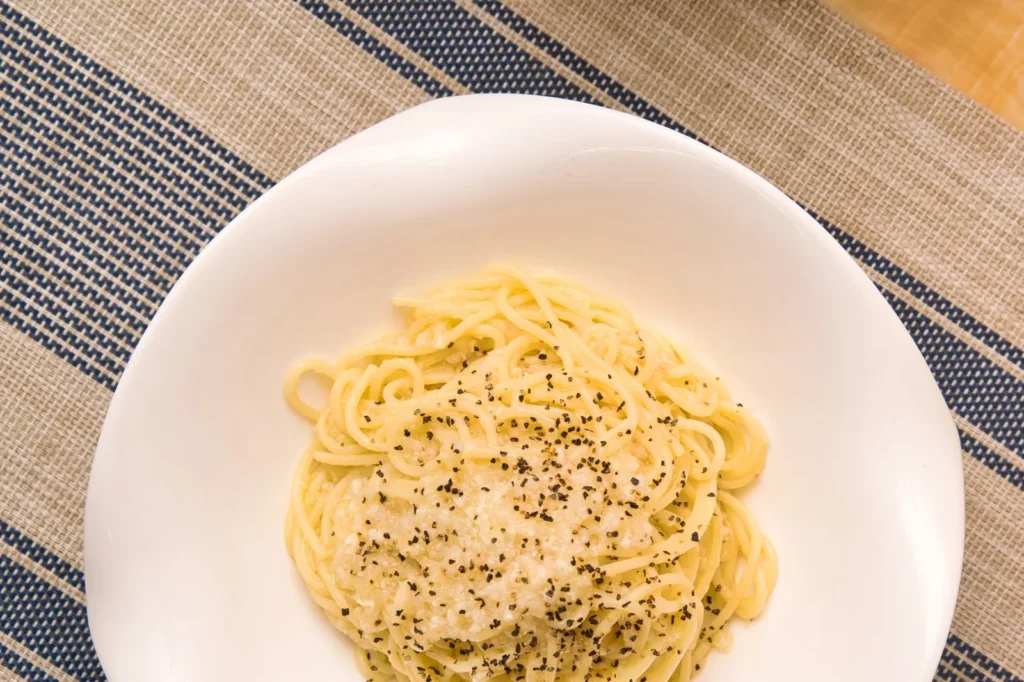
Our cacio e pepe spaghetti squash turns the Roman pasta classic into a low-carb dinner by swapping noodles for roasted squash strands. You get the same creamy pecorino sauce and sharp black pepper bite without the wheat. This version is built so the sauce clings to the squash instead of pooling at the bottom of the bowl.
The method matters more than the ingredient count here. Spaghetti squash releases water as it cooks, and that moisture is what ruins the sauce if you don't handle it. We roast the squash dry, then build the cheese emulsion off the heat so it stays silky. If you enjoyed this, our california spaghetti salad is worth trying next. Making this cacio e pepe spaghetti squash at home is surprisingly straightforward once you know the key steps.
Why You'll Love These Cacio E Pepe Spaghetti Squash
- Ready in about 45 minutes with one sheet pan and one skillet
- Naturally gluten free and under 10 net carbs per serving
- Uses only five ingredients you can find at any grocery store
- The pecorino pepper sauce tastes like the real Roman dish
Ingredients You'll Need
- 1 medium spaghetti squash (about 2.5 lb), halved and seeded
- 2 tbsp olive oil, divided
- 1 cup finely grated pecorino romano (packed, about 3 oz)
- 1.5 tsp coarsely cracked black pepper, divided
- 1/4 cup reserved squash roasting liquid or warm water
Ingredient Substitutions
Pecorino romano: Replace with an equal weight of aged parmesan if you need a milder, nuttier profile. Parmesan melts a touch more smoothly but lacks the salty tang that defines cacio e pepe spaghetti squash. You may need to cut the pepper back by half a teaspoon so the softer cheese isn't overwhelmed.
Olive oil: Use 2 tbsp of melted butter for a rounder, richer mouthfeel on the squash surface. Butter browns faster than oil, so drop the oven temp by 10°C if you brush it on before roasting. The final dish reads slightly sweeter and less grassy. The cacio e pepe spaghetti squash works well for weeknight cooking when time is limited.
Black pepper: Swap the cracked pepper for 1 tsp finely ground pepper plus 1/2 tsp crushed pink peppercorns for a floral note. Whole pink berries soften the bite and add a pale color speckle to the sauce. Keep the quantity small or the sauce turns perfumey rather than sharp.
Reserved squash liquid: Use 1/4 cup warm low-sodium chicken broth if your squash dried out in the oven. Broth adds savory depth but also salt, so reduce any added cheese saltiness by grating finer. The emulsion will be a shade lighter in color. For another easy option, check out our california spaghetti salad.
Step-by-Step Instructions
- Heat the oven to 200°C / 400°F and line a sheet pan with parchment. Brush the cut squash faces with 1 tbsp olive oil and sprinkle with 1/2 tsp pepper.
- Roast cut-side down for 25–30 minutes until a knife slides into the flesh with no resistance. Tip the halves up and pour out the pooled liquid into a cup.
- Scrape the flesh with a fork into strands directly onto the pan, then roast 5 minutes to drive off surface water until the strands look dry, not glossy.
- Warm the remaining 1 tbsp olive oil and 1 tsp pepper in a skillet over medium-low heat for 90 seconds until you smell toasted spice, then remove from heat.
- Add the squash strands to the skillet and toss with 2 tbsp of the reserved liquid. Let it sit 1 minute so the strands absorb warmth.
- Add the pecorino in three batches, tossing off heat each time, adding a splash more liquid if the sauce looks tight. Stop when the strands are coated and the sauce is creamy, not clumpy.
Pro Tips
Roast the squash a day ahead and store the strands uncovered in the fridge so extra moisture evaporates. Dry strands are the difference between a sauce that coats and one that slides off.
Grate the pecorino as finely as your microplane allows. Fine shreds melt into a smooth emulsion instead of forming rubbery clumps when they hit the warm squash.
Always pull the skillet off the burner before adding cheese. The emulsified sauce technique fails above gentle warmth because the fats separate and the dairy seizes.
Crack the pepper coarsely by hand rather than using pre-ground. The larger pieces bloom in warm oil and give the cacio e pepe spaghetti squash its signature speckled bite.
Common Mistakes to Avoid
Skipping the second roast after scraping leaves the squash watery. That released liquid thins the cheese sauce into a soup, so never skip the dry-off roast.
Adding all the cheese at once causes clumping. The proteins bind before they can spread, leaving lumps; add it in thirds while tossing constantly.
Using a wet squash from the fridge without reheating means the sauce cools on contact. Bring strands to room temp or warm them in the skillet first for a creamy coat.
Serving Suggestions
Plate the squash in a shallow bowl and finish with extra cracked pepper and a few pecorino shavings. A side of spaghetti arrabbiata works if you want a tomato contrast on the table.
For a fuller meal, add a protein like halibut with chimichurri alongside the squash. The herbal sauce cuts the cheese richness well.
Storage and Reheating
Keep leftovers in an airtight container in the fridge for up to 3 days. The cheese sauce firms as it cools, which is normal for pecorino-based coatings.
Reheat in a skillet over medium-low heat with a splash of water, tossing until steaming. Reach 74°C / 165°F internally if any meat was added as a side in the same container.
This dish does not freeze well because the squash turns mushy on thaw. Make a fresh batch rather than storing it past the fridge window of up to 3 days.
Recipe Variations
Spicy Version
Add 1/2 tsp red pepper flakes to the oil with the black pepper during the toast step. The heat builds a slow burn that complements the salty cheese. Expect a warmer finish and faint red speckles in the sauce.
Butternut Base
Swap the spaghetti squash for butternut squash gnocchi if you want a starchier chew. Boil the gnocchi separately, then toss with the same pecorino emulsion. The result is denser and less stringy than the original squash strand format.
Protein Add-In
Fold in 1 cup of shredded rotisserie chicken after the cheese goes in. The meat absorbs the pepper sauce and makes the bowl a full dinner. Add it off heat so the poultry stays tender rather than stringy.
Roasted Veg Mix
Roast 1 cup of butternut pasta cubes with the squash for a mixed texture plate. The cubes stay firm while the strands stay soft. Toss both together at the end so the sauce reaches every piece.