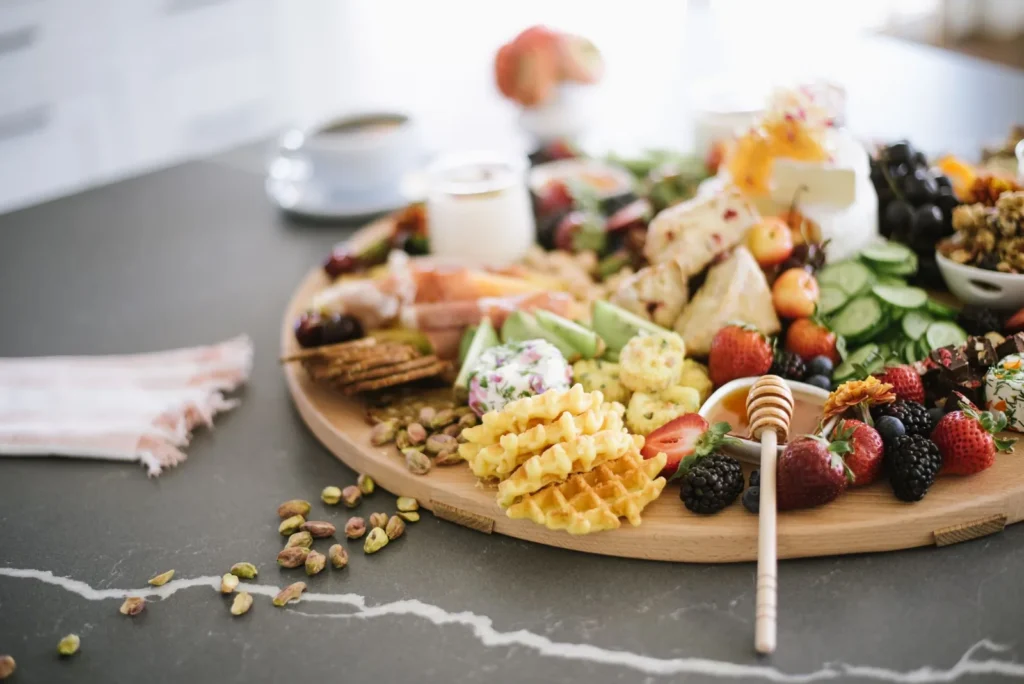
A breakfast charcuterie board is the easiest way to feed a group without standing at the stove for an hour. It brings cured meats, soft cheeses, fresh fruit, and warm pastry onto one shared surface so everyone grabs what they like. This guide shows how to balance textures and flavors so the board looks full and tastes coherent.
The method works because cold and room-temperature items carry the board while one hot element adds comfort. You control portion size by choosing smaller cuts and more variety rather than large slabs. Below you'll find a practical ingredient list, swaps, and assembly steps that hold up for brunch crowds. If you enjoyed this, our image is worth trying next. Making this breakfast charcuterie board at home is surprisingly straightforward once you know the key steps.
Why You'll Love These Breakfast Charcuterie Board
- Mixes make-ahead items with one quick bake so prep stays under 25 minutes.
- Flexible for 2 or 12 people by scaling meats, cheeses, and fruit counts.
- Covers salty, sweet, creamy, and crunchy in each bite without extra cooking.
- Lets guests self-serve, which frees you to enjoy the meal instead of plating.
Ingredients You'll Need
- 4 oz prosciutto, thinly sliced
- 4 oz soppressata, cut into 1/4-inch rounds
- 6 oz brie wheel, room temperature
- 4 oz aged cheddar, cubed
- 1 cup plain Greek yogurt
- 2 tbsp honey
- 1 cup strawberries, hulled and halved
- 1 cup red grapes, stemmed
- 2 kiwi, peeled and sliced
- 4 mini croissants
- 4 oz almond crackers
- 1/2 cup pitted olives
- 2 tbsp whole grain mustard
- 1 tbsp fresh thyme leaves
Ingredient Substitutions
Prosciutto: Replace with an equal weight of smoked salmon for a seafood-forward board. Salmon brings a softer bite and briny note, so reduce added salt elsewhere and skip the olives if you want less salt overall. The board reads lighter and pairs better with the yogurt dip than with cheddar. The breakfast charcuterie board works well for weeknight cooking when time is limited.
Brie wheel: Use an equal weight of goat cheese log for a tangier, firmer spread. Goat cheese holds shape at room temperature longer than brie, which softens fast in warm rooms. Expect a sharper flavor that matches the mustard and cuts the fruit sweetness. Storing leftover breakfast charcuterie board correctly keeps it tasting good for days.
Mini croissants: Swap with an equal count of plain bagels halved for a denser starch. Bagels need toasting to avoid a doughy center and add chew rather than flake. They also soak up yogurt dip better but hide the board's lighter items if stacked. For the best results with this breakfast charcuterie board, read through all the steps before starting.
Greek yogurt: Replace with an equal volume of sour cream for a richer, less tangy base. Sour cream whips smoother with honey and stays stable uncovered for up to 2 hours. The dip loses protein but gains a silky mouthfeel against crisp crackers.
Step-by-Step Instructions
- Set the brie and cheddar on the board's center at room temperature so they soften for easy spreading.
- Fold prosciutto into ribbons and lay soppressata rounds in a small pile at opposite corners on a 14-inch board.
- Spoon Greek yogurt into a ramekin, drizzle honey, and place near cheese with thyme sprinkled on top.
- Arrange strawberries, grapes, and kiwi in open spaces, keeping colors separate for contrast.
- Warm croissants at 180°C / 350°F for 5 minutes until golden and crispy, then set at board edge.
- Fill gaps with almond crackers, olives, and mustard so no bare wood shows between items.
Pro Tips
Cut cheeses into varied shapes so guests don't need a knife for every bite. Cubes, wedges, and a wheel with a spreader cover different textures.
Use a wooden serving board with a lip to stop crackers rolling off when the table gets bumped. Flat trays leak crumbs onto the cloth.
Prep fruit the night before and store in sealed containers so morning assembly takes 10 minutes. Keep herbs dry until plating to avoid black spots.
Layer a breakfast drink shot beside the board for a paired morning bite without extra dishes. Small glasses keep pours controlled.
Common Mistakes to Avoid
Overcrowding the board makes items touch and transfer flavors you didn't want, like olive brine onto fruit. Leave a finger-width gap between wet and dry foods.
Skipping the warm element leaves the spread cold only, which feels thin for cold mornings. One baked item adds weight and aroma.
Putting out a whole cheese block with no cutter means guests tear it awkwardly. Portion ahead or supply a knife that reaches the board.
Serving Suggestions
Add a non alcoholic toddy for a warm cup that suits the meats without alcohol at the table. It steams gently beside the croissants.
Set the board on a linen runner so crumbs catch and the wood tone pops against white cloth. Pass small plates so guests don't overload hands.
Storage and Reheating
Wrap cured meats and hard cheese in paper and refrigerate up to 3 days after disassembly. Soft brie keeps up to 2 days and should be tossed if it smells ammonia-like.
Reheat croissants at 180°C / 350°F for 5 minutes until golden and crispy again. Discard yogurt dip if left out beyond 2 hours since dairy spoils fast.
Recipe Variations
Vegan Spread
Drop meats and animal cheese, using smoked almonds and cashew spread instead. The board stays crunchy and creamy with vegan bulgogi as a warm center. Expect a lighter salt profile and no dairy cleanup.
Low-Carb Option
Remove croissants and crackers, doubling olives and adding celery sticks. The board drops starch but keeps fat and protein high for a curry paste dip swap. Guests get crunch from raw veg instead of bread.
Italian Brunch
Swap cheddar for provolone and add fig jam with a puttanesca side in a small bowl. The flavor leans tomato and brine with sweet fruit offset. It reads heavier than the base board but suits dinner guests.