Guide to Basil Pesto: Flavor and Freshness
Basil pesto is more than just a sauce; it’s an experience. This vibrant green jewel of Italian cuisine instantly elevates any dish it touches, bringing the bright, aromatic essence of summer right to your plate.
The classic version, originating from the Liguria region of Italy, is a simple harmony of ingredients that, when perfectly blended, creates a flavor profile that is both intensely savory and incredibly fresh. It’s a foundational flavor every home cook should master.
We’re diving deep into what makes basil pesto such a culinary superstar, from the ingredients that matter most to the surprising ways you can use it. Get ready to awaken your taste buds!
Easy Basil Pesto Recipe
While the core concept is straightforward, achieving a truly luxurious basil pesto requires attention to detail. The process is quick, but the resulting flavor payoff is immense.
The sheer versatility of this sauce means you can prepare a batch and use it throughout the week in countless creative ways, transforming simple meals into something special.
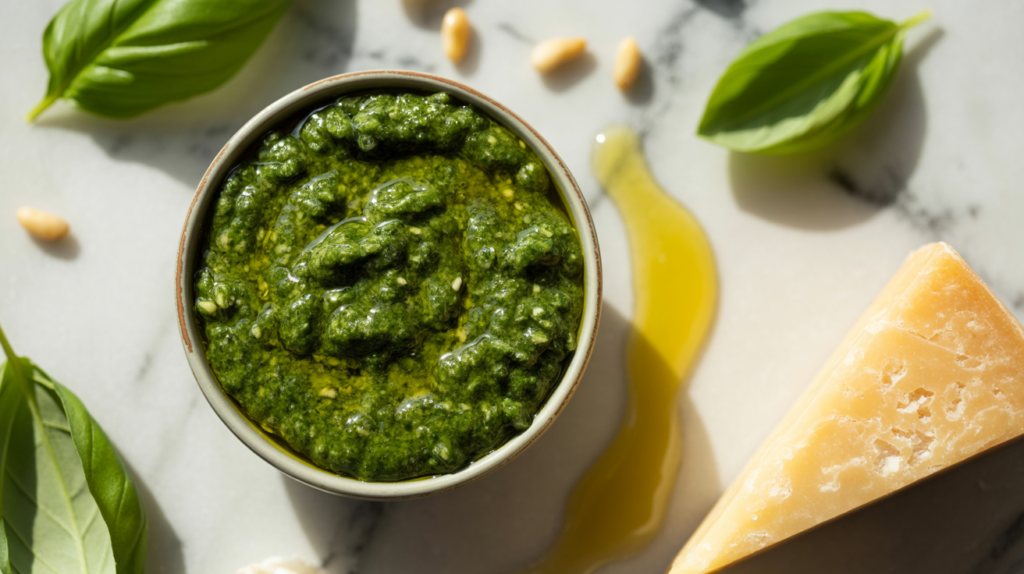
It’s about balancing the five core elements—basil, pine nuts, garlic, cheese, and olive oil—into a smooth yet texturally interesting emulsion.
Ready to see how simple it is to whip up your own homemade basil pesto? If you’re looking for more quick and delicious inspiration, check out this incredible Spinach Artichoke Dip while you wait for your pesto water to boil.
Best Ingredients for Basil Pesto
The secret to truly great pesto lies almost entirely in the quality and freshness of your components. You can’t hide inferior ingredients when the recipe is this minimal.
The basil itself must be vibrant green, freshly picked, and free of any wilting or black spots. Its potent, sweet, peppery aroma is the heart of the dish.
You must use high-quality, extra virgin olive oil. The oil binds the ingredients and contributes its own fruity, slightly peppery notes, so choose one you would happily use for dipping bread.
Pine nuts, the traditional choice, offer a delicate, buttery richness. Lightly toasting them can deepen their flavor, but some prefer them raw for a softer texture.
Taste & Texture Highlights
The signature taste of basil pesto is a complex interplay of contrasts that hits every part of the palate.
There’s the bright, sweet-peppery lift from the fresh basil, immediately followed by a sharp, salty tang from the hard Italian cheese.
A gentle, underlying warmth comes from the raw garlic, which should enhance without overpowering. The extra virgin olive oil wraps everything together, smoothing the sharp edges.
Texturally, a perfect pesto is not completely smooth like a puree. It should retain a slight grittiness or coarseness from the crushed nuts and cheese, giving it satisfying body.

Flavor Combinations That Work
The flavor profile of homemade basil pesto is so robust, it acts as a wonderful anchor for many different ingredients and cuisines.
It pairs naturally with the bright acidity of tomatoes, making it a perfect component for bruschetta or a simple caprese salad.
The richness of the sauce cuts beautifully through the fattiness of grilled chicken or pan-seared salmon, offering a fresh counterpoint.
It also works surprisingly well with subtle, earthy flavors, such as roasted root vegetables or a delicate white fish like cod. Think beyond pasta!
Health Benefits of Basil Pesto
While it is an energy-dense sauce, the ingredients in basil pesto offer genuine nutritional value, making it a flavorful addition to a healthy diet.
Fresh basil is rich in antioxidants, particularly flavonoids and essential oils, which have been studied for their potential anti-inflammatory benefits.
Olive oil is primarily monounsaturated fat, known to be heart-healthy. It helps the body absorb the fat-soluble vitamins present in the other ingredients.
The pine nuts contribute healthy fats, protein, and essential minerals like magnesium and zinc.
Nutrition Facts & Calories
Understanding the nutritional breakdown of basil pesto helps you incorporate it mindfully into your meals.
Because it relies heavily on olive oil and nuts, it is naturally high in healthy fats and thus calorie-dense. A small serving goes a long way.
The calories primarily come from the heart-healthy fats, making it a satiating sauce that helps you feel full longer.
It’s also an excellent source of Vitamin K from the basil and calcium from the hard cheese used, such as Parmigiano-Reggiano.
Quick Tips for Making Basil Pesto
To achieve the best possible result with your vibrant green pesto, a few pro tricks can make all the difference.
Keep it Cool: The friction from a food processor can generate heat, which can oxidize the basil and turn your beautiful green sauce brown. Use short pulses and add a few ice cubes to the mixture to keep the color bright.
Oil Last: Drizzle the extra virgin olive oil in slowly at the very end. This helps you control the consistency and ensures the oil emulsifies properly with the other ingredients.
Blanching Basil: For an intensely green, professional-looking pesto, quickly blanch the basil leaves in boiling water and shock them in ice water before blending. This locks in the color.
Serving Suggestions
The most common use for basil pesto is tossed with pasta, but its application extends far beyond that Italian staple.
- Elevated Dips: Stir a spoonful into hummus, plain Greek yogurt, or sour cream for a brilliant, herbaceous dip for vegetables or chips.
- Pizza/Flatbread: Use it instead of a traditional tomato sauce as the base for a fresh, basil-forward pizza.
- Soup Swirl: Drop a dollop into a bowl of minestrone, vegetable, or potato soup just before serving to add a burst of flavor.
- Sandwich Spread: Spread a thin layer on a grilled cheese, turkey sandwich, or wrap for a massive flavor upgrade.

Perfect Pairings / Meal Ideas
Thinking about the full menu? Basil pesto is an ideal component in a variety of balanced meals.
For a simple yet elegant lunch, toss it with spaghetti, sliced cherry tomatoes, and small, fresh mozzarella balls.
Use it as a marinade base for grilled shrimp or chicken before grilling. The oil helps tenderize and the flavor penetrates the meat beautifully.
A fantastic appetizer is simply spreading pesto over warm crusty bread slices or incorporating it into a savory pastry filling.
Presentation Tips
Because basil pesto has such a beautiful, vibrant color, presentation is key to showcasing its appeal.
When serving with pasta, don’t mix it fully in the pot. Instead, toss most of the pasta with the pesto, then finish with a swirl of extra pesto and a grating of cheese on top of each serving.
Garnish your pesto dishes with a few fresh basil leaves and a sprinkle of chopped pine nuts for color contrast and texture.
The bright green contrasts wonderfully with white dinnerware, making the dish visually pop. A small drizzle of extra virgin olive oil on top adds a desirable sheen.
Pro Tips & Fun Facts
Here are a few final pieces of advice and interesting tidbits about this classic sauce.
Cheese Flexibility: While Parmigiano-Reggiano is standard, adding a touch of Pecorino Romano can introduce a sharper, more pungent saltiness. Try a mix!
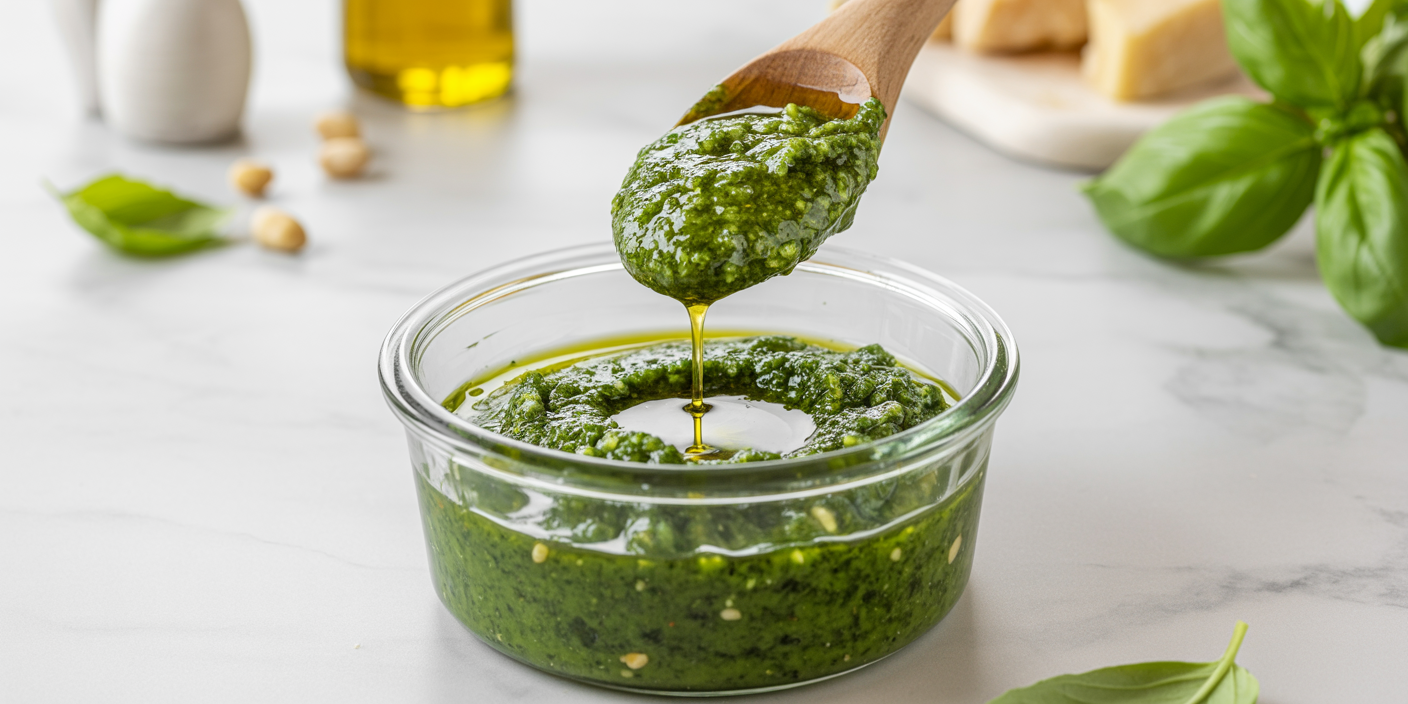
Storage Solution: To keep stored basil pesto from turning brown, pour a thin layer of olive oil over the top surface before sealing the container. This creates an airtight barrier.
Fun Fact: The name pesto comes from the Italian verb pestare, which means “to crush” or “to pound,” traditionally referring to the method of preparation in a marble mortar and wooden pestle.
Why You Should Try Basil Pesto
If you’ve only ever bought jars of store-bought pesto, you owe it to yourself to experience the depth and freshness of homemade basil pesto. The difference is truly night and day.
It’s a foundational recipe that empowers you to add a professional flair to your weeknight dinners with minimal effort.
From simple pasta to elaborate grilled feasts, basil pesto is the vibrant, aromatic powerhouse your kitchen needs. It’s the true taste of Italian simplicity and quality.
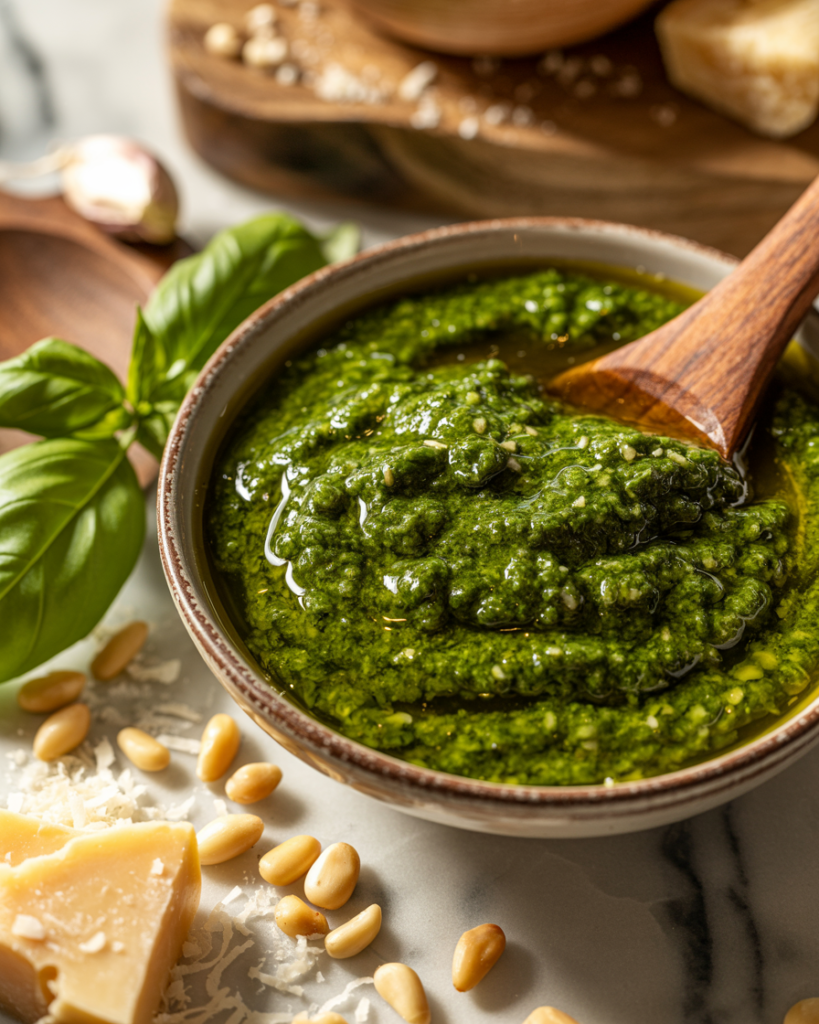

Basil Pesto
Description
A vibrant, intensely flavorful pesto sauce made with fresh basil, pine nuts, garlic, Parmigiano-Reggiano, and high-quality extra virgin olive oil. Perfect for pasta, spreading, or dipping.
Ingredient
Instructions
-
Prepare the Base (1 Minute)
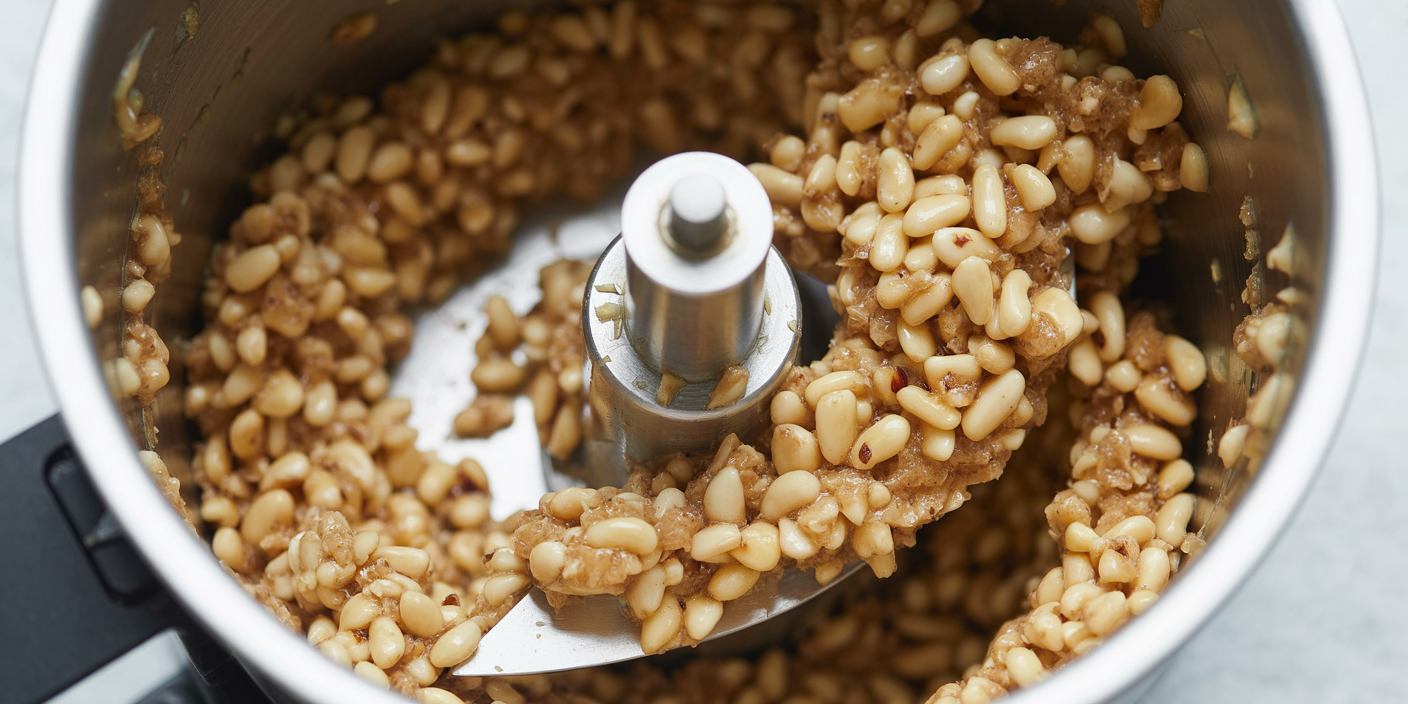
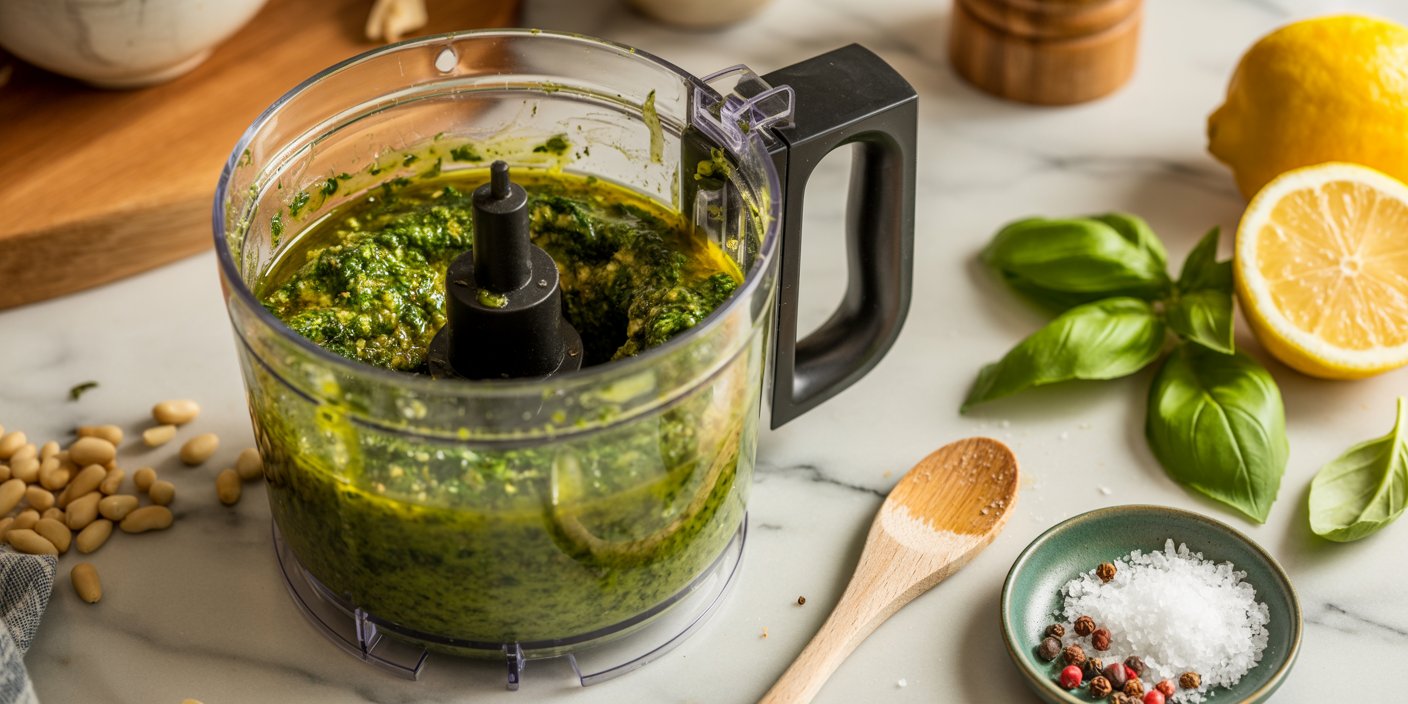
Place the pine nuts and garlic cloves into the bowl of a food processor. Pulse a few times until they are finely chopped and form a coarse paste-like texture. Texture Cue: The mixture should be chunky, not completely smooth.

-
Add the Basil and Cheese (3 Minutes)
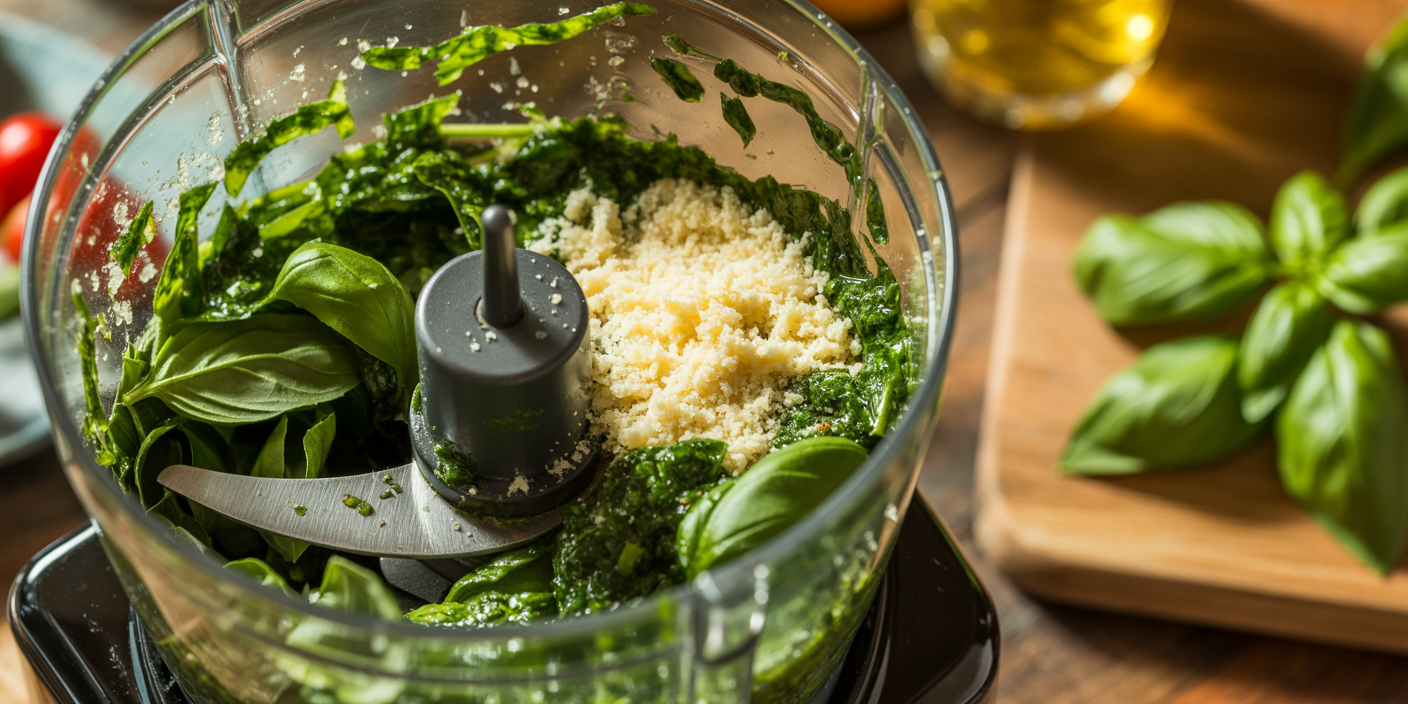
Add the packed fresh basil leaves, grated Parmigiano-Reggiano, and Pecorino Romano (if using) to the food processor. Add the salt and pepper. Pulse continuously, stopping occasionally to scrape down the sides, until the basil is finely chopped. Timing Cue: Use quick, short pulses (1-2 seconds each) to prevent the basil from overheating.
-
Emulsify with Oil (4 Minutes)
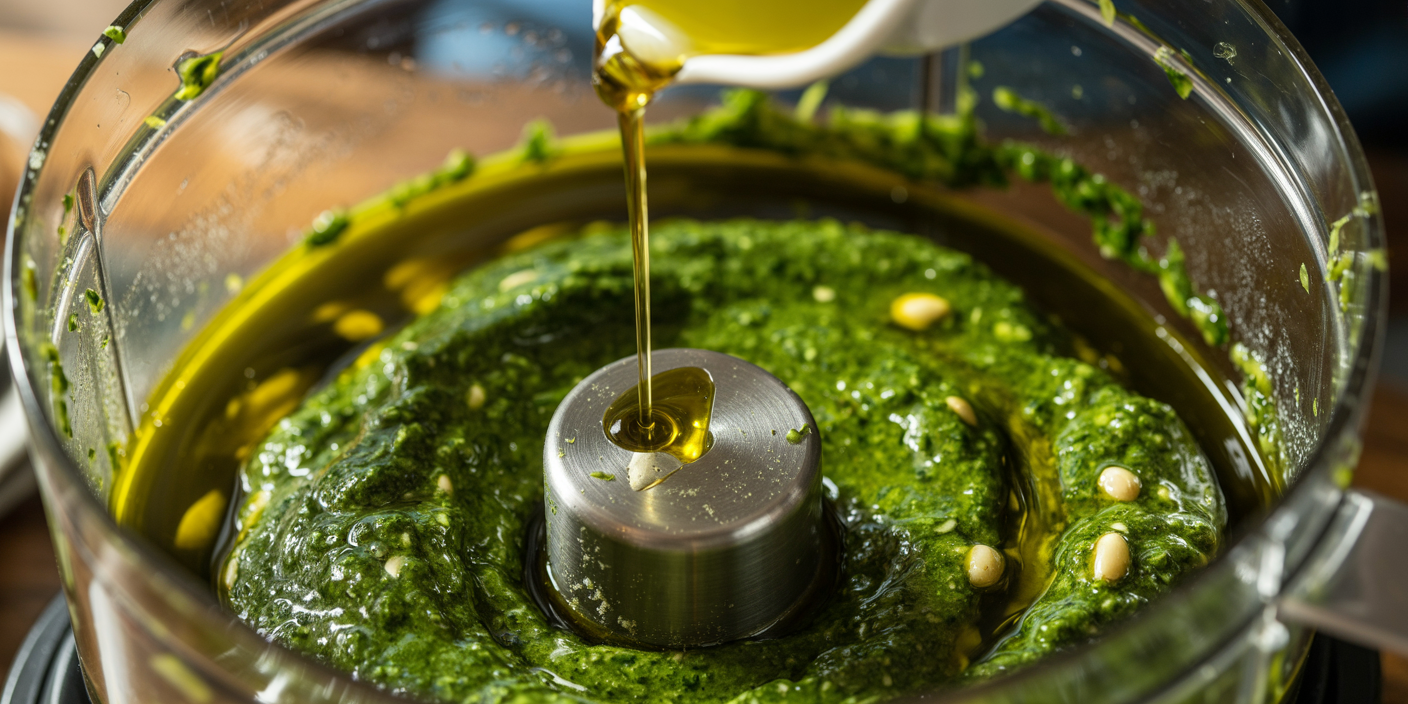
With the food processor running on low speed, slowly drizzle the extra virgin olive oil through the feed tube in a thin, steady stream. Continue processing until the oil is fully incorporated and the pesto reaches your desired consistency. Texture Cue: The final sauce should be a thick, vibrant green emulsion with a slightly grainy texture.
-
Taste and Adjust (2 Minutes)
Stop the processor and taste the pesto. Add more salt, pepper, or a squeeze of lemon juice if needed to brighten the flavors. Process briefly to mix.
-
Storage and Use
Transfer the basil pesto to an airtight container. If storing for more than a day, pour a thin layer of olive oil over the surface to prevent browning.
Nutrition Facts
Servings 8
- Amount Per Serving
- Calories 190kcal
- % Daily Value *
- Total Fat 18g28%
- Saturated Fat 3g15%
- Cholesterol 7mg3%
- Sodium 180mg8%
- Total Carbohydrate 3g1%
- Dietary Fiber 1g4%
- Protein 4g8%
- Vitamin A 13 IU
- Vitamin C 5 mg
- Calcium 10 mg
- Iron 6 mg
* Percent Daily Values are based on a 2,000 calorie diet. Your daily value may be higher or lower depending on your calorie needs.
Note
Toasting Pine Nuts: For a deeper flavor, spread the pine nuts on a baking sheet and toast them at 350°F (175°C) for 5 minutes until lightly golden. Let cool before using.
Alternative Equipment: If you do not have a food processor, a large mortar and pestle can be used, which is the traditional method and yields a slightly richer, more complex flavor.
Freezing: Pesto freezes beautifully. Freeze it in small ice cube trays, then transfer the cubes to a zip-top bag for easy, single-serving portions.