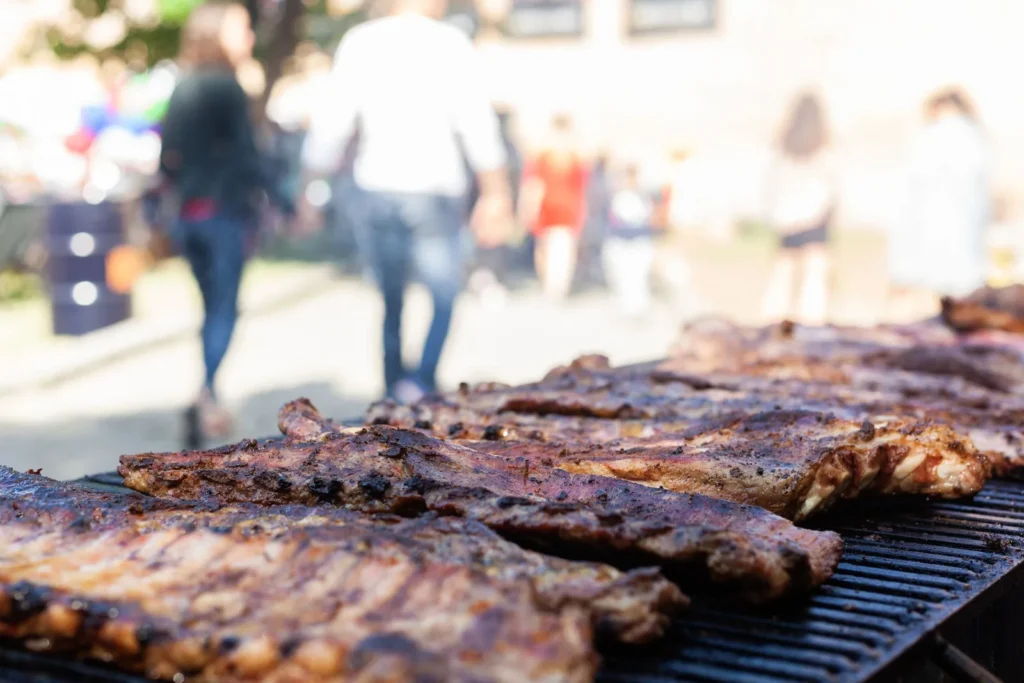
A reliable method for barbecued baby back ribs starts with a balanced dry rub and a long, low cook so the connective tissue breaks down without drying the meat. This recipe walks through exactly how to set up the smoker, hold a steady temperature, and sauce at the right moment. You'll end up with ribs that pull cleanly from the bone but still have a slight chew at the surface.
The approach here uses indirect heat and a modest amount of wood smoke rather than a blast of high heat. That keeps the pork juicy and lets the spice crust form slowly. If you've struggled with tough or sauced-too-early ribs, this plan fixes both problems with timing alone. If you enjoyed this, our colman s mustard is worth trying next. Making this barbecued baby back ribs at home is surprisingly straightforward once you know the key steps.
Why You'll Love These Barbecued Baby Back Ribs
- Predictable tenderness from a fixed 3-hour smoke at 110°C / 230°F before wrapping.
- A dry rub that doubles as a crust, not just surface seasoning, because of the sugar and paprika ratio.
- Sauce goes on at the end so it lacquers instead of burning over long heat.
- Uses only a kettle grill or bullet smoker, no specialist cabinet required.
Ingredients You'll Need
- 2 racks baby back ribs (about 1.8 kg total, membrane removed)
- 3 tbsp light brown sugar
- 2 tbsp smoked paprika
- 1 tbsp coarse kosher salt
- 1 tbsp black pepper, ground
- 1 tsp garlic powder
- 1 tsp onion powder
- 1/2 tsp cayenne pepper
- 1/2 cup apple juice (for the wrap)
- 3/4 cup thick tomato-based barbecue sauce
- 2 tbsp unsalted butter (for the wrap)
Ingredient Substitutions
Smoked paprika: Replace with an equal amount of sweet paprika plus 1 tsp of liquid smoke in the wrap step. Smoked paprika gives both color and a round woodsy note; sweet paprika alone looks right but tastes flat. You'll recover some smoke character from the liquid smoke, though the aroma is sharper and less layered than real wood. The barbecued baby back ribs works well for weeknight cooking when time is limited.
Light brown sugar: Use an equal weight of coconut sugar if you want a less sweet, more caramel-like crust. Coconut sugar is less hygroscopic, so the surface stays a touch drier and browns a shade darker. Expect a slightly firmer bark and a muted molasses note compared with brown sugar. Storing leftover barbecued baby back ribs correctly keeps it tasting good for days.
Apple juice: Swap for pear juice or plain water with 1 tsp of cider vinegar for acidity. The juice mainly steams the ribs during the wrap, so flavor impact is mild. Pear juice adds a floral sweetness; water with vinegar keeps things neutral and a bit brighter. For the best results with this barbecued baby back ribs, read through all the steps before starting.
Thick tomato-based barbecue sauce: Use a mustard-based sauce in equal volume for a tangier Lowcountry style finish. Mustard sauce won't caramelize the same way and stays looser, so apply it in the last 15 minutes only. The result is sharper and less sweet, with the pork flavor more exposed. For another easy option, check out our recipe tags.
Step-by-Step Instructions
- Remove the thin membrane from the back of each rack with a butter knife and paper towel grip, then pat the ribs dry with a towel.
- Mix brown sugar, smoked paprika, salt, black pepper, garlic powder, onion powder, and cayenne in a bowl. Coat both sides of the ribs with the rub, pressing it in; rest at room temperature for 20 minutes.
- Set a kettle grill for indirect heat and hold 110°C / 230°F with 2 small chunks of fruitwood. Place ribs bone-side down on the cool side with the lid closed.
- Smoke untouched for 3 hours, checking vent position only, until the surface looks dry and faintly mahogany.
- Lay each rack on heavy foil, add 1/4 cup apple juice and 1 tbsp butter per rack, wrap tight, and return to indirect heat for 2 hours.
- Open the foil, brush both sides with barbecue sauce, and place sauced-side up for 30 minutes unwrapped to set the glaze.
- Rest the ribs 10 minutes before slicing between bones with a sharp knife.
Pro Tips
Keep the grill vent mostly open so smoke moves through instead of stalling into bitter stagnation. A low and slow guide from Serious Eats explains why airflow matters as much as wood choice.
Trim the rib tips if your racks have them so the rack cooks evenly instead of steaming in its own fat pocket. Those trimmed pieces can go on the grill for a cook's snack.
Use a probe thermometer at the grate, not on the meat, to confirm ambient temperature before the ribs go on. A 5-degree drift over a long cook changes total time more than people expect.
Sauce in thin layers with a 10-minute gap if you want a thicker shell. One heavy coat tends to slide off when sliced because it never fully dried on the surface.
Common Mistakes to Avoid
Saucing too early burns the sugars and turns the top black and bitter. Wait until the wrap stage is done before any sauce touches the meat.
Skipping the membrane removal leaves a tough film that blocks rub and smoke. Pull it off completely or the back side stays rubbery after the long cook.
Cooking at too high a temperature firms the muscle before collagen melts, giving stringy ribs. Hold the low range steady rather than chasing a faster finish. You might also like our register.
Serving Suggestions
Slice into single bones and pile on a warm platter with pickles to cut the richness. A side of greek salad adds crunch and acid that balances the sweet glaze.
For a fuller plate, pair with lard bread to soak up any rendered juices. Keep napkins close since the glaze stays tacky at serving temperature.
Storage and Reheating
Refrigerate leftovers in an airtight container for up to 4 days and freeze for up to 3 months wrapped tight. Reheat covered at 150°C / 300°F until the center reaches 74°C / 165°F. Don't leave cooked ribs out longer than 2 hours before chilling.
If reheating from frozen, thaw overnight first so the interior warms before the glaze scorches. A short foil-wrap with a spoon of water prevents the surface from hardening. Pair this with our crab meat weight for more ideas.
Recipe Variations
Mustard Rub Version
Coat the ribs with 2 tbsp yellow mustard before the dry rub so the spices adhere and add tang. The mustard flavor cooks off, leaving a tighter crust and a sharper edge than the plain rub. Expect a slightly darker surface by the end of the smoke.
Cider Vinegar Mop
Spritz the ribs every 45 minutes with a mix of 1/4 cup cider vinegar and 1/4 cup water during the first 3 hours. This slows the bark set and keeps the surface from drying on windy days. The finished ribs taste a bit brighter and less sweet up top.
Charcoal Only Smoke
Skip fruitwood and rely on lump charcoal alone for a cleaner, less pronounced smoke. The rub carries more of the flavor load, so bump smoked paprika by 1 tbsp. The ribs come out milder but still deeply savory, closer to oven-cooked with a hint of ember.