

What to serve with duck breast comes down to balancing its rich, fatty meat with something bright, acidic, or earthy. A properly seared breast has crisp skin and a tender, rosy interior, and the right side dish keeps each bite from feeling heavy. This guide gives you concrete pairings, not vague advice, so you can build a complete plate with confidence.
The fat rendered from the skin is the key to flavor, but it also means you need contrast on the plate. Think sharp fruit sauces, bitter greens, or starchy roots that soak up the juices. Below you’ll find sides, grains, vegetables, and drinks that genuinely work with the meat rather than competing with it. If you enjoyed this, our dry brined turkey is worth trying next. Making this what to serve with duck breast at home is surprisingly straightforward once you know the key steps.
Why You’ll Love These What To Serve With Duck Breast
- Each pairing cuts the fat with acid, bitterness, or texture so the meat stays the star.
- You can mix a quick weeknight pan sauce with a slow-roasted root vegetable.
- Wine and cocktail matches are included, not just food sides.
- Every suggestion uses ingredients found in a normal grocery store.
Ingredients You’ll Need
- 2 duck breasts (about 170g each), scored and room temperature
- 300g baby potatoes, halved
- 2 oranges, juiced and zested
- 150g bitter greens such as radicchio
- 100g pitted cherries, fresh or frozen
- 1 tbsp honey
- 2 tbsp red wine vinegar
- 1 fennel bulb, thinly sliced
- 200g cooked farro
- 30g butter
- Sea salt and black pepper
Ingredient Substitutions
Baby potatoes: Replace with an equal weight of cubed rutabaga for a deeper, more earthy sweetness. Rutabaga holds its shape but cooks slower, so roast at 200°C / 400°F for an extra 10 minutes. The result is less starchy and pairs well with the duck’s fat. The what to serve with duck breast works well for weeknight cooking when time is limited.






Radicchio: Swap with an equal weight of endive if you want a milder bitter note. Endive wilts faster, so dress it after searing the duck and rest it only 2 minutes. Expect a softer crunch and a slightly less aggressive color on the plate. Storing leftover what to serve with duck breast correctly keeps it tasting good for days.
Farro: Use an equal weight of pearl barley for a chewier grain. Barley needs 25–30 minutes of simmering versus farro’s shorter time, so start it first. The plate gets a rounder, nuttier base that still catches the pan sauce. For the best results with this what to serve with duck breast, read through all the steps before starting.
Cherries: Replace with an equal weight of blackberries if cherries are out of season. Blackberries break down faster, so add them in the last 5 minutes of the sauce. The sauce turns darker and a touch more tart.
Step-by-Step Instructions
- Score the duck skin in a crosshatch, then season with salt. Place breast-side down in a cold pan and turn to medium-low heat so fat renders slowly for 8 minutes until skin is golden and crispy.
- Flip the breasts, cook 3 minutes on the flesh side, then rest on a board 5 minutes before slicing.
- Roast halved potatoes at 200°C / 400°F for 25–30 minutes until edges are brown and centers yield to a fork.
- Simmer orange juice, zest, cherries, and honey on medium heat 10 minutes until syrupy and coats a spoon.
- Toss radicchio and fennel with red wine vinegar and butter warmed on low heat 2 minutes until just wilted but still bright.
- Spoon farro onto plates, add potatoes, then sliced duck and the cherry-orange sauce over the top.
Pro Tips
Rest the duck before slicing so the juices redistribute instead of pooling on the plate. A 5 minutes rest makes the slice clean and pink throughout.
Use a sharp knife on the scored skin to avoid tearing the fat layer during cooking. A dull blade drags and leaves ragged edges that crisp unevenly.
For a reliable pan sauce method, see the pan sauce technique from Simply Recipes before you start reducing fruit juices.
Slice the breast thin against the grain so each piece gets skin, fat, and meat in one bite. Thick slices make the fat feel like a separate layer.
Warm your plates if the room is cool so the duck fat does not solidify before the first bite. A 30 seconds microwave on the plate works.
Common Mistakes to Avoid
Starting the duck in a hot pan seizes the skin and traps fat underneath, leaving a rubbery layer. Always begin on medium-low heat from cold.
Overcooking the cherries in the sauce turns them to mush and loses the tart pop. Pull the sauce when it coats a spoon, not when it darkens fully.
Dressing radicchio too early makes it limp and grey before serving. Toss it 2 minutes before plating for a crisp, bright contrast.
Skipping the farro or another grain leaves the plate sauceless and rich. The starch catches the cherry-orange drips and balances the fat.
Serving Suggestions
Plate the duck over farro with potatoes to one side and greens beneath the slices. A baked feta on the side adds salt that cuts the fat nicely.
For a drink, a Lillet spritz keeps the meal light with bitter citrus notes. If you prefer red, a cool-climate Pinot Noir matches without overwhelming.
A lamb lollipop on a shared board works if you’re serving a larger table alongside the duck.
Storage and Reheating
Cooked duck breast keeps in an airtight container for up to 3 days refrigerated. Store the sauce separately so the skin stays crisp on reheating.
Reheat sliced duck in a 150°C / 300°F oven 8 minutes until the internal temperature reaches 60°C / 140°F. Avoid the microwave, which rubberizes the meat.
Freeze the cherry-orange sauce for up to 2 months and thaw overnight before warming on low heat. The farro freezes poorly, so make it fresh.
Recipe Variations
Winter Root Version
Replace potatoes with roasted parsnip and carrot at 200°C / 400°F for 25–30 minutes. The sauce stays cherry-orange but the plate turns sweeter and more seasonal.
Red Wine Sauce
Swap the orange juice for 100ml red wine reduced with cherries on medium heat 12 minutes. Expect a deeper, savory sauce that pairs with steak pinwheels leftovers too.
Citrus Fennel Salad
Skip farro and serve duck over raw fennel and orange segments with vinegar. This eggplant rollatini side can replace potatoes for a lower-starch plate.
Smoked Cherry Glaze
Add 1 tsp smoked paprika to the cherry sauce for a campfire edge. The duck reads more rustic and matches a Manhattan cocktail better than a spritz.
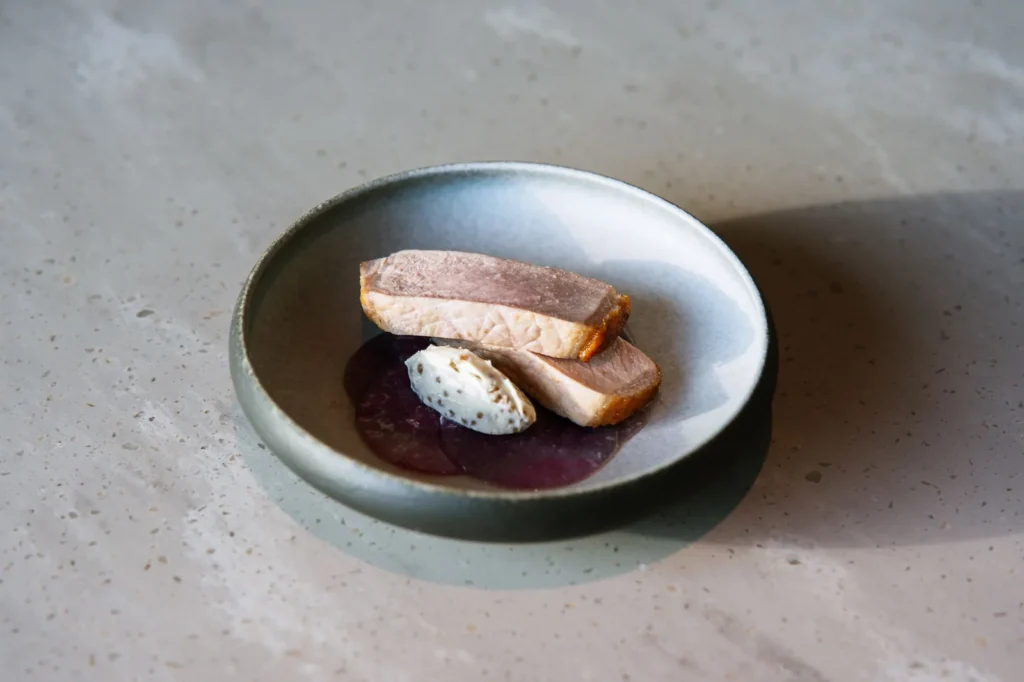

What To Serve With Duck Breast
Description
This guide shows how to serve seared duck breast with bright, acidic, and earthy sides like cherry-orange sauce, bitter greens, and farro to cut the rich fat.
Ingredients
Instructions
-
Score and season duck
Using a sharp knife, score the duck skin in a crosshatch pattern without cutting into the meat. Season both sides with sea salt and black pepper, then leave the breasts at room temperature so they cook evenly from a cold pan start.
-
Render duck skin
Place the duck breasts skin-side down in a cold pan and turn the heat to medium-low so the fat renders slowly for 8 minutes until the skin is golden and crispy and most fat has melted out. Do not move the breasts during this time to avoid tearing the fat layer.
-
Cook and rest duck
Flip the breasts and cook on the flesh side for 3 minutes over medium-low heat until lightly browned. Transfer to a board and rest for 5 minutes so juices redistribute and the slice stays pink and clean.
-
Roast potatoes
Arrange the halved baby potatoes on a tray and roast at 200°C / 400°F for 25–30 minutes until the edges are brown and the centers yield easily to a fork. Turn once halfway if you like more even browning.
-
Simmer fruit sauce
In a small pan, simmer the orange juice, zest, cherries, and honey on medium heat for 10 minutes until syrupy and it coats the back of a spoon. Pull it off when it coats a spoon, not when it darkens fully, to keep the tart pop of the cherries.
-
Wilt greens and fennel
Toss the radicchio and thinly sliced fennel with red wine vinegar and butter warmed on low heat for 2 minutes until just wilted but still bright in color. Dress them only at this point so they stay crisp and do not go limp or grey.
-
Spoon farro and potatoes
Spoon the cooked farro onto each plate as a base and add the roasted potatoes to one side. The starch will catch the cherry-orange drips and balance the duck fat on the plate.
-
Slice and plate duck
Slice the rested duck thin against the grain so each piece gets skin, fat, and meat in one bite. Lay the slices over the greens and spoon the cherry-orange sauce over the top to finish the plate.
Nutrition Facts
Servings 2
- Amount Per Serving
- Calories 520kcal
- % Daily Value *
- Total Fat 28g44%
- Saturated Fat 9g45%
- Cholesterol 105mg35%
- Sodium 620mg26%
- Total Carbohydrate 42g15%
- Dietary Fiber 6g24%
- Sugars 14g
- Protein 28g57%
* Percent Daily Values are based on a 2,000 calorie diet. Your daily value may be higher or lower depending on your calorie needs.
Note
- Storage: Keep cooked duck in an airtight container for up to 3 days refrigerated and store the sauce separately so the skin stays crisp.
- Reheating: Reheat sliced duck in a 150°C / 300°F oven 8 minutes until internal temperature reaches 60°C / 140°F; avoid the microwave which rubberizes meat.
- Pro tip: Warm your plates for 30 seconds in the microwave if the room is cool so the duck fat does not solidify before the first bite.
- Make ahead: Try our dry brined turkey next for another reliable brined protein method.
