

A honey glazed roast chicken gives you crisp skin and tender meat with a sweet, lightly caramelized coat that works for a weeknight dinner or a small gathering. This version uses a simple pan sauce built from honey, mustard, and butter so you don’t need special equipment or a long brine. You’ll get a bird that pulls apart cleanly and a glaze that sets without turning brittle.
The method keeps the oven hot enough to brown the skin while the cavity heat cooks the thighs through. We baste only twice, which protects the skin from steaming and keeps it shatter-crisp. If you like a lighter side, pair it with brussels sprouts roasted in the same oven. Making this honey glazed roast chicken at home is surprisingly straightforward once you know the key steps.
Why You’ll Love These Honey Glazed Roast Chicken
- Sticky honey glaze that browns without burning in under 90 minutes.
- Crisp skin from a dry surface and a two-stage roast, not a long brine.
- One roasting pan catches the drippings for a quick stovetop sauce.
- Leftovers hold well for sandwiches and grain bowls across three days.
Ingredients You’ll Need
- 1 whole chicken (about 1.6 kg / 3.5 lb), giblets removed
- 3 tbsp runny honey
- 2 tbsp Dijon mustard
- 40 g unsalted butter, melted
- 1 tbsp olive oil
- 4 garlic cloves, smashed
- 1 tsp fine salt
- 1/2 tsp black pepper
- 1 small lemon, halved
- 3 sprigs thyme
Ingredient Substitutions
Runny honey: Replace with an equal amount of maple syrup for a deeper, woodsy sweetness. Maple browns faster than honey, so drop the glaze oven temperature by 10°C for the final stage to avoid a bitter edge. The finished coat will be a little softer and less glossy. The honey glazed roast chicken works well for weeknight cooking when time is limited.
Dijon mustard: Use 1 tbsp whole-grain mustard plus 1 tbsp water for a milder, speckled glaze. Whole-grain mustard lowers the sharpness and adds small pops of texture on the skin. You may need to brush the glaze on in a thinner layer so the grains don’t scorch. Storing leftover honey glazed roast chicken correctly keeps it tasting good for days.
Unsalted butter: Swap with an equal weight of olive oil if you want a dairy-free bird. Oil gives less body to the glaze, so the coat will be thinner and slightly less shiny. Expect the skin to crisp a touch faster because there is no milk solid to brown. For the best results with this honey glazed roast chicken, read through all the steps before starting.
Thyme: Replace the 3 sprigs with 2 tsp dried oregano if fresh herbs are out. Dried oregano is more concentrated, so use less and tuck it inside the cavity to keep it from burning on the skin. The flavor shifts from green and light to warm and earthy. If you enjoyed this, our porchetta roast is worth trying next.
Step-by-Step Instructions
- Pat the chicken dry inside and out with paper towels, then place it on a rack in a roasting pan. Rub the skin with olive oil and season with salt and pepper, getting into the creases of the legs.
- Stuff the cavity with the halved lemon and thyme sprigs. Tie the legs with kitchen string and tuck the wing tips behind the shoulders so they don’t burn.
- Roast at 200°C / 400°F for 20 minutes to set the skin. The surface should look pale gold and dry, not wet or grey.
- Whisk honey, mustard, and melted butter into a glaze. Brush half over the bird, then lower the oven to 180°C / 350°F and roast 40 minutes.
- Brush the remaining glaze on and roast another 20 minutes, until the thickest thigh reads 74°C / 165°F and the skin is golden and crisp.
- Rest the chicken on a board for 15 minutes before carving so the juices redistribute and the glaze firms slightly.
Pro Tips
Dry the skin at least 30 minutes uncovered in the fridge before roasting; a dry surface browns instead of steaming. For a firmer glaze, brush the last coat at minute 50 rather than at the start of the final stage.
Roast on a rack so hot air hits the back and the skin renders evenly; a flat tray pools fat under the bird. Use a leave-in probe thermometer so you don’t open the oven and drop the heat near the end.
A quick pan sauce saves the drippings: pour off excess fat, add 100 ml stock, and simmer on medium-low heat for 5 minutes. For more on resting meat, see this carryover cooking explainer from The Kitchn.
If the glaze darkens too fast, tent a small piece of foil over the breast only. Keep the legs exposed so they finish cooking while the breast stays protected.
Common Mistakes to Avoid
Skipping the dry step leaves the skin rubbery because surface moisture steams it. Always pat the bird dry and let it sit uncovered before it goes into the oven.
Glazing too early causes the honey to burn before the meat is done. Wait until the skin has set and the oven has dropped to 180°C / 350°F before the first brush.
Carving right away loses juices back onto the board instead of into the meat. Rest the bird for the full 15 minutes even when you’re hungry. For another easy option, check out our honey garlic chicken.
Serving Suggestions
Slice the chicken and plate it with brussels sprouts and roasted potatoes for a full dinner. The glaze also pairs with a plain rice bowl and quick cucumber salad.
For a lighter plate, serve the thigh meat cold over greens with the pan sauce warmed as a dressing. A squeeze of the roasted lemon cuts the sweetness well.
If you want a second chicken dish on the table, chicken parmigiana balances the sweet roast with a tomato crust.
Storage and Reheating
Cut the meat off the bone and store it in an airtight container in the fridge for up to 3 days. Keep the skin separate if you want it crisp when reheated.
Reheat pieces in a 180°C / 350°F oven until the center hits 74°C / 165°F, about 12 minutes for thigh meat. Microwave reheating works but softens the skin.
The cooked chicken freezes for up to 2 months in a sealed bag with the air pressed out. Thaw overnight in the fridge before reheating for food safety. You might also like our french roast.
Recipe Variations
Orange Glaze
Replace the lemon in the cavity with one halved orange and add 2 tbsp orange juice to the glaze. The citrus lifts the honey and gives a softer, fruit-forward coat that browns a shade lighter.
Smoked Paprika Version
Add 1 tsp smoked paprika to the glaze before brushing for a warm, lightly smoky skin. The color deepens to a red-brown and the flavor reads more like a backyard roast.
Spatchcocked Bird
Remove the backbone and flatten the chicken before roasting to cut the time to about 50 minutes at 200°C / 400°F. The skin crisps across the whole surface because more of it meets the hot air.
Mustard-Free Coat
Drop the Dijon and use 1 tbsp soy sauce plus the honey and butter for a salty-sweet glaze. The skin browns darker and the flavor leans savory, closer to a honey garlic profile.

Honey Glazed Roast Chicken
Description
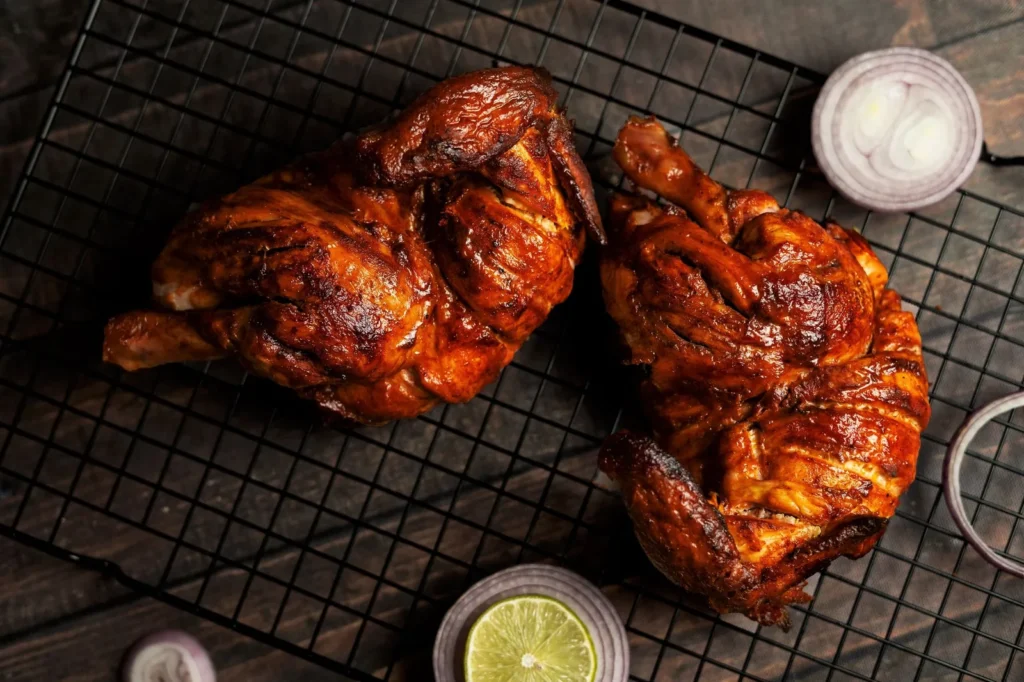
A honey glazed roast chicken with crisp, shatter-crisp skin and tender meat under a sweet, lightly caramelized honey-mustard coat. It roasts in under 90 minutes using one pan and a quick stovetop sauce from the drippings.
Ingredients
Instructions
-
Dry and season chicken
Pat the chicken dry inside and out with paper towels, then place it breast-up on a rack set inside a roasting pan so air can circulate. Rub the skin with the 1 tbsp olive oil and season with 1 tsp fine salt and 1/2 tsp black pepper, working the seasoning into the creases where the legs meet the body. The surface should feel dry and matte, not slick, which helps the skin crisp instead of steam.
-
Stuff and truss bird
Stuff the cavity with the 1 small lemon, halved and 3 sprigs thyme to perfume the meat from the inside as it roasts. Tie the legs together with kitchen string and tuck the wing tips behind the shoulders so they don't burn during the hot first stage. The bird should sit compact and stable on the rack before it goes into the oven.
-
Initial high heat roast
Roast the chicken in a preheated oven at 200°C / 400°F for 20 minutes to set the skin. The surface should look pale gold and dry, not wet or grey, which tells you the outer layer has firmed. Keep the oven closed during this stage so the heat stays high and the skin renders evenly.
-
Mix honey glaze
Whisk the 3 tbsp runny honey, 2 tbsp Dijon mustard, and 40 g melted unsalted butter together in a small bowl until smooth and glossy. This glaze builds the sticky, lightly caramelized coat without needing a long brine or special equipment. Set it near the stove so it is ready to brush as soon as the oven temperature drops.
-
First glaze and lower heat
Brush half of the glaze evenly over the bird, then lower the oven to 180°C / 350°F and roast for 40 minutes. The glaze should begin to tack up and turn golden as the meat cooks through. Avoid opening the oven often; use a leave-in probe if you have one to track the temperature without losing heat.
-
Final glaze and finish roast
Brush the remaining glaze over the chicken and roast for another 20 minutes, until the thickest part of the thigh reads 74°C / 165°F on a thermometer and the skin is golden and crisp. The juices should run clear and the glaze should be set but not brittle. If the breast darkens too fast, tent a small piece of foil over it while keeping the legs exposed.
-
Rest before carving
Rest the chicken on a cutting board for 15 minutes before carving so the juices redistribute and the glaze firms slightly. The internal temperature will hold at a safe range while the meat relaxes for cleaner slicing. Carving right away loses juices back onto the board instead of into the meat.
-
Make quick pan sauce
Pour off excess fat from the roasting pan, add 100 ml stock, and simmer on medium-low heat for 5 minutes to capture the drippings into a quick sauce. Stir and scrape the browned bits from the pan so the sauce picks up the honey-mustard flavor. Serve the sauce alongside the sliced chicken or as a warm dressing over leftovers.
Nutrition Facts
Servings 4
- Amount Per Serving
- Calories 520kcal
- % Daily Value *
- Total Fat 32g50%
- Saturated Fat 11g56%
- Cholesterol 165mg56%
- Sodium 680mg29%
- Total Carbohydrate 14g5%
- Dietary Fiber 1g4%
- Sugars 12g
- Protein 44g88%
* Percent Daily Values are based on a 2,000 calorie diet. Your daily value may be higher or lower depending on your calorie needs.
Note
- Dry the skin: Uncover the bird in the fridge for at least 30 minutes before roasting so the surface browns instead of steaming.
- Storage: Cut meat off the bone and refrigerate in an airtight container within 2 hours; keep skin separate and use within 3 days.
- Reheating: Warm pieces in a 180°C / 350°F oven until the center hits 74°C / 165°F, about 12 minutes for thighs, and don't reheat twice.
- Related roast: For a different centerpiece, our porchetta roast is worth trying next.
