

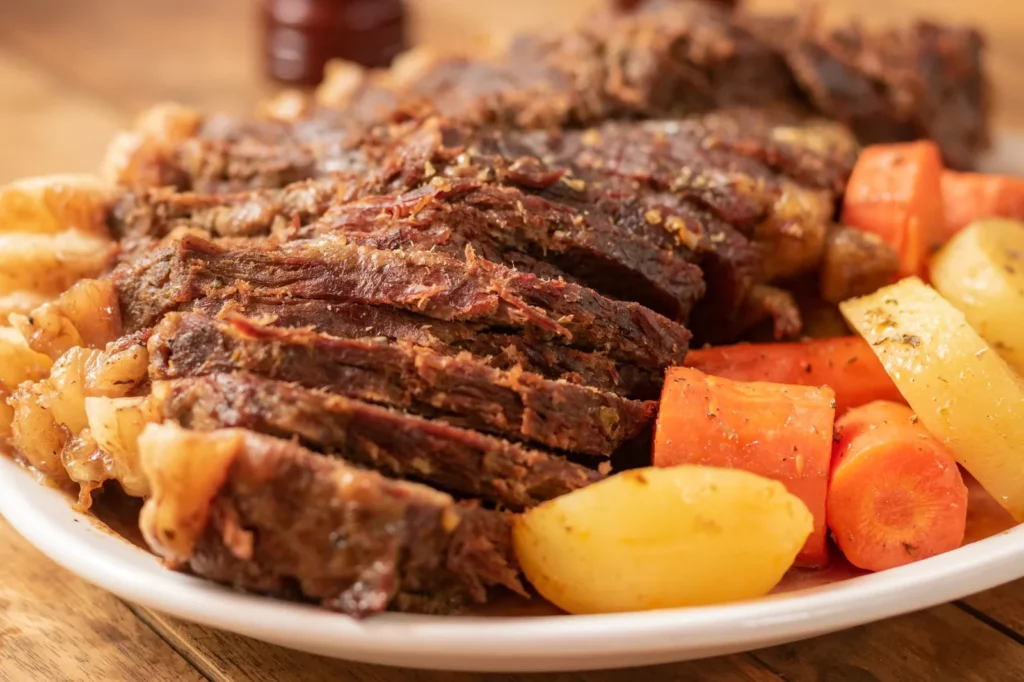
A dutch oven red wine braised pot roast turns a tough beef chuck into a sliceable-yet-falling-apart centerpiece with a glossy, wine-forward sauce. The method relies on low, steady heat and a sealed heavy pot so the meat breaks down without drying out. You get a full dinner from one vessel with minimal active work once it’s in the oven.
This version leans on a dry red wine for acidity and depth, with aromatics and a short list of pantry staples. The long braise concentrates flavor so the sauce tastes layered rather than boozy. It’s the kind of dish that rewards a slow afternoon and feeds a table with little fuss. If you enjoyed this, our snapper oven is worth trying next. Making this dutch oven red wine braised pot roast at home is surprisingly straightforward once you know the key steps.
Why You’ll Love These Dutch Oven Red Wine Braised Pot Roast
- One pot handles searing, braising, and sauce reduction so cleanup stays small.
- Chuck roast becomes tender enough to pull with a fork after slow heat.
- The red wine sauce reduces into a silky gravy without flour shortcuts.
- Leftovers reheat well and taste even better the next day.
- You can pair it with mash, noodles, or crusty bread for an easy plate.

Ingredients You’ll Need
- 3.5 lb beef chuck roast, tied if loose, patted dry
- 2 tbsp neutral oil
- 1.5 tsp kosher salt, plus more to finish
- 1 tsp black pepper
- 2 cups dry red wine, such as cabernet or merlot
- 2 cups low-sodium beef stock
- 2 tbsp tomato paste
- 1 large yellow onion, cut into wedges
- 3 garlic cloves, smashed
- 3 carrots, cut into 2-inch chunks
- 2 parsnips, cut into 2-inch chunks
- 2 tbsp chopped fresh thyme
- 2 bay leaves
Ingredient Substitutions
Dry red wine: Replace the 2 cups with an equal amount of unsweetened pomegranate juice plus 2 tbsp red wine vinegar for acidity. The sauce will be fruitier and slightly sweeter with less tannin backbone, so reduce the braising liquid by a few minutes longer at the end. Expect a lighter color and a softer edge that still cuts the beef’s richness. The dutch oven red wine braised pot roast works well for weeknight cooking when time is limited.



Beef chuck roast: Use an equal weight of beef brisket flat if chuck is unavailable, keeping the fat cap intact. Brisket renders a slightly stringier texture and needs the same low heat but may need 20 extra minutes to soften. Trim only the thickest external fat so the braise stays balanced rather than greasy. Storing leftover dutch oven red wine braised pot roast correctly keeps it tasting good for days.
Beef stock: Swap with an equal volume of mushroom stock for a deeper earthy note that complements the red wine. The finished sauce will be darker and less meaty, so add 1 tsp soy sauce for savory depth. This works well if you want a partial vegetarian-friendly base for the vegetables. For the best results with this dutch oven red wine braised pot roast, read through all the steps before starting.
Carrots and parsnips: Replace with 1 lb baby potatoes and 1 fennel bulb wedged for a different sweet-anise profile. Potatoes hold shape better and absorb sauce, while fennel softens to a mellow flavor after braising. Cut potatoes to match the 2-inch size so they cook evenly with the meat. For another easy option, check out our irish trash can.
Step-by-Step Instructions
- Heat medium-high heat with 2 tbsp neutral oil in a 6-quart dutch oven. Season the roast with 1.5 tsp kosher salt and 1 tsp black pepper, then sear 4 to 5 minutes per side until deeply browned; remove to a plate.
- Lower to medium heat and add onion wedges, smashed garlic, and tomato paste. Cook 3 to 4 minutes, stirring, until the paste darkens and onions soften at the edges.
- Pour in 2 cups dry red wine and scrape the browned bits off the bottom with a wooden spoon. Simmer 3 minutes to cook off the raw alcohol smell and concentrate the liquid.
- Return the roast with juices, add 2 cups beef stock, thyme, and bay leaves. Bring to a gentle simmer, then cover with the lid slightly ajar and move to a 160°C / 325°F oven.
- Braise 2 hours, then add carrots and parsnips around the meat. Continue braising 1 hour until the roast yields easily to a fork and vegetables are tender.
- Transfer meat and vegetables to a platter. Set the pot on medium-low heat and reduce the sauce 10 minutes until it coats a spoon. Discard bay leaves and adjust salt before serving.
Pro Tips
Dry the beef thoroughly before searing so the surface browns instead of steaming, which builds the base flavor for the sauce. A wet roast will stall browning and leave you with gray meat.
Braise with the lid just barely offset so some moisture escapes while the meat stays protected. Too tight a seal can make the sauce thin and the texture slack rather than silky.
Rest the roast on the platter 10 minutes before pulling so the fibers relax and the slices hold together better. Skipping this step loses more juices onto the board.
Read about maillard reaction if you want the science behind why a dark sear improves the whole braise. The browned crust dissolves into the wine and stock for a fuller sauce.
Save the fat cap from the roast and render a teaspoon in the pot if the sauce needs more body. A little beef fat carries the wine aromatics better than butter here.
Common Mistakes to Avoid
Using a sweet or oaky wine makes the sauce cloying once reduced, so choose a dry, moderate red and avoid dessert wines. If the bottle tastes too sweet to drink, it will taste worse concentrated.
Rushing the braise at high oven heat toughens the connective tissue instead of melting it, so keep the temperature at 160°C / 325°F. The collagen needs time, not just heat, to break into gelatin.
Adding the root vegetables at the start makes them fall apart and muddy the sauce, so wait until the last hour. They should be tender but distinct when the roast is done.
Serving Suggestions
Spoon the reduced sauce over pot roast slices with buttered egg noodles to catch the gravy. The wide noodles hold the wine sauce better than rice.
Pair the plate with a simple roast vegetables side if you want more caramelized edges alongside the braised ones. A sharp green salad cuts the richness after the heavy main.
For a bread option, serve with dinner rolls to mop the sauce, though save sweet bakes for dessert. Warm bread keeps the meal casual and comforting.
Storage and Reheating
Cool the meat and sauce separately, then refrigerate in airtight containers for up to 4 days. The fat will rise and solidify, which you can skim before reheating for a cleaner sauce.
Freeze the sliced roast with sauce in a rigid container for up to 3 months, leaving headspace for expansion. Thaw overnight in the refrigerator rather than on the counter to stay food safe.
Reheat covered on medium-low heat until the beef reaches an internal temperature of 74°C / 165°F and the sauce simmers. Stir once halfway so the edges don’t scorch while the center warms.
Recipe Variations
Mushroom Version
Add 8 oz quartered cremini mushrooms with the onions in step two for an earthy braise. They release water then brown, deepening the sauce and giving a second texture next to the root vegetables. Expect a darker, more savory result with no other changes.
Herb-Citrus Twist
Add 2 wide orange peel strips and 1 tbsp rosemary with the thyme for a bright note against the red wine. The citrus oils lift the sauce without making it sweet, and the peel softens to a mild flavor. Remove the peel before reducing so it doesn’t turn bitter.
Pressure Braise
After searing and deglazing, move everything to a pressure cooker and braise 75 minutes at high pressure with a natural release. The texture stays tender but the sauce needs a separate 8 minutes open reduction on the stovetop. This cuts the time if you didn’t plan a slow afternoon.
Porchetta-Style Swap
Replace beef with a pork roast of equal weight and use white wine instead of red for a lighter braise. Pork benefits from the same low oven but check doneness at 2.5 hours since leaner cuts vary. The sauce turns golden and pairs well with fennel in the vegetable mix.
Make-Ahead Freezer Batch
Portion the cooled braised meat into meal-sized bags with sauce before freezing for grab-and-go dinners. Label with the date and reheat from frozen in a covered pot over 25 minutes. This works best if you slice the roast first so it heats evenly.

Dutch Oven Red Wine Braised Pot Roast
Description
A Dutch oven red wine braised pot roast turns tough beef chuck into a fork-tender centerpiece with a glossy, wine-forward sauce. This one-vessel method uses low steady heat so the meat breaks down without drying out and feeds a table with little fuss.
Ingredients
Instructions
-
Heat oil and sear roast
Heat medium-high heat with 2 tbsp neutral oil in a 6-quart dutch oven. Season the 3.5 lb beef chuck roast with 1.5 tsp kosher salt and 1 tsp black pepper, then sear 4 to 5 minutes per side until deeply browned with a dark crust; remove to a plate.
-
Cook aromatics and paste
Lower to medium heat and add 1 large yellow onion wedges, 3 smashed garlic cloves, and 2 tbsp tomato paste. Cook 3 to 4 minutes, stirring, until the paste darkens to a rust color and onions soften at the edges.
-
Deglaze with red wine
Pour in 2 cups dry red wine and scrape the browned bits off the bottom with a wooden spoon. Simmer 3 minutes to cook off the raw alcohol smell and concentrate the liquid slightly.
-
Add stock and braise start
Return the roast with juices, add 2 cups beef stock, 2 tbsp fresh thyme, and 2 bay leaves. Bring to a gentle simmer, then cover with the lid slightly ajar and move to a 160°C / 325°F oven.
-
Braise meat two hours
Braise 2 hours at 160°C / 325°F so the connective tissue begins melting into gelatin. The meat should still be firm but starting to yield at the edges when tested with a fork.
-
Add root vegetables
Add 3 carrots and 2 parsnips cut into 2-inch chunks around the meat. Continue braising 1 hour until the roast yields easily to a fork and vegetables are tender but distinct.
-
Rest meat and plate
Transfer meat and vegetables to a platter and let the roast rest 10 minutes so fibers relax and slices hold together. The internal temperature after rest should reach at least 63°C / 145°F for a safe whole-cut beef serve.
-
Reduce sauce and finish
Set the pot on medium-low heat and reduce the sauce 10 minutes until it coats a spoon with a silky gloss. Discard bay leaves and adjust salt before serving the sauce over the sliced roast.
Nutrition Facts
Servings 6
- Amount Per Serving
- Calories 620kcal
- % Daily Value *
- Total Fat 34g53%
- Saturated Fat 13g65%
- Cholesterol 160mg54%
- Sodium 780mg33%
- Total Carbohydrate 18g6%
- Dietary Fiber 4g16%
- Sugars 7g
- Protein 52g104%
* Percent Daily Values are based on a 2,000 calorie diet. Your daily value may be higher or lower depending on your calorie needs.
Note
- Storage: Cool the meat and sauce separately, then refrigerate in airtight containers for up to 4 days; skim solidified fat before reheating for a cleaner sauce.
- Make ahead: For a pork twist on this method, see our porchetta roast as a related braise option.
- Pro tip: Dry the beef thoroughly before searing so the surface browns instead of steaming and builds the sauce base.
- Reheating: Reheat covered on medium-low until the beef hits 74°C / 165°F and the sauce simmers; do not reheat the same portion more than once.
