

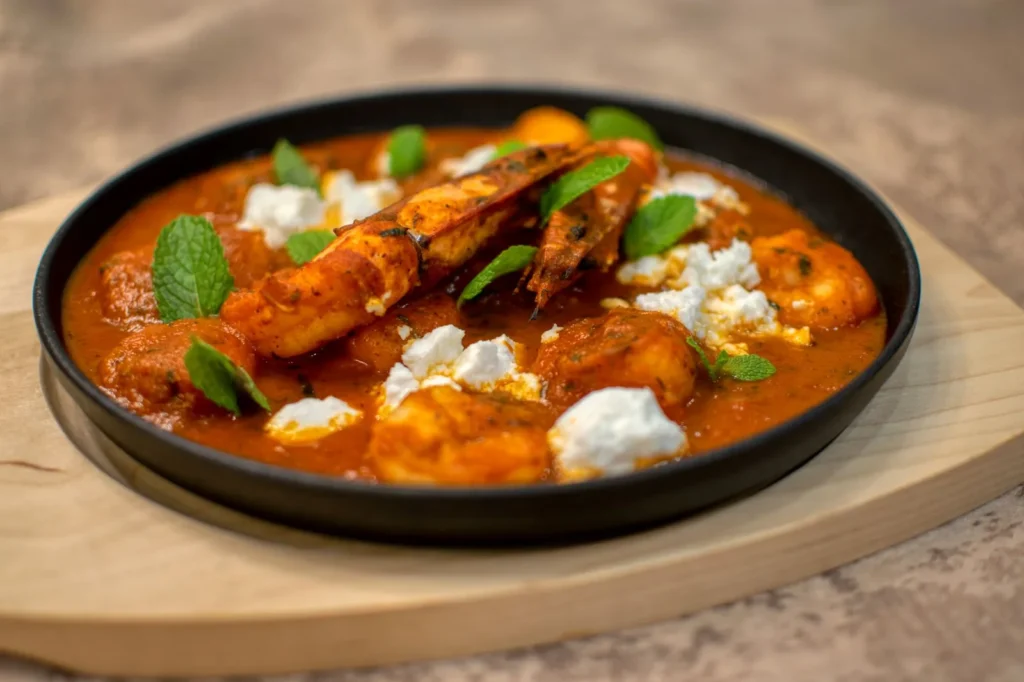
Shrimp in tomato sauce with feta is a one-skillet Mediterranean dinner that pulls together in about 25 minutes using pantry staples. The shrimp stay tender because they cook quickly in a simmering tomato base, while chunks of feta soften into creamy pockets without fully melting. You get a balanced plate of lean protein, acidity, and savory dairy with almost no cleanup.
This version skips precooked shrimp and builds the sauce from crushed tomatoes, garlic, and oregano so the flavors actually develop. A handful of fresh parsley at the end keeps the dish bright instead of heavy. If you like garlic butter shrimp, the tomato-feta route gives you the same speed with a saucier result.
Why You’ll Love These Shrimp In Tomato Sauce With Feta
The shrimp in tomato sauce with feta earns its spot on a weeknight because it solves three common dinner problems at once.





- One pan means less washing and the sauce catches every bit of flavor from the shrimp.
- Feta adds salt and body without a heavy cream or roux.
- Crushed tomatoes and frozen shrimp keep the ingredient list cheap and reachable.
- The dish reheats without turning rubbery if you follow the storage steps below.
Ingredients You’ll Need
- 1 lb raw large shrimp, peeled and deveined (21–25 count)
- 2 tbsp olive oil
- 4 cloves garlic, minced
- 1 small yellow onion, finely diced (about 1 cup)
- 1 can (28 oz) crushed tomatoes
- 1 tsp dried oregano
- 1/2 tsp crushed red pepper flakes (optional)
- 4 oz block feta, cut into 1/2-inch cubes
- 2 tbsp fresh parsley, chopped
- 1/2 tsp fine salt, plus more to finish
- 1/4 tsp black pepper
Ingredient Substitutions
Olive oil: Replace with an equal amount of avocado oil if you need a higher smoke point for searing. Avocado oil stays neutral in flavor, so the garlic and tomato notes come through more clearly. The sauce texture stays the same because the fat ratio is identical.
Crushed tomatoes: Use 2 cups of peeled fresh tomatoes pulsed in a blender during summer months. Fresh tomatoes carry more water, so simmer the sauce 5 minutes longer to thicken. Expect a lighter color and a slightly less concentrated tang than canned.
Feta: Swap for 4 oz of ricotta salata cubed the same size for a firmer, less salty bite. Ricotta salata does not soften into creamy pockets, so the sauce stays thinner and you lose the signature melts. Add 1/4 tsp salt to compensate for the lower sodium.
Raw shrimp: Use 1 lb of cooked shrimp only if you add them in the final 2 minutes of simmering. Pre-cooked shrimp toughen fast, so they should warm through rather than braise. The flavor is slightly less infused but the timing rescue works when raw is unavailable.
Step-by-Step Instructions
- Pat the raw shrimp dry with paper towels and season with the 1/2 tsp salt and black pepper. Dry shrimp sear instead of steaming, which builds flavor before they hit the sauce.
- Heat 1 tbsp olive oil in a 12-inch skillet over medium-high heat. Add shrimp in a single layer and cook 90 seconds per side until they turn pink with golden and crispy edges, then remove to a plate.
- Lower the burner to medium-low heat and add the remaining 1 tbsp oil. Stir in onion and cook 4 minutes until translucent, then add garlic and red pepper flakes and cook 1 minute until fragrant.
- Pour in crushed tomatoes and oregano, scraping the browned bits from the pan. Simmer 10 minutes until the sauce reduces and coats a spoon.
- Nestle the feta cubes into the sauce and cook 3 minutes until they soften but hold shape. Return shrimp with juices to the skillet and warm 2 minutes until opaque throughout.
- Shut off heat, scatter parsley, and rest 2 minutes before serving so the sauce thickens slightly. The shrimp in tomato sauce with feta is ready when the feta looks creamy at the edges.
Pro Tips
Buy block feta packed in brine rather than pre-crumbled, which contains anti-caking starch that won’t melt the same way. The block gives you those distinct salty pockets that define the dish.
Devein shrimp even if the label says cleaned, because the tract adds a gritty note to a light sauce. A quick run under cold water after peeling handles it.
Use a wide skillet so the shrimp sear instead of crowding, since never crowd the pan keeps the sear instead of a gray poach. A 12-inch pan fits 1 lb without overlap.
Read searing techniques from Serious Eats if you want the science behind why dry protein browns faster. The moisture barrier is the same reason we pat shrimp before they hit the oil.
Common Mistakes to Avoid
Adding feta too early makes it dissolve into grainy strings instead of soft cubes, so wait until the tomato base has already reduced. The acid in tomatoes tightens dairy quickly once boiling.
Overcooking shrimp past opaque turns the meat from tender to bouncy, so pull them at the 2 minutes rewarm mark. They keep cooking from pan heat during the rest.
Skipping the onion step to save time leaves a sharp raw garlic note, because the medium-low heat sweat is what softens both aromatics. Rushing this reads as harsh in the finished sauce.
Serving Suggestions
Spoon the shrimp in tomato sauce with feta over orzo or crusty bread to catch the liquid. The starch balances the acid and makes the plate feel complete without a side.
Pair with tzatziki sauce on a cucumber side for a cool contrast to the warm tomatoes. A simple green salad with lemon also cuts the richness.
For a wine match, pour a dry white like Assyrtiko, which echoes the brined feta. Avoid oaky reds that bury the shrimp sweetness.
Storage and Reheating
Cool the skillet contents within 2 hours and move to an airtight container. The cooked shrimp and tomato base keep refrigerated for up to 3 days without quality loss.
Reheat in a covered pan over medium-low heat until the center reaches 145°F for seafood safety. Stir once at the halfway point so the feta reincorporates instead of sticking.
Freezing is not advised because thawed shrimp turn mushy and feta separates. Make a fresh batch instead of storing past the fridge window.
Recipe Variations
Spicy Version
Add 1 tsp extra crushed red pepper with the garlic and finish with 1/2 tsp smoked paprika. The heat lifts the tomato sweetness and the smoked note pairs with the brined cheese. Expect a warmer finish that still reads Mediterranean.
Green Bean Side Blend
Stir 1 cup trimmed green beans into the sauce at the 10-minute simmer for a one-pan vegetable add. They stay snappy if pulled at the same time as the shrimp. The dish becomes a fuller meal without another pot.
Chorizo Boost
Brown 3 oz diced chorizo before the onion for a smoky pork base. Remove the rendered fat down to 1 tbsp so the sauce isn’t greasy. The shrimp in tomato sauce with feta takes on a deeper, meaty layer.
Turkey Burger Pair
Serve the skillet next to turkey burgers for a feta-themed spread. The burgers use the same cheese so the flavors repeat without clashing. It works for a casual group dinner.
Sheet Pan Shrimp Tacos Use
Use the sauce as a filling base under shrimp tacos by spooning it onto warm tortillas. The tomato-feta mix replaces salsa for a richer taco. Cool slightly so the shells don’t sog.

Shrimp In Tomato Sauce With Feta
Description
Shrimp in tomato sauce with feta is a quick one-skillet Mediterranean dinner that pulls together in about 25 minutes using pantry staples. Tender shrimp simmer in a crushed tomato base while chunks of feta soften into creamy pockets for a balanced plate with almost no cleanup.
Ingredients
Instructions
-
Season the raw shrimp
Pat the raw shrimp dry with paper towels so they sear instead of steaming, then season with the 1/2 tsp salt and 1/4 tsp black pepper. Dry shrimp build more flavor before they hit the sauce and avoid a gray poach. Set them aside while you prepare the pan.
-
Sear shrimp in skillet
Heat 1 tbsp olive oil in a 12-inch skillet over medium-high heat. Add shrimp in a single layer and cook 90 seconds per side until they turn pink with golden and crispy edges, then remove to a plate.
-
Cook aromatics
Lower the burner to medium-low heat and add the remaining 1 tbsp oil. Stir in onion and cook 4 minutes until translucent, then add garlic and red pepper flakes and cook 1 minute until fragrant.
-
Simmer tomato sauce
Pour in crushed tomatoes and oregano, scraping the browned bits from the pan. Simmer 10 minutes until the sauce reduces and coats a spoon with a thick, glossy layer.
-
Soften feta cubes
Nestle the feta cubes into the sauce and cook 3 minutes until they soften but hold shape with creamy edges. Wait until the tomato base has reduced so the acid doesn't tighten the dairy into grainy strings.
-
Warm shrimp in sauce
Return shrimp with juices to the skillet and warm 2 minutes until opaque throughout and the internal temperature reaches 63°C for shellfish safety. They should look firm but tender, not bouncy.
-
Add parsley and rest
Shut off heat, scatter parsley, and rest 2 minutes before serving so the sauce thickens slightly. The dish is ready when the feta looks creamy at the edges and the shrimp are fully opaque.
Nutrition Facts
Servings 4
- Amount Per Serving
- Calories 350kcal
- % Daily Value *
- Total Fat 16g25%
- Saturated Fat 6g30%
- Cholesterol 190mg64%
- Sodium 780mg33%
- Total Carbohydrate 14g5%
- Dietary Fiber 3g12%
- Sugars 7g
- Protein 28g57%
* Percent Daily Values are based on a 2,000 calorie diet. Your daily value may be higher or lower depending on your calorie needs.
Note
- Storage: Cool the skillet within 2 hours and move to an airtight container; keep refrigerated up to 3 days and reheat covered over medium-low until center reaches 63°C.
- Pro tip: Buy block feta packed in brine rather than pre-crumbled, which contains anti-caking starch that won't melt the same way; see Greek tzatziki sauce for a cool side match.
- Serving: Spoon over orzo or crusty bread, or try the sauce base under sheet pan shrimp tacos for a richer taco.
- Don't reheat twice: Only reheat the portion you will eat to keep shrimp from toughening.
