

A solid roast loin of pork with mustard caper sauce gives you a lean, tender center cut of pork paired with a sharp, savory pan sauce that cuts the richness. This version uses a quick sear, a steady oven roast, and a deglazed sauce built from the browned bits in the pan. You get clean slices that hold their shape and a sauce with enough acid to keep each bite from feeling heavy.
The method below is built for a boneless center-cut loin, which cooks faster and more evenly than a bone-in roast. Mustard and capers do the heavy lifting in the sauce, so you don’t need a long ingredient list or special equipment. It’s a dependable main course for a Sunday dinner or a small gathering. If you enjoyed this, our pork loin in is worth trying next. Making this roast loin of pork with mustard caper sauce at home is surprisingly straightforward once you know the key steps.
Why You’ll Love These Roast Loin Of Pork With Mustard Caper Sauce
- The mustard caper sauce uses pantry staples and comes together in the same pan you roast in.
- A two-step sear-then-roast approach keeps the outside browned while the center stays juicy.
- Leftovers slice cleanly for sandwiches or next-day plates without drying out.
- You can scale the recipe up for a larger loin without changing the sauce ratio much.
Ingredients You’ll Need
- 1 boneless pork loin roast (about 2.5 lb / 1.1 kg), trimmed of excess silver skin
- 2 tbsp olive oil
- 1 tbsp kosher salt
- 1 tsp black pepper, freshly ground
- 3 tbsp Dijon mustard
- 2 tbsp drained capers, lightly chopped
- 1 cup low-sodium chicken stock
- 2 tbsp unsalted butter
- 1 tsp fresh thyme leaves
- 1 tbsp all-purpose flour
Ingredient Substitutions
Dijon mustard: Replace with an equal amount of whole-grain mustard for a coarser texture and milder heat. The seeds stay visible in the sauce and give a slight pop when bitten. You’ll lose some of the smooth sharpness, so add a small pinch of white wine vinegar if you want more brightness. The roast loin of pork with mustard caper sauce works well for weeknight cooking when time is limited.







Capers: Swap with an equal volume of chopped green olives if you don’t have capers. Olives bring more salt and a firmer bite, so rinse them first and cut the added salt in the rub by half. The sauce will taste brinier and less floral than the original. Storing leftover roast loin of pork with mustard caper sauce correctly keeps it tasting good for days.
Chicken stock: Use an equal amount of vegetable stock to make the sauce pork-light in flavor. Vegetable stock is usually less gelatinous, so the sauce will be thinner unless you add an extra 1/2 tbsp flour at the roux step. Expect a cleaner, less meaty background note. For the best results with this roast loin of pork with mustard caper sauce, read through all the steps before starting.
Unsalted butter: Replace with 2 tbsp olive oil for a dairy-free finish. The sauce will be a little less glossy and won’t thicken quite as much from the fat alone. Keep the flour step the same to hold the body. For another easy option, check out our bechamel sauce french.
Step-by-Step Instructions
- Heat medium-high heat with 2 tbsp olive oil in a heavy oven-safe skillet. Pat the 2.5 lb pork loin dry, then rub with 1 tbsp kosher salt and 1 tsp black pepper. Sear the loin on all sides until golden and crispy, about 8 minutes total, then remove the skillet from the heat.
- Move the seared loin to a rimmed sheet pan if your skillet is not oven-safe, or keep it in the skillet. Roast at 180°C / 350°F until the center reads 63°C / 145°F on an instant-read thermometer, about 35–45 minutes depending on thickness.
- Rest the roasted loin on a cutting board loosely tented with foil for 10 minutes so the juices redistribute. The internal temperature will rise a few degrees while it sits.
- Pour off excess fat from the skillet, leaving the browned bits. Set the pan over medium-low heat and add 1 tbsp all-purpose flour, stirring for 1 minute to form a light roux.
- Slowly whisk in 1 cup low-sodium chicken stock, scraping the bottom until the liquid thickens slightly, about 3 minutes. Add 3 tbsp Dijon mustard, 2 tbsp chopped capers, and 1 tsp thyme, then simmer for 2 minutes.
- Stir in 2 tbsp unsalted butter off the heat until the sauce looks glossy. Slice the rested pork against the grain and spoon the mustard caper sauce over the top. mustard ribs use a similar tangy profile if you like this sauce.
Pro Tips
Dry the pork surface well before searing so the Maillard browning happens instead of steaming. A wet surface lowers the pan temperature and gives you gray meat rather than a brown crust.
Let the loin sit at room temperature for 20 minutes before it goes into the oven. A cold center forces the outside to overcook while the middle catches up.
Use an instant-read thermometer instead of guessing by time. Loin is lean, and even 5 degrees past target makes the slices firm and chewy.
For a smoother sauce, strain it through a fine mesh before adding butter. This removes thyme stems and caper bits if you want a restaurant-style pour. See Food Network for more on pan sauce technique.
Common Mistakes to Avoid
Skipping the rest period after roasting is the most common error. Cutting too early lets the juices run out onto the board, leaving dry slices.
Adding butter while the sauce is still boiling can break the emulsion and make it look oily. Pull the pan off the heat first, then stir.
Using a too-small pan crowds the loin and blocks browning. A 12-inch skillet or a roomy sheet pan gives the surface room to sear.
Serving Suggestions
Slice the pork into 1/2-inch pieces and plate with roasted potatoes or a simple green salad. The sauce pairs well with starches that soak it up. For a complementary side, try tzatziki sauce on a cucumber side to cool the plate.
Storage and Reheating
Store sliced pork and sauce in separate airtight containers in the fridge for up to 4 days. Keep the loin whole if you can, since cut slices lose moisture faster. Reheat slices to an internal temperature of 63°C / 145°F in a covered pan over medium-low heat with a splash of stock. The sauce freezes for up to 2 months, though the texture may loosen after thawing.
Recipe Variations
Apple Mustard Version
Add 1/2 cup unsweetened apple puree to the stock step for a faint sweetness that balances the mustard. The sauce turns lighter in color and gains body from the fruit. Use the same roast time and check the thermometer as usual.
White Wine Sauce
Deglaze the pan with 1/4 cup dry white wine before the stock for a brighter, more aromatic sauce. Let it reduce by half so the alcohol cooks off. The capers and mustard stay, but the background notes become more floral.
Herb-Crusted Loin
Coat the seared loin with 2 tbsp chopped parsley and rosemary before roasting for a green, resinous crust. The herbs crisp at the edges and add texture to each slice. Pair with slow pork loin if you want a different cook method another night.
Caper-Free Lemon Sauce
Drop the capers and add 1 tbsp lemon zest plus 1 tbsp lemon juice at the end for a citrus-forward pan sauce. The tang comes from fruit instead of brine, and the color stays pale. This works well with chimichurri fish as a side inspiration.
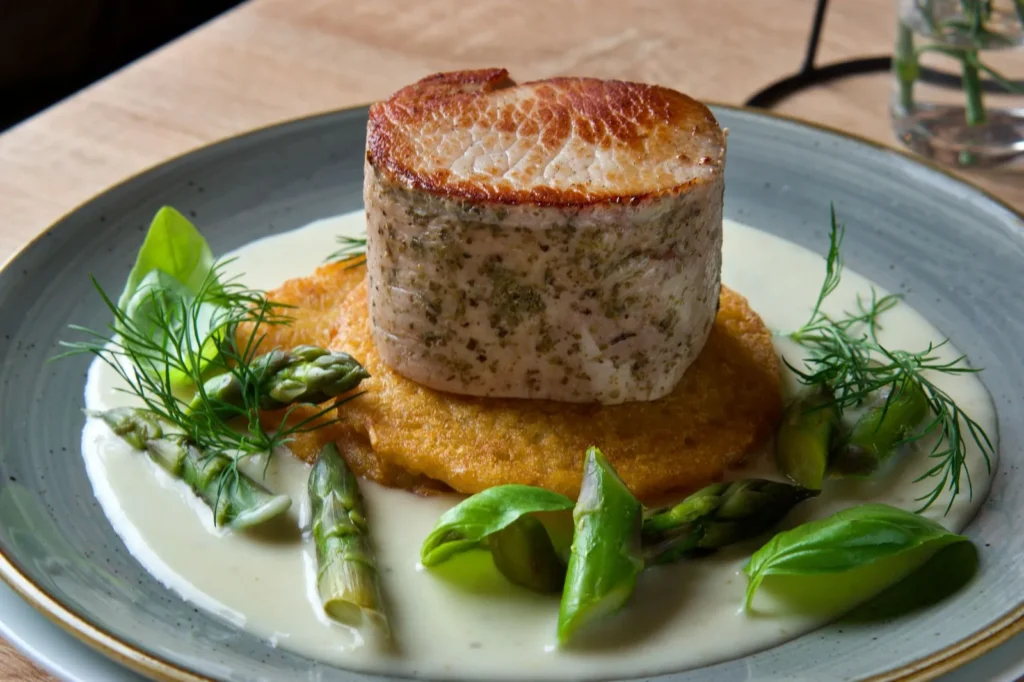

Roast Loin Of Pork With Mustard Caper Sauce
Description
A boneless center-cut pork loin is seared then roasted to juicy perfection and finished with a sharp mustard caper pan sauce built from the browned bits.
Ingredients
Instructions
-
Heat skillet and season
Heat a heavy oven-safe skillet over medium-high heat with 2 tbsp olive oil until the oil shimmers. Pat the 2.5 lb pork loin dry with paper towels, then rub the surface evenly with 1 tbsp kosher salt and 1 tsp black pepper so the seasoning adheres to the meat.
-
Sear the loin
Place the seasoned loin in the hot skillet and sear on all sides until the exterior is golden and crispy, about 8 minutes total. The meat should release easily when a side is properly browned; remove the skillet from the heat once all surfaces are sealed.
-
Prepare for roasting
Move the seared loin to a rimmed sheet pan if your skillet is not oven-safe, or keep it in the skillet for roasting. Make sure the meat sits with space around it so heat circulates evenly during the oven step.
-
Roast to temperature
Roast in an oven preheated to 180°C / 350°F until the center reads 63°C / 145°F on an instant-read thermometer, about 35–45 minutes depending on thickness. The loin is ready when the thermometer slides in with slight resistance and the juices run clear at the center.
-
Rest the roast
Rest the roasted loin on a cutting board loosely tented with foil for 10 minutes so the juices redistribute. The internal temperature will rise a few degrees while it sits, reaching a safe final doneness for whole-cut pork.
-
Make the roux
Pour off excess fat from the skillet, leaving the browned bits on the bottom. Set the pan over medium-low heat and add 1 tbsp all-purpose flour, stirring constantly for 1 minute to form a light roux that smells toasty but not burnt.
-
Build the sauce
Slowly whisk in 1 cup low-sodium chicken stock, scraping the bottom until the liquid thickens slightly, about 3 minutes. Add 3 tbsp Dijon mustard, 2 tbsp chopped capers, and 1 tsp thyme, then simmer for 2 minutes until the sauce is uniform and aromatic.
-
Finish and slice
Stir in 2 tbsp unsalted butter off the heat until the sauce looks glossy and coats a spoon. Slice the rested pork against the grain into clean pieces and spoon the mustard caper sauce over the top to serve.
Nutrition Facts
Servings 4
- Amount Per Serving
- Calories 380kcal
- % Daily Value *
- Total Fat 22g34%
- Saturated Fat 8g40%
- Cholesterol 95mg32%
- Sodium 720mg30%
- Total Carbohydrate 4g2%
- Dietary Fiber 1g4%
- Sugars 1g
- Protein 42g84%
* Percent Daily Values are based on a 2,000 calorie diet. Your daily value may be higher or lower depending on your calorie needs.
Note
- Storage: Store sliced pork and sauce in separate airtight containers in the fridge for up to 4 days; refrigerate within 2 hours of cooking.
- Reheating: Reheat slices to an internal temperature of 63°C / 145°F in a covered pan over medium-low heat with a splash of stock; do not reheat the same portion more than once.
- Pro tip: Dry the pork well and let it sit at room temperature 20 minutes before roasting for better browning, as shown in our slow pork loin guide.
- Rest: Always rest the loin 10 minutes before slicing so juices stay in the meat instead of running onto the board.
