

A herbed pork rib roast is a bone-in pork roast cut from the rib section, seasoned with a paste of fresh herbs, garlic, and fat, then roasted so the exterior crisps while the interior stays tender. This version uses a straightforward two-stage roast that avoids the dried-out results people often get from cooking pork too hot for too long. You get a presentation-worthy centerpiece with a technique simple enough for a relaxed weekend cook.
The rib bones act as a natural heat shield, so the meat nearest them stays juicy, and the herb paste forms a savory crust rather than a heavy breading. Because the cut is larger than a weeknight chop, timing matters more than speed. Read through the steps once before you start so the rest period and carryover cooking land where they should. If you enjoyed this, our ground beef ground is worth trying next. Making this herbed pork rib roast at home is surprisingly straightforward once you know the key steps.
Why You’ll Love These Herbed Pork Rib Roast
- Bone-in rib meat stays juicier than a boneless loin because the bones slow local heat transfer.
- The herb paste uses pantry fat and fresh aromatics, so no special equipment or rubs are needed.
- A two-stage roast gives you a crisp exterior without overshooting the safe internal temperature.
- Leftovers slice cleanly for sandwiches, making the cook once, eat twice approach practical.
- It pairs with simple roasted vegetables, so the whole plate needs one oven.
Ingredients You’ll Need
- 1 bone-in pork rib roast, 3 to 4 pounds, tied if loose
- 3 tablespoons olive oil
- 2 tablespoons unsalted butter, softened
- 4 cloves garlic, minced
- 2 tablespoons fresh rosemary, finely chopped
- 2 tablespoons fresh thyme leaves
- 1 tablespoon fresh sage, minced
- 1 tablespoon kosher salt
- 1 teaspoon coarse black pepper
- 1 teaspoon fennel seed, cracked
Ingredient Substitutions
Olive oil: Replace with an equal amount of avocado oil if you want a more neutral flavor and a slightly higher smoke point. Avocado oil keeps the paste from browning too fast during the initial high-heat sear. The herb crust will look a little lighter but the texture stays the same. The herbed pork rib roast works well for weeknight cooking when time is limited.




Fresh rosemary: Use 2 teaspoons dried rosemary for the 2 tablespoons fresh, since dried herbs concentrate flavor by weight. Dried rosemary needs to be crushed finely or it stays woody on the crust. Expect a marginally less bright top note but the same resinous base. Storing leftover herbed pork rib roast correctly keeps it tasting good for days.
Unsalted butter: Swap for an equal weight of softened ghee if you need a dairy-free version that still carries fat for browning. Ghee browns a touch faster than butter because it lacks water, so watch the first roast stage closely. The crust will be a shade darker with a nuttier edge. For the best results with this herbed pork rib roast, read through all the steps before starting.
Fennel seed: Replace the cracked fennel with 1 teaspoon caraway seed for a sharper, more peppery aroma. Caraway shifts the profile toward a rustic pork roast rather than the milder anise note fennel gives. Use the same cracked preparation so the seeds don’t roll off the paste.
Step-by-Step Instructions
- Pat the 3 to 4 pound roast dry with paper towels, then place it on a rimmed tray. Mix olive oil, softened butter, garlic, rosemary, thyme, sage, salt, pepper, and fennel in a bowl until a rough paste forms.
- Coat the roast with the herb paste, pressing it into the fat cap and ends. Leave it at room temperature for 45 minutes so the surface loses chill and the salt begins to season the outer layer.
- Set a rack in a roasting pan and place the roast bone-side down. Start the oven at 220°C / 425°F and roast for 20 minutes to set a crisp, browned exterior.
- Lower the oven to 160°C / 325°F and continue roasting until the center reads 60°C / 140°F on an instant-read thermometer. For a 3 to 4 pound roast this usually takes 50 to 70 minutes depending on shape.
- Transfer the roast to a cutting board and rest for 20 minutes under loose foil. The internal temperature will rise to a safe 63°C / 145°F while juices redistribute.
- Carve by running a knife along the bones, then slice the meat across the grain into 1/2-inch pieces. Spoon any warm pan drippings over the slices before serving.
Pro Tips
Let the roast sit at room temperature before cooking so the center doesn’t lag behind the crust during the first hot stage. A cold roast needs longer in the oven and risks a dry outer band.
Use an instant-read thermometer instead of guessing by time, because rib roasts vary in thickness and bone placement. The single most reliable cue is the 60°C / 140°F reading before rest.
Crack the fennel seed with a pan base rather than grinding it to powder, which keeps small bursts of flavor in the crust. For more on resting meat correctly, see the guidance from Food Network on carryover cooking.
Save the pan drippings and warm them with a splash of water to loosen the fond before spooning over slices. That step adds back the browned herb flavor the carving board loses.
Common Mistakes to Avoid
Skipping the rest period lets the juices run out when you carve, leaving the slices gray and dry. Always hold the roast under foil for the full 20 minutes before cutting.
Roasting only at high heat pushes the outside past crisp into tough before the center is safe. The two-stage method exists specifically to prevent that gap.
Using unchopped woody herbs like whole rosemary leaves leaves bitter bits that don’t soften. Mince the sage and chop the rosemary so the paste adheres and cooks evenly.
Serving Suggestions
Slice the roast and plate it with porchetta roast style crisp potatoes if you want a second herb-crusted pork contrast on the table. The similar seasoning keeps the menu coherent without repeating the exact cut.
Roast carrots and onions in the same oven during the low stage so they pick up the pork fat. A sharp french gimlet on the side cuts the richness for guests who want a bright note.
Offer a mustard sauce separately rather than on the crust, since the herb paste already carries the seasoning. Keep the slices best enjoyed warm rather than held under heat that dries the edges.
Storage and Reheating
Wrap cooled slices in an airtight container and refrigerate for up to 4 days. The bone-in cut holds moisture better than loin, but don’t leave the cooked roast unrefrigerated for more than 2 hours.
Freeze portions for up to 2 months in a sealed bag with the drippings. Thaw overnight in the fridge before reheating so the texture stays close to fresh.
Reheat covered in a 150°C / 300°F oven until the center reaches 63°C / 145°F again. Microwave reheating works for thin slices but dries the crust, so use the oven for whole pieces.
Recipe Variations
Citrus Version
Add 1 tablespoon orange zest and 1 tablespoon lemon zest to the herb paste before coating the roast. The citrus oils lift the rosemary and give the crust a brighter finish. Expect a slightly more aromatic top with the same two-stage timing.
Slow Cooker Base
Sear the paste-coated roast in a pan, then move it to a pork loin crock pot with 1 cup stock for 4 hours on low. The result is softer around the edges and less crisp, but the herb flavor penetrates deeper. Finish under a broiler for 5 minutes if you want some crust back.
Mustard Herb Crust
Spread 1 tablespoon Dijon mustard over the fat cap before the herb paste for a tangier layer that helps the herbs stick. The mustard mellows in the oven and leaves a deeper brown color. This pairs well with the pork chops supreme style pan sauce if you make one alongside.
French Style
Swap the fennel for 1 teaspoon dried tarragon and follow the french roast timing of 15 minutes high then low. Tarragon gives a milder anise note and a more delicate crust. The meat texture stays identical because only the aromatics change.
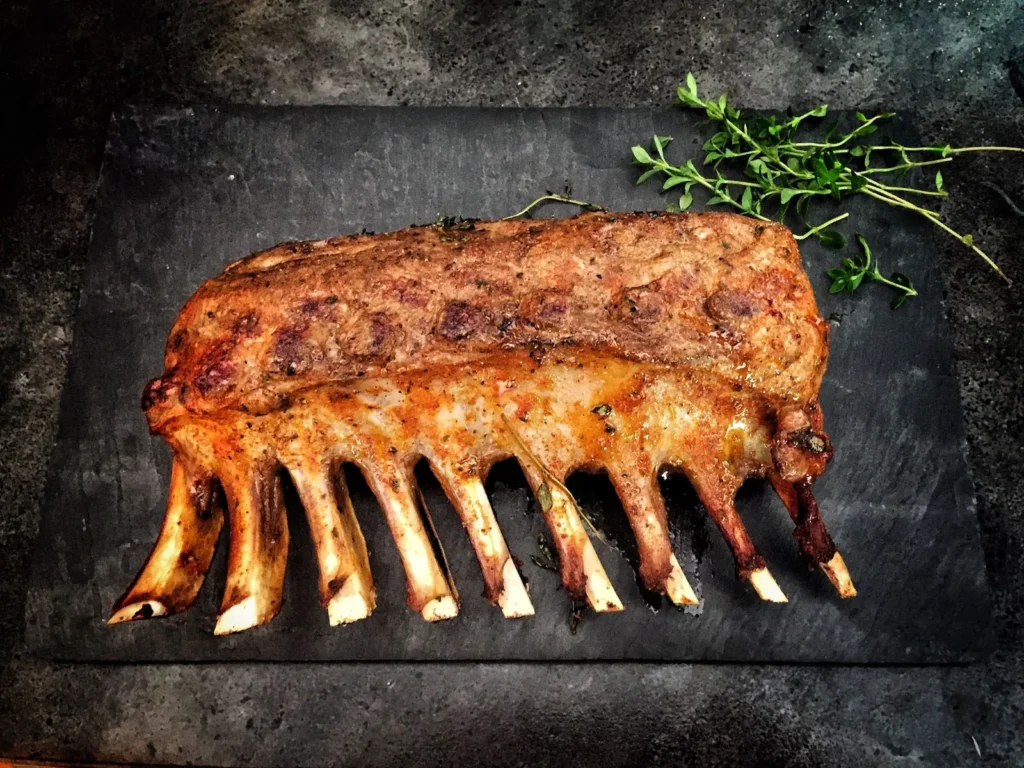

Herbed Pork Rib Roast
Description
A herbed pork rib roast is a bone-in cut from the rib section coated in a fresh herb, garlic, and fat paste then roasted in two stages for a crisp exterior and tender interior. The rib bones shield the meat so it stays juicy while the herb crust delivers savory flavor without heavy breading.
Ingredients
Instructions
-
Pat and place roast
Pat the 3 to 4 pound pork rib roast completely dry with paper towels to remove surface moisture that would steam the crust. Place it on a rimmed tray so it is ready for coating and any drips are contained.
-
Mix herb paste
In a bowl combine olive oil, softened butter, garlic, rosemary, thyme, sage, salt, pepper, and fennel until a rough paste forms with no dry spots. Stir thoroughly so the aromatics are evenly distributed before applying to the meat.
-
Coat the roast
Coat the roast with the herb paste, pressing it firmly into the fat cap and ends so it adheres like a crust. Make sure all exposed surfaces are covered so the exterior browns evenly during roasting.
-
Room temp rest
Leave the coated roast at room temperature for 45 minutes so the surface loses its chill and the salt begins to season the outer layer. The meat should feel cool but not cold to the touch before it goes into the oven.
-
Initial high roast
Set a rack in a roasting pan and place the roast bone-side down. Start the oven at 220°C / 425°F and roast for 20 minutes until the exterior is crisp and browned with the herb paste set.
-
Low stage roast
Lower the oven to 160°C / 325°F and continue roasting until the center reads 60°C / 140°F on an instant-read thermometer. For a 3 to 4 pound roast this usually takes 50 to 70 minutes depending on shape; the juices should run clear and the meat near the bone stay moist.
-
Rest the roast
Transfer the roast to a cutting board and rest for 20 minutes under loose foil. The internal temperature will rise to a safe 63°C / 145°F while juices redistribute, so the slices stay pink and juicy rather than dry.
-
Carve and serve
Carve by running a knife along the bones, then slice the meat across the grain into 1/2-inch pieces. Spoon any warm pan drippings over the slices before serving so the browned herb flavor returns to the plate.
Nutrition Facts
Servings 6
- Amount Per Serving
- Calories 520kcal
- % Daily Value *
- Total Fat 38g59%
- Saturated Fat 13g65%
- Cholesterol 135mg45%
- Sodium 780mg33%
- Total Carbohydrate 3g1%
- Dietary Fiber 1g4%
- Protein 40g80%
* Percent Daily Values are based on a 2,000 calorie diet. Your daily value may be higher or lower depending on your calorie needs.
Note
- Storage: Wrap cooled slices in an airtight container and refrigerate for up to 4 days; don't leave the cooked roast unrefrigerated for more than 2 hours.
- Reheating: Reheat covered in a 150°C / 300°F oven until the center reaches 63°C / 145°F again; avoid microwaving whole pieces as it dries the crust.
- Pro tip: Crack fennel seed with a pan base rather than grinding to powder so small flavor bursts stay in the crust; for a slow version see our pork loin crock pot method.
- Serving: Spoon warm pan drippings loosened with water over slices to bring back browned herb flavor lost on the board.
