

The best way to start a cold-weather dinner is with balsamic glazed short ribs braised until the meat pulls apart with a fork. This recipe uses a two-stage cook: a slow oven braise to break down connective tissue, then a concentrated glaze reduction for a glossy, tangy-sweet coating. You get restaurant-level depth without special equipment or complicated technique.
Short ribs come from the beef chuck primal and carry enough intramuscular fat to stay juicy through a long cook. The balsamic brings acidity that cuts the richness, while a little brown sugar rounds the sharp edges. Read through the steps once before you begin so the timing flows. If you enjoyed this, our eggplant rollatini is worth trying next. Making this balsamic glazed short ribs at home is surprisingly straightforward once you know the key steps.
Why You’ll Love These Balsamic Glazed Short Ribs
- Deep braising flavor from a 3-hour oven cook at low temperature
- A sticky glaze made from the same pan liquid, not a bottled sauce
- Make-ahead friendly — tastes better on day two after the fat is removed
- Simple ingredient list with pantry staples and one bottle of vinegar
- Flexible serving — over mashed potatoes, polenta, or egg noodles
Ingredients You’ll Need
- 3 lbs bone-in beef short ribs, cut into 3-inch pieces
- 2 tbsp olive oil
- 1 tsp kosher salt
- 1/2 tsp black pepper
- 1 large yellow onion, diced
- 3 cloves garlic, smashed
- 2 cups low-sodium beef stock
- 1 cup balsamic vinegar
- 2 tbsp brown sugar
- 2 sprigs fresh rosemary
- 1 tbsp tomato paste
Ingredient Substitutions
Balsamic vinegar: Replace the 1 cup with 3/4 cup red wine vinegar plus 1/4 cup honey for a similar sweet-tart profile. Red wine vinegar is sharper and less viscous, so the glaze reduces faster and needs 5 minutes less simmer time. Expect a lighter color and a more wine-forward note rather than the dark fig-like sweetness of true balsamic. The balsamic glazed short ribs works well for weeknight cooking when time is limited.


Beef short ribs: Use 3 lbs boneless beef chuck roast cut into 3-inch chunks if ribs are unavailable. Chuck has less surface fat cap, so brown it well for medium-high heat searing to build crust. The texture stays tender but the marrow richness of bone-in ribs will be missing. Storing leftover balsamic glazed short ribs correctly keeps it tasting good for days.
Brown sugar: Swap with an equal amount of maple syrup for a rounder, less molasses-heavy sweetness. Maple thins the glaze slightly, so reduce the stock by 1/4 cup at the braise stage. The finished coating looks lighter amber and carries a woodsy note.
Beef stock: Use 2 cups chicken stock if you’re out of beef; the braise will be lighter and less gelatinous. Add 1 tsp soy sauce to restore savory depth lost from the beef bones. The glaze will be thinner and need 25–30 minutes reduction instead of 20. For another easy option, check out our greek salad only.
Step-by-Step Instructions
- Heat medium-high heat on the stovetop and add 2 tbsp olive oil to a heavy Dutch oven. Season the 3 lbs short ribs with 1 tsp salt and 1/2 tsp pepper, then sear each side golden and crispy, about 4 minutes per side. Remove ribs to a plate.
- Lower to medium-low heat and add the diced onion. Cook 5 minutes until softened, then add smashed garlic and 1 tbsp tomato paste. Stir 1 minute until the paste darkens.
- Pour in 1 cup balsamic vinegar and scrape the browned bits from the bottom with a wooden spoon. Add 2 tbsp brown sugar and stir until dissolved.
- Return ribs to the pot with 2 cups beef stock and 2 rosemary sprigs. Liquid should reach two-thirds up the meat. Bring to a simmer on medium heat.
- Cover and move to a 160°C / 325°F oven for 3 hours, until meat pulls back from the bone and feels yielding when pierced.
- Remove ribs and discard rosemary. Strain liquid, skim fat, and reduce on medium-high heat 20 minutes until syrupy and coats a spoon.
- Return ribs to the glaze and turn to coat over low heat 5 minutes. brussels sprouts make a good side while you finish.
Pro Tips
Brown the ribs in batches so the pot stays dry — never crowd the pan or the meat steams instead of searing. A dark crust is where braise flavor starts.
Chill the strained braise liquid 30 minutes before reducing; solid fat lifts off cleanly for a less greasy glaze. This also concentrates the vinegar note.
If your balsamic is young and thin, reduce the braise liquid uncovered the last 20 minutes in the oven to avoid a watery sauce. Watch for just set edges on the surface bubbles.
For even cooking, cut rib pieces to a uniform 3-inch length so they finish in the same 3-hour window. See braising basics for doneness cues.
Common Mistakes to Avoid
Rushing the sear causes gray meat and flat flavor. Give each side 4 minutes contact without moving the ribs, and work in two batches if needed.
Skipping the fat skim leaves a waxy mouthfeel in the glaze. Always chill or use a ladle to remove the top layer before reduction.
Glazing on high heat burns the sugar before it coats. Keep the final toss at low heat and pull the pot early if the sauce looks glassy.
Serving Suggestions
Spoon the ribs over creamy polenta so the glaze pools into the grain. A baby back ribs plate works for a mixed rib night.
Pair with roasted root vegetables or a sharp arrabbiata side if you want contrast. The acid in the tomato cuts the beef fat.
For a low-starch plate, serve with sautéed greens and a squeeze of lemon. The balsamic glazed short ribs hold heat well, so serve immediately off the stove.
Storage and Reheating
Cool the ribs within 2 hours and store in an airtight container up to 4 days refrigerated. The fat solidifies on top and is easy to remove.
Freeze portions with glaze up to 3 months in a sealed bag. Reheat covered at 150°C / 300°F until the internal temperature reaches 74°C / 165°F for food safety.
Yes, this freezes well for up to 3 months. Reheat gently on medium-low heat with a splash of stock to loosen the sauce.
Recipe Variations
Red Wine Version
Replace 1/2 cup balsamic with 1/2 cup dry red wine for a deeper, less sweet glaze. The braise time stays 3 hours but the reduction needs 25–30 minutes to thicken. Expect a more savory, tannic finish.
Pressure Cooker Method
After searing, cook the ribs with liquid on high pressure 45 minutes, then reduce the sauce on medium-high heat. You save 2 hours but lose some oven-roasted top note. The meat is equally tender.
Asian Profile
Add 1 tbsp grated ginger and 2 tbsp soy sauce to the braise, cutting brown sugar to 1 tbsp. The glaze takes a salty-sweet turn that pairs with pork ramen noodles. Garnish with scallion.
Citrus Twist
Add strips of orange zest with the rosemary for a bright lift against the vinegar. Remove zest before reducing so it doesn’t turn bitter. The glaze reads lighter and fruitier.
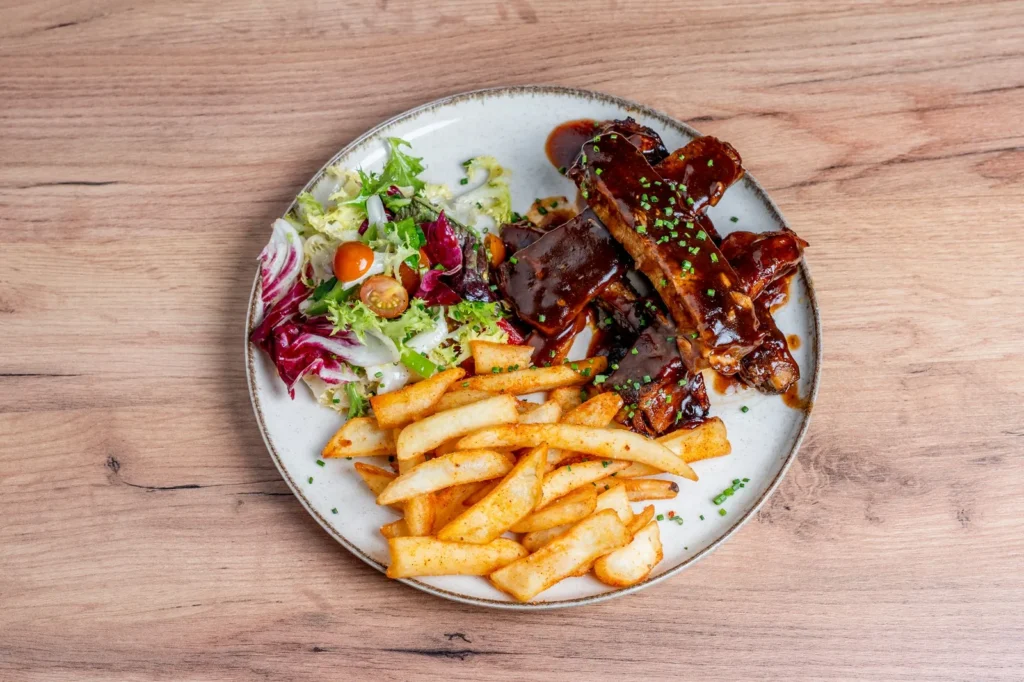

Balsamic Glazed Short Ribs
Description
These balsamic glazed short ribs are slow-braised in the oven until the meat pulls apart with a fork, then coated in a glossy tangy-sweet glaze made from the same pan liquid. A simple make-ahead friendly dinner with pantry staples and deep restaurant-level flavor.
Ingredients
Instructions
-
Heat oil and sear ribs
Heat medium-high heat on the stovetop and add 2 tbsp olive oil to a heavy Dutch oven. Season the 3 lbs short ribs with 1 tsp salt and 1/2 tsp pepper, then sear each side golden and crispy, about 4 minutes per side, until a dark crust forms and the meat releases easily from the pot. Remove ribs to a plate and set aside.
-
Cook aromatics and paste
Lower the heat to medium-low and add the diced large yellow onion to the same pot. Cook 5 minutes until softened and translucent, then add 3 smashed garlic cloves and 1 tbsp tomato paste. Stir 1 minute until the paste darkens and smells toasty.
-
Deglaze with vinegar
Pour in 1 cup balsamic vinegar and scrape the browned bits from the bottom with a wooden spoon to lift the seared flavor. Add 2 tbsp brown sugar and stir until fully dissolved and the liquid looks glossy.
-
Add ribs and braise liquid
Return the seared ribs to the pot with 2 cups beef stock and 2 rosemary sprigs. The liquid should reach two-thirds up the meat; add a splash more stock if needed. Bring to a simmer on medium heat until you see gentle bubbles around the edges.
-
Oven braise covered
Cover the Dutch oven and move it to a 160°C / 325°F oven for 3 hours. Cook until the meat pulls back from the bone and feels yielding when pierced with a fork, showing the connective tissue has broken down.
-
Remove ribs and strain
Remove the ribs from the pot and discard the 2 rosemary sprigs. Strain the cooking liquid through a fine sieve into a bowl, then skim the fat from the top with a ladle or by chilling.
-
Reduce glaze syrupy
Put the strained liquid back on the stovetop and reduce on medium-high heat for 20 minutes until syrupy and coats the back of a spoon. Watch for just-set edges on the surface bubbles as the sign it has thickened enough.
-
Coat ribs in glaze
Return the ribs to the glaze and turn to coat over low heat for 5 minutes, until the meat is glossy and warmed through. Serve immediately off the stove so the glaze stays sticky and hot.
Nutrition Facts
Servings 4
- Amount Per Serving
- Calories 520kcal
- % Daily Value *
- Total Fat 34g53%
- Saturated Fat 14g70%
- Cholesterol 120mg40%
- Sodium 680mg29%
- Total Carbohydrate 14g5%
- Dietary Fiber 1g4%
- Sugars 11g
- Protein 38g76%
* Percent Daily Values are based on a 2,000 calorie diet. Your daily value may be higher or lower depending on your calorie needs.
Note
- Storage: Cool the ribs within 2 hours and store in an airtight container up to 4 days refrigerated; fat solidifies on top and is easy to remove.
- Make ahead: Chill the strained braise liquid 30 minutes before reducing so solid fat lifts off cleanly for a less greasy glaze.
- Pro tip: Brown the ribs in batches so the pot stays dry and never crowd the pan or the meat steams instead of searing.
- Side idea: Pair with brussels sprouts while you finish the glaze for a complementary tangy side.
