

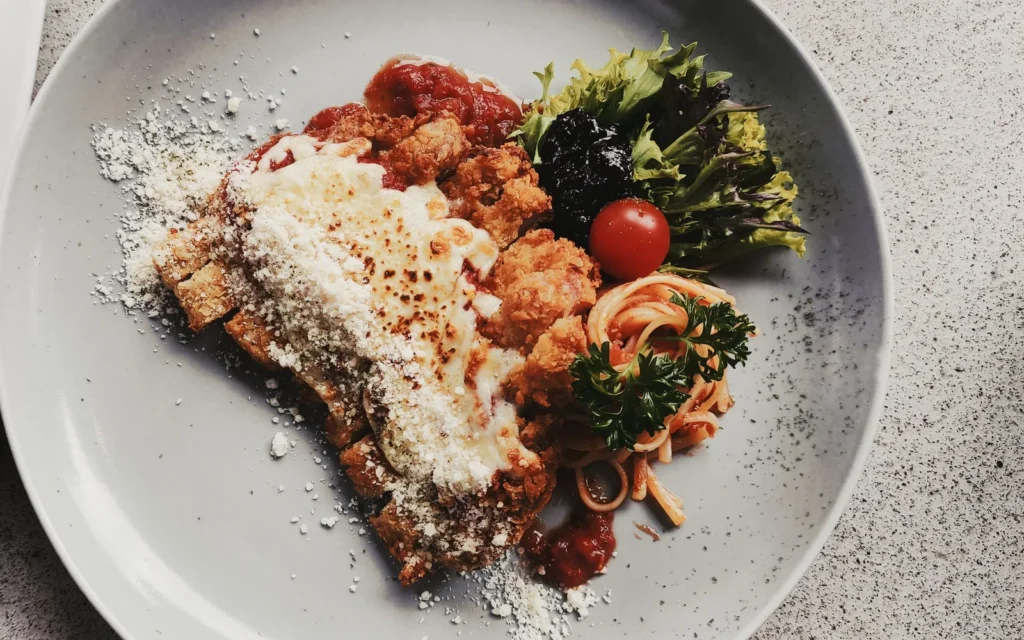
An improvised chicken parmigina is what you make when the classic breaded cutlet plan falls apart but you still want something crispy, cheesy, and reassuringly Italian-American. This version leans on whatever breadcrumbs, cheese, and tomato product you already have, then builds a reliable result through a few non-negotiable technique points. You get a weeknight dinner that tastes like the real thing without a specialty shopping trip.
The dish works because the chicken is pounded thin, seared hard for a crust, then finished under sauce and cheese so the top melts while the meat stays juicy. An improvised chicken parmigina won’t look like a restaurant plate, but it will hit the same notes: salt, fat, acid, and crunch. Below is the exact method I use when the fridge is half empty. If you enjoyed this, our caesar chicken bake is worth trying next.
Why You’ll Love These Improvised Chicken Parmigina
- Uses pantry staples instead of a long Italian-market list
- Thin-cut chicken cooks in under 10 minutes per batch
- Flexible cheese and sauce swaps still taste balanced
- One skillet plus a baking tray keeps cleanup small
Ingredients You’ll Need
- 2 boneless chicken breasts (about 500g), halved horizontally and pounded to 1cm thickness
- 60g all-purpose flour
- 1 large egg, beaten with 1 tbsp water
- 80g dry breadcrumbs (plain or seasoned)
- 40g grated parmesan
- 120g shredded mozzarella
- 250ml tomato passata or plain marinara
- 3 tbsp olive oil for frying
- 1 tsp salt, divided
- 1/2 tsp black pepper
- 1 tsp dried oregano
Ingredient Substitutions
Dry breadcrumbs: Replace with an equal weight of crushed plain cornflakes for a lighter, louder crunch. Cornflakes brown faster than wheat crumbs, so drop the skillet heat by one notch and watch the edges closely. The crust will taste a bit sweeter and hold up well under sauce for about 10 minutes before softening. Making this improvised chicken parmigina at home is surprisingly straightforward once you know the key steps.
Tomato passata: Use 250ml of canned crushed tomatoes simmered with the oregano for 8 minutes until thick. Crushed tomatoes add visible pulp and a brighter acid note than passata. You’ll need the extra simmer time to drive off water so the topping doesn’t flood the crust. The improvised chicken parmigina works well for weeknight cooking when time is limited.
Shredded mozzarella: Swap for 120g of torn fresh mozzarella, patted dry on paper towels. Fresh cheese releases more water and browns less, giving a milky, soft cap instead of a stretchy melt. Bake 3 minutes longer and place the tray higher in the oven to set the surface.
Parmesan: Use 40g of aged pecorino romano for a sharper, saltier crust. Pecorino crisps faster than parmesan, so mix it half-and-half with the crumbs to avoid burnt spots. The finished dish reads more sheep’s-milk funky than nutty.
Step-by-Step Instructions
- Heat the oven to 200°C / 400°F and line a tray with parchment. Pat the pounded chicken dry and season both sides with half the salt and the pepper.
- Set out three shallow bowls: flour in the first, egg wash in the second, breadcrumbs mixed with parmesan and oregano in the third. Coat each piece in flour, then egg, then crumb mix, pressing so the surface is evenly covered.
- Warm 3 tbsp olive oil in a 30cm skillet over medium heat. Lay two pieces in without touching and sear 3 minutes per side until golden and crispy. Rest on the tray; repeat with the rest.
- Spoon 2 tbsp passata on each cutlet, spread to the edges, then scatter mozzarella over the top. Bake 8–10 minutes until the cheese bubbles and the chicken reaches 74°C / 165°F inside.
- Finish with the remaining salt and serve from the tray. If you want the top browner, broil 2 minutes but watch closely so the crumbs don’t burn.
Pro Tips
Pound the chicken to an even 1cm so it cooks at the same rate; uneven thickness gives you dry corners and raw centers. A panade technique isn’t needed here, but resting the coated cutlets 5 minutes before frying helps the crumb stick.
Use a thermometer to confirm 74°C / 165°F rather than guessing by color, since improvised sauces vary in sugar and can darken the crust early. For a tighter crust, freeze the coated raw cutlets 15 minutes before they hit the pan.
Spread sauce almost to the edge but not over it, or the exposed crumb stays raw and pasty. If your chicken parmigiana habit is strong, keep a jar of passata and a block of mozzarella as permanent staples.
Broil only at the end and on a higher rack, because the cheese can go from melted to acrid in under a minute. A light scatter of extra parmesan at the broil stage crisps into salty lace.
Common Mistakes to Avoid
Overcrowding the skillet drops the oil temperature and steams the crumb instead of frying it. Cook in batches and never crowd the pan so each piece stays crisp.
Skipping the pounding step leads to chicken that’s raw in the thick middle while the thin end is tough. A heavy can or pan works if you don’t own a mallet.
Pouring sauce straight from a cold jar onto hot cutlets cools the surface and prevents melting. Warm the passata in the same skillet after the chicken comes out, using it to deglaze the brown bits.
Serving Suggestions
Plate the cutlets over grilled chicken thighs leftovers only if you must, but better is plain spaghetti with a little oil and the same oregano. A sharp sausage and peppers side balances the rich cheese with acid and bite.
For a lighter plate, serve with a lemon wedge and a simple green salad instead of pasta. The cutlets also fold into a sheet pan quesadilla next day if you have leftovers and want a different format.
Storage and Reheating
Cooled cutlets keep in an airtight container in the fridge for up to 3 days. Reheat in a 180°C / 350°F oven for 12 minutes until the center hits 74°C / 165°F again; microwaving makes the crust rubbery.
You can freeze the baked cutlets for freeze for up to 2 months wrapped tight, then reheat from frozen at 190°C / 375°F for 20 minutes. Don’t leave cooked chicken at room temperature longer than 2 hours before chilling.
Recipe Variations
Eggplant Swap
Replace the chicken with 1cm eggplant slices, salted 10 minutes and patted dry, then coated the same way. The vegetable cooks faster, about 2 minutes per side, and gives a softer bite under the cheese. Expect a sweeter, less meaty plate that still satisfies the same craving.
Spicy Version
Add 1 tsp chili flakes to the crumb mix and use a arrabbiata passata instead of plain. The heat builds at the crust and the sauce both, so taste before adding extra salt. Serve with cooling yogurt if the chili level runs high.
Low-Carb Option
Skip flour and egg, and coat the chicken in parmesan alone pressed firmly on. The surface crisps in the pan but won’t have the same bready layer, dropping the carb load sharply. Bake as written and watch the cheese so it doesn’t over-brown.
Chicken Milanese Style
For a chicken milanese lean, omit sauce and cheese, fry the crumbed cutlet, and finish with lemon. This turns the improvised chicken parmigina base into a brighter, drier plate good for summer. Keep the pounding and the hot oil or the crust slips.

An Improvised Chicken Parmigina
Description
An improvised chicken parmigiana uses whatever breadcrumbs, cheese, and tomato product you have to deliver a crispy, cheesy, reassuringly Italian-American dinner. The chicken is pounded thin, seared hard for a crust, then finished under sauce and cheese so the top melts while the meat stays juicy.
Ingredients
Instructions
-
Heat oven and prep tray
Heat the oven to 200°C / 400°F and line a tray with parchment. This preheats the baking surface so the cheese melts quickly once the seared cutlets go in. Having the tray ready prevents the crispy crust from sitting and softening before baking.
-
Season the chicken
Pat the pounded chicken dry with paper towels and season both sides with half the salt and the 1/2 tsp black pepper. Drying the surface helps the coating stick and promotes a crisp crust. Even seasoning now ensures the meat is flavored throughout, not just on the outside.
-
Set up coating bowls
Set out three shallow bowls: flour in the first, egg wash (beaten egg with 1 tbsp water) in the second, and 80g breadcrumbs mixed with 40g parmesan and 1 tsp oregano in the third. Arranging them in order keeps the dredging process clean and efficient. Mix the crumb blend well so each piece picks up cheese and herb evenly.
-
Coat chicken pieces
Coat each piece in flour, then egg, then crumb mix, pressing so the surface is evenly covered. The pressing step ensures the crust adheres and stays on during searing. Rest the coated cutlets 5 minutes before frying if you have time, to help the crumb stick.
-
Sear the cutlets
Warm 3 tbsp olive oil in a 30cm skillet over medium heat. Lay two pieces in without touching and sear 3 minutes per side until golden and crispy, then rest on the tray and repeat with the rest. The crust should be deep golden and rigid to the touch before flipping, showing the crumb has set.
-
Add sauce and cheese
Spoon 2 tbsp passata on each cutlet, spread to the edges but not over, then scatter mozzarella over the top. Keeping sauce off the rim leaves exposed crumb from going raw and pasty. The tomato layer should just cover the surface so the cheese melts into a cap.
-
Bake the cutlets
Bake 8–10 minutes at 200°C / 400°F until the cheese bubbles and the chicken reaches 74°C / 165°F inside. Use a thermometer to confirm the safe temperature rather than judging by color alone. The top should look molten with light browning at the edges when done.
-
Finish and serve
Finish with the remaining salt and serve from the tray. If you want the top browner, broil 2 minutes on a higher rack but watch closely so the crumbs don't burn. The chicken is ready to eat once it has rested briefly and the cheese has set.
Nutrition Facts
Servings 4
- Amount Per Serving
- Calories 450kcal
- % Daily Value *
- Total Fat 22g34%
- Saturated Fat 9g45%
- Cholesterol 130mg44%
- Sodium 900mg38%
- Total Carbohydrate 22g8%
- Dietary Fiber 2g8%
- Sugars 5g
- Protein 38g76%
* Percent Daily Values are based on a 2,000 calorie diet. Your daily value may be higher or lower depending on your calorie needs.
Note
- Storage: Cooled cutlets keep in an airtight container in the fridge for up to 3 days; reheat in a 180°C / 350°F oven for 12 minutes until 74°C / 165°F.
- Make ahead: Our sheet pan quesadillas are a great next-day use for leftovers.
- Pro tip: Pound chicken to an even 1cm and rest coated cutlets 5 minutes so the crumb sticks and cooks evenly.
- Food safety: Don't leave cooked chicken at room temperature longer than 2 hours before chilling.
