

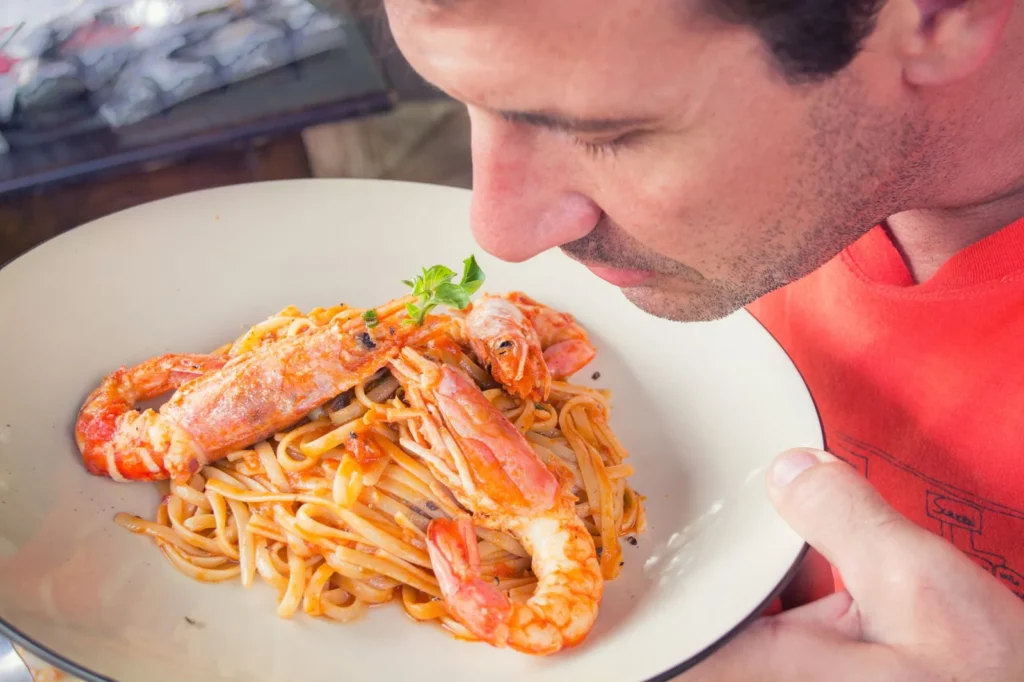
A puttanesca with shrimp takes the bold, salty punch of the classic Neapolitan tomato sauce and pairs it with sweet, quick-cooking seafood. You get a weeknight pasta that tastes like it simmered all afternoon but comes together in about 30 minutes. The shrimp stay tender because they only hit the pan at the end, while the sauce builds depth from olives, capers, and anchovies.
This version keeps the ingredient list short and the technique simple. You don’t need special equipment or a long shopping trip — most of the pantry items are staples. The result is a balanced plate: acidic tomatoes, briny olives, and a clean shrimp sweetness that keeps the sauce from feeling heavy. If you enjoyed this, our garlic butter baked is worth trying next. Making this puttanesca with shrimp at home is surprisingly straightforward once you know the key steps.
Why You’ll Love These Puttanesca With Shrimp
- Ready in one skillet plus a pasta pot, so cleanup stays minimal.
- Uses shelf-stable pantry items like capers and olives for last-minute dinners.
- Shrimp cook in under 4 minutes, preventing rubbery texture.
- Strong savory sauce means you need less salt at the table.
- Works with many pasta shapes you already have on hand.
Ingredients You’ll Need
- 12 oz spaghetti (or linguine)
- 1 lb large shrimp, peeled and deveined, tails removed
- 3 tbsp extra-virgin olive oil
- 4 garlic cloves, thinly sliced
- 4 anchovy fillets, finely chopped
- 1/4 tsp red pepper flakes
- 1 (28 oz) can crushed tomatoes
- 1/3 cup pitted Kalamata olives, halved
- 2 tbsp capers, drained
- 2 tbsp chopped fresh parsley
- 1 tbsp fresh lemon juice
- Salt for pasta water and final seasoning
Ingredient Substitutions
Anchovy fillets: Replace the 4 chopped fillets with 1 tsp anchovy paste or omit for a milder sauce. Anchovies dissolve into the oil and give a round, savory base without a fishy taste; paste disperses faster but can darken the sauce slightly. Without them, add an extra pinch of salt and a dash more olive oil to keep the sauce from tasting flat. The puttanesca with shrimp works well for weeknight cooking when time is limited.





Kalamata olives: Swap with an equal volume of pitted green Castelvetrano olives for a milder, buttery note. Green olives lower the brine intensity and add a faint sweetness that suits people sensitive to strong cured flavors. Chop them the same size so they distribute evenly through the sauce. Storing leftover puttanesca with shrimp correctly keeps it tasting good for days.
Crushed tomatoes: Use 1 (28 oz) can of whole peeled tomatoes, crushed by hand, if you want more texture. Whole tomatoes break down with a slightly fresher taste but need an extra 5 minutes of simmering to thicken. Keep the liquid measured the same to avoid a watery sauce. For the best results with this puttanesca with shrimp, read through all the steps before starting.
Spaghetti: Substitute with 12 oz bucatini or penne if that is what you have; both hold the sauce well. Short shapes trap more olives and capers in their ridges, changing the bite slightly. For a gluten-free option, use a corn-rice blend and check the boil time on the box since it varies. For another easy option, check out our garlic butter baked.
Step-by-Step Instructions
- Bring 4 quarts of water to a rolling boil and add 1 tbsp salt. Cook 12 oz spaghetti until al dente, about 9 minutes, then drain and reserve 1/2 cup of the starchy water.
- Warm 3 tbsp olive oil in a 12-inch skillet over medium-low heat. Add sliced garlic and chopped anchovies, stirring until garlic is pale gold and anchovies break down, about 2 minutes.
- Stir in 1/4 tsp red pepper flakes and the crushed tomatoes. Raise heat to medium heat and simmer until the sauce thickens and stops looking watery, about 8 minutes.
- Add 1/3 cup olives and 2 tbsp capers to the sauce. Cook 2 minutes so the brine mellows into the tomatoes and the olives soften at the edges.
- Pat shrimp dry and add them to the skillet in a single layer. Cook over medium heat until they turn opaque and curl loosely, about 2 minutes per side.
- Add drained pasta, 2 tbsp parsley, and 1 tbsp lemon juice. Toss with a splash of reserved water until the sauce coats the strands and the shrimp are just cooked through.
Pro Tips
Dry the shrimp with paper towels before they hit the pan so they sear instead of steaming, which keeps the texture snappy. A wet shrimp releases moisture and lowers the pan temperature fast.
Save the pasta water every time; its starch helps the thin tomato sauce cling to the noodles without adding butter or cream. Add it one tablespoon at a time near the end.
Chop the garlic by hand rather than using a press, since pressed garlic burns quicker in olive oil and turns bitter. Thin slices give a gentle sweetness as they soften.
Read technique notes from minimalist baker if you want a deeper look at building flavor with fewer pans and steady heat control.
Common Mistakes to Avoid
Overcooking the shrimp is the most common error; they only need about 2 minutes per side and keep cooking from pan heat after you pull them. Remove them the moment they turn opaque to avoid a chewy bite.
Adding capers and olives too early makes the sauce aggressively salty and dulls their texture. Stir them in during the last few minutes so they stay distinct and bright.
Skipping the pasta water leads to a sauce that pools at the bottom of the bowl. The starchy liquid emulsifies the oil and tomato so the coating sticks to each strand.
Serving Suggestions
Plate the pasta in shallow bowls and finish with extra parsley and a light drizzle of olive oil. A side of pasta with celery works as a lighter starter if you want a second vegetable on the table.
For a fuller Italian spread, pour a chilled white wine and add a simple green salad with lemon dressing. The acid in the salad matches the lemon note in the shrimp sauce without repeating flavors.
Storage and Reheating
Cool the leftovers within 2 hours and store them in an airtight container for up to 3 days. Shrimp and tomato hold safely in the fridge, but the pasta will soften slightly each day.
Reheat in a skillet over medium-low heat with a splash of water until the shrimp reach 145°F internally. Avoid the microwave if you can, since it toughens the seafood and splits the sauce.
This dish does not freeze well because the cooked shrimp turn mushy after thawing. Make a penne puttanesca without seafood if you need a freezer-friendly version for later meals.
Recipe Variations
Spicy Calabrian Version
Add 1 tbsp Calabrian chili paste with the garlic for a fruity heat that builds slowly. The peppers keep the sauce bright red and pair well with the briny olives. Expect a warmer finish without losing the shrimp’s sweetness.
Shrimp and Chorizo Mix
Brown 3 oz diced chorizo before the garlic, then proceed with the same steps for a smoky, meaty edge. The rendered fat replaces part of the olive oil and deepens the sauce. Try this alongside shrimp tapas flavors if you like Spanish crossover dinners.
Low-Carb Option
Skip the pasta and serve the sauce over zucchini noodles warmed for 1 minute in the pan. The shrimp and tomato mixture stays identical, so you only change the base. The sauce will be thinner without starch, so reduce it 2 minutes longer.
Sheet Pan Shrimp Twist
Roast the shrimp with the sauce components on a tray at 180°C / 350°F for 10 minutes, then toss with boiled pasta. This method suits batch cooking and pairs with sheet pan shrimp tacos night planning. You lose a little skillet caramelization but gain hands-off time.

Puttanesca With Shrimp
Description
A puttanesca with shrimp brings the bold, salty punch of classic Neapolitan tomato sauce together with sweet, quick-cooking seafood for a weeknight pasta that tastes slow-simmered but comes together in about 30 minutes.
Ingredients
Instructions
-
Boil pasta water
Bring 4 quarts of water to a rolling boil in a large pot over high heat. Add 1 tbsp salt to the water, then cook 12 oz spaghetti until al dente, about 9 minutes, stirring occasionally so the strands do not stick. Drain the pasta and reserve 1/2 cup of the starchy water for finishing the sauce later.
-
Warm oil and aromatics
Warm 3 tbsp olive oil in a 12-inch skillet over medium-low heat. Add the sliced garlic and chopped anchovies, stirring until the garlic is pale gold and the anchovies break down into the oil, about 2 minutes — the mixture should look fragrant and slightly creamy, not browned.
-
Simmer tomato sauce
Stir in 1/4 tsp red pepper flakes and the 28 oz crushed tomatoes. Raise the heat to medium heat and simmer until the sauce thickens and stops looking watery, about 8 minutes, stirring now and then so it does not scorch on the bottom.
-
Add olives and capers
Add 1/3 cup olives and 2 tbsp capers to the sauce. Cook for 2 minutes so the brine mellows into the tomatoes and the olive edges soften slightly while they stay distinct and bright.
-
Cook the shrimp
Pat the 1 lb shrimp dry with paper towels and add them to the skillet in a single layer over medium heat. Cook until they turn opaque and curl loosely, about 2 minutes per side, reaching an internal temperature of 63°C / 145°F — pull them the moment they are opaque so they stay snappy rather than chewy.
-
Toss with pasta
Add the drained 12 oz pasta, 2 tbsp parsley, and 1 tbsp lemon juice to the skillet. Toss with a splash of the reserved pasta water until the sauce coats the strands and the shrimp are just cooked through, about 1 minute of gentle tossing over the heat.
Nutrition Facts
Servings 4
- Amount Per Serving
- Calories 420kcal
- % Daily Value *
- Total Fat 14g22%
- Saturated Fat 2g10%
- Cholesterol 180mg60%
- Sodium 900mg38%
- Total Carbohydrate 45g15%
- Dietary Fiber 4g16%
- Sugars 8g
- Protein 28g57%
* Percent Daily Values are based on a 2,000 calorie diet. Your daily value may be higher or lower depending on your calorie needs.
Note
- Storage: Cool leftovers within 2 hours and store in an airtight container for up to 3 days; the pasta will soften slightly each day.
- Reheating: Reheat in a skillet over medium-low heat with a splash of water until the shrimp reach 145°F internally, and avoid the microwave so the seafood stays tender.
- Pro tip: Save the pasta water every time; its starch helps the thin tomato sauce cling to the noodles without butter or cream — for more easy seafood ideas try our garlic butter shrimp.
- Shrimp prep: Pat shrimp dry with paper towels before they hit the pan so they sear instead of steaming and keep a snappy texture.
